
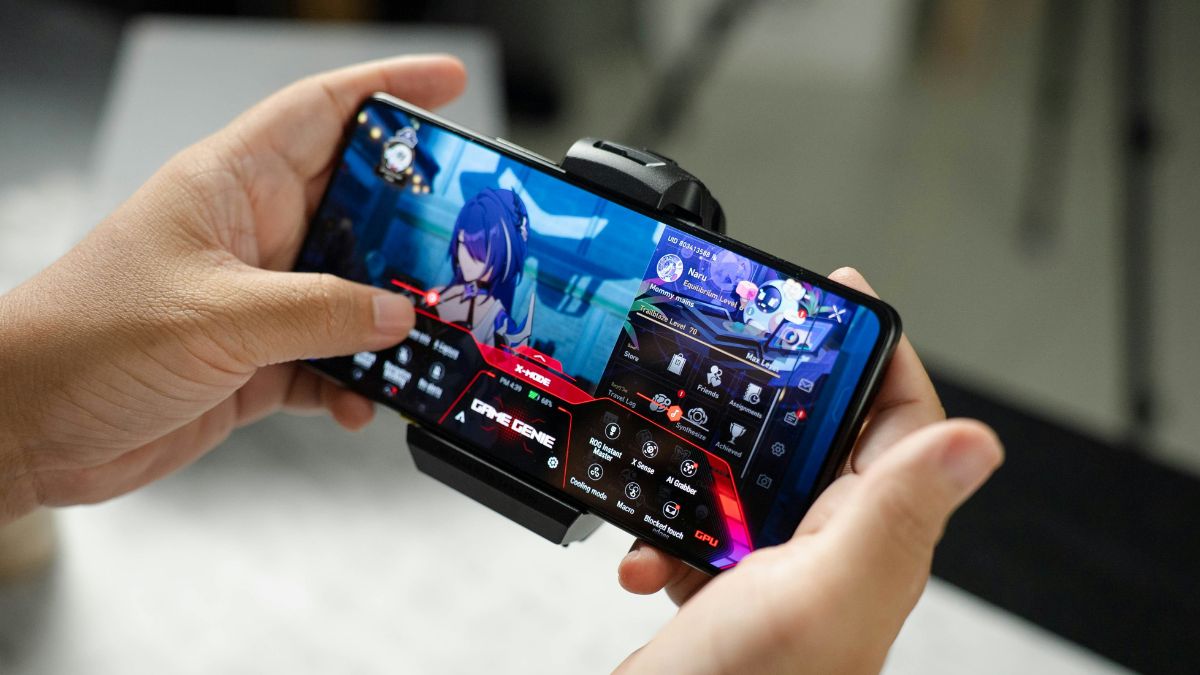

For years, gaming phones have been one of the most interesting experiments in the smartphone industry. They brought bold designs, RGB lighting, internal cooling fans, and even shoulder triggers to a category that was otherwise becoming predictable. Yet, despite all that innovation, gaming phones never became mainstream.
Even in 2026, dedicated gaming phones are just a tiny part of the overall smartphone market. Big brands like Apple and Samsung sell more than 240 million phones every year. In comparison, total shipments of pure gaming phones like the Asus ROG Phone and Nubia RedMagic are estimated to be under 3 million units globally.
To understand how small this is, the global smartphone market ships over 1.2 billion devices every year. Gaming phones make up less than 0.25 percent of that. This is a very small number for a category that gets so much attention in media, tech reviews, and the gaming community.
And still, new brands continue to enter this space. Companies like Infinix and OnePlus have recently started pushing gaming-focused devices. This comes at a time when earlier pioneers are either struggling or have reduced their focus on the segment.
This creates an interesting contradiction. If gaming phones do not sell in large numbers, why are more brands trying to build them?
The idea of a gaming-focused phone is not entirely new. Devices like the Nokia N-Gage and Sony Ericsson Xperia Play tried to combine gaming with mobile hardware long before smartphones became powerful. However, the modern gaming phone category truly began in 2018 with devices like the Asus ROG Phone. Around the same time, brands like Xiaomi Black Shark and Nubia RedMagic entered the market.
These devices focused on performance above everything else. High refresh rate displays, aggressive thermal management, hardware features like air triggers, and gaming-centric software became their identity. These devices also offered external accessories like air coolers to help better gaming.
Between 2019 and 2021, mobile gaming saw massive growth. Titles like PUBG Mobile drove millions of users toward competitive gaming on smartphones. This created the impression that gaming phones would become the next big category.
Several brands entered the segment during this phase. Lenovo launched its Legion gaming phones. ASUS continued expanding its ROG lineup. Xiaomi supported Black Shark with multiple launches. However, the demand never scaled the way brands expected.
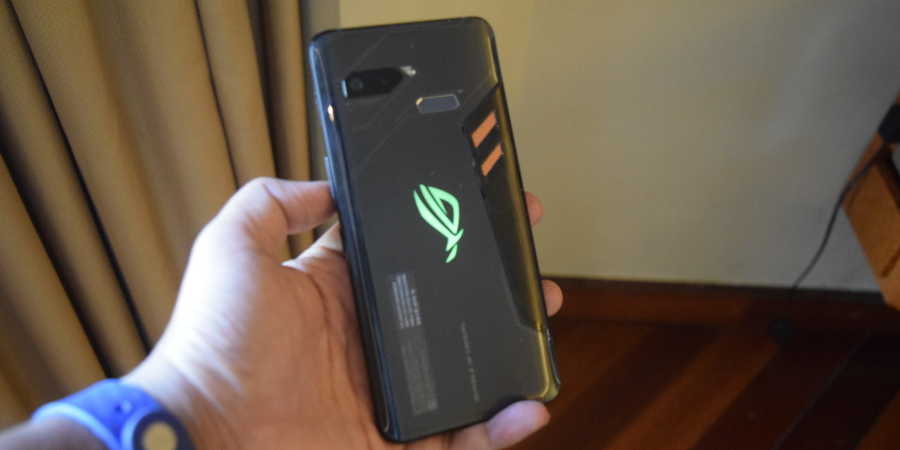
Even at their peak, gaming phones remained a niche product. In large markets like China, shipments were only a fraction of total smartphone volumes. While hundreds of millions of smartphones were sold annually, gaming phones accounted for only a tiny share.
The hype around gaming phones was real. Everyone felt that. However, the market size was not. People wanted to feel gaming phones, but not many of them wanted to own it.
The biggest problem with gaming phones was relevance.
Gaming phones used the same flagship processors that were available in regular premium smartphones. Over time, even mid-range devices became powerful enough to handle demanding games smoothly. At the same time, gaming phones made several compromises. Camera quality was often weaker compared to mainstream flagships. Software support and updates were not always consistent. The designs were bulky and not suitable for everyday use.
For most users, a regular flagship offered a better overall experience. It could handle gaming well while also delivering strong cameras, better software, and a more practical design. This reduced the need for a separate gaming-focused device.
While gaming phones struggled to grow, something more important was happening. Mainstream smartphones started adopting gaming features. High refresh rate displays, once a key selling point of gaming phones, are now common even in mid-range devices. Advanced cooling systems, performance modes, and touch optimizations have also become standard across many brands.
Companies like OnePlus, iQOO, and even budget-focused brands began offering gaming-focused optimizations without building dedicated gaming phones. This changed the entire landscape. Gaming phones no longer offer a unique advantage. Their features had already been absorbed by the broader smartphone market while offering compact phones as compared to niche gaming phones.
As a result, several early players started losing momentum. Lenovo quietly stepped back from its Legion gaming phones. Xiaomi Black Shark reduced its presence and shifted focus. Even the Asus ROG Phone has faced questions about long-term continuity in the segment. The only brand that has remained consistently active is Nubia RedMagic, which continues to launch new models with advanced cooling systems and aggressive designs.
But even here, the success is relative. Leading a niche category does not necessarily translate into large-scale success.
This brings us to the current situation. Despite limited market share and declining interest in dedicated gaming phones, new brands are entering the space. POCO also launched Poco F4 GT 5G with Air Tiggers, but later shifted focus only to compact gaming phones. Infinix recently introduced a gaming-focused device, the Infinix GT 50 Pro. OnePlus has also launched the OnePlus Ace 6 Ultra, which is mainly for gamers.
This seems like a contradiction. Why would companies invest in a category that has not delivered strong sales? The answer lies in how the role of gaming phones has evolved over time.
Gaming phones today are less about volume and more about positioning. Companies use these phones as technology showcases. Features like advanced cooling, high touch sampling rates, and performance tuning often appear first in these devices. Over time, these features move into mainstream smartphones. This is the reason you don’t see features like Air Triggers in all gaming phones. Dropping these features helps them make phones compact.
They also create a strong marketing impact. A gaming phone attracts attention. It builds a brand image around performance and power, even if the actual sales numbers are not very high.
More importantly, brands are no longer building “pure” gaming phones in the traditional sense. Instead, they are blending gaming features into regular smartphones.
This is why newer entrants do not always follow the same bulky and aggressive design language. They focus more on performance optimization while keeping the device practical for everyday use.
The biggest change in 2026 is that gaming phones are no longer a clear category. They are becoming a feature set. Instead of buying a separate gaming phone, users now buy regular smartphones that are already optimized for gaming. This includes better GPUs, improved cooling, and software-level enhancements.
If you look closely, the industry has moved from “gaming phones” to “phones that are good at gaming.”
I hope you now understand that the success of gaming phones cannot be seen just by numbers. These phones didn’t succeed in the way brands initially expected. Even today, they remain a niche with limited volume. However, their impact on the industry is much larger than their sales numbers suggest. They pushed innovation. They introduced new ideas. And most importantly, they influenced the direction of mainstream smartphones.
That is why, even in 2026, brands continue to explore this space. Not because gaming phones sell in huge numbers, but because the idea behind them still shapes the market.
Gaming phones may not dominate the industry. But they have already changed it in a way that makes them impossible to ignore.