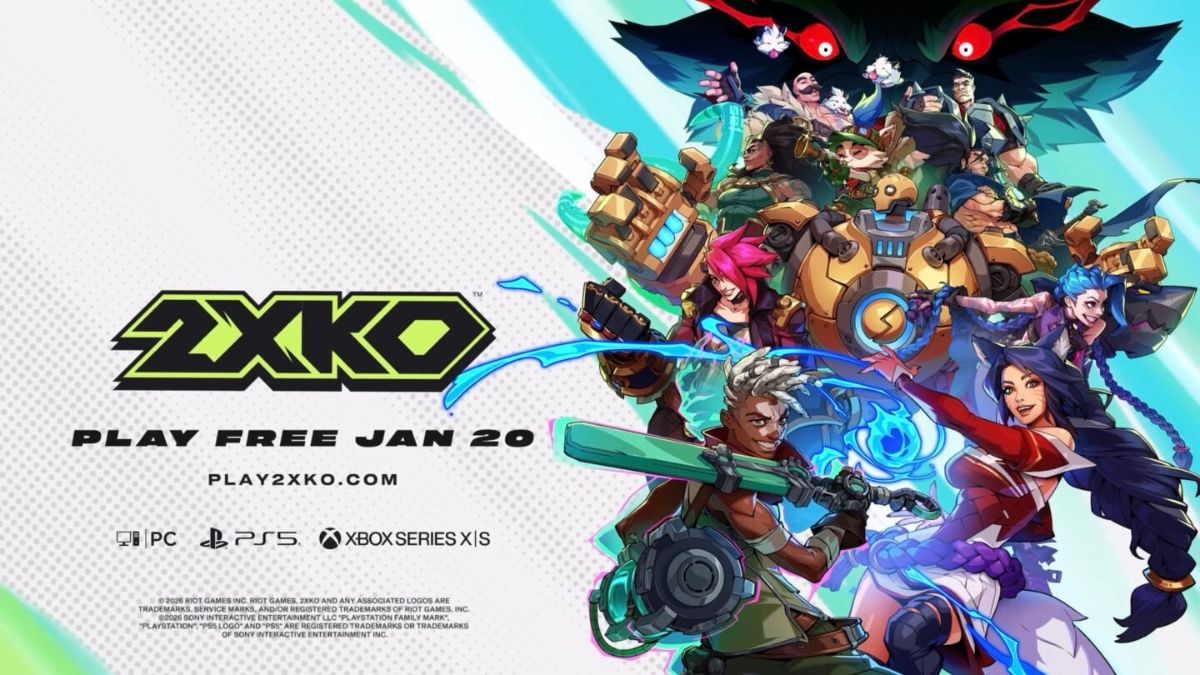

Riot Games is ending active development of 2XKO, its free-to-play fighting game set in the League of Legends universe. The game will remain playable, but Riot will stop producing major new content after the final updates planned for later this year.
The decision is a disappointing one for a game that had a lot going for it. 2XKO had Riot behind it, a huge library of familiar League of Legends characters, a free-to-play model and a tag-team fighting system that made it different from most other fighting games. But those advantages were not enough to build the player base Riot needed.
Riot says the game attracted a dedicated group of fighting game players, but most other players did not have enough reason to keep coming back. The company also says the cost of running 2XKO is now substantially higher than the revenue it generates, while continued updates have not resulted in meaningful growth.
That is ultimately why Riot has decided to stop investing in it.
It is important to understand that the game did not fail because nobody liked it. 2XKO built a strong following among fighting game fans, and Riot had also started building a competitive scene around it. By the end of 2025, the company said the game had already seen more than 1,500 community tournaments, including 22 events sponsored through its First Impact programme.
But the wider audience never really arrived.
There is no reliable public player-count figure for 2XKO because the game is distributed through Riot’s own client rather than Steam. Twitch data still gives us some idea of how much attention the game was getting. According to Streams Charts, 2XKO generated around 1.48 million hours watched in June 2026, but that fell to roughly 173,000 hours in July. Its peak viewership also dropped from 47,522 viewers in June to 2,238 in July.
Twitch numbers obviously do not equal player numbers, so they should not be treated as a direct measure of the game’s audience. But the sharp decline does fit Riot’s explanation that engagement was not improving.
And this is where 2XKO ran into a problem that free-to-play games cannot easily solve.
Riot had a reasonable idea when it decided to make 2XKO free. A fighting game can be difficult to sell to someone who has never played one. Asking players to pay upfront makes that barrier even higher. Riot wanted people to try the game without worrying about the price and hoped the League of Legends characters would give them a reason to stay.
That worked to an extent. People tried it. Some stayed. But the game did not turn its large potential audience into a large active audience.
A League of Legends player may know who Jinx, Ekko or Ahri are, but that does not mean they want to learn a fighting game, practise combos and compete against other players. Familiar characters can get people through the door, but they cannot make an entirely different genre appealing to everyone.
Riot now effectively acknowledges this. The company says its hardcore tag-fighter audience loved 2XKO, while many other fighting game players struggled to find reasons to stick with it.
That is a much harder problem to fix than simply lowering the price.
The writing was already on the wall earlier this year. In February, Riot reduced the 2XKO development team. At the time, the company said the game had a passionate core audience but did not have enough momentum to justify maintaining the same team size. A smaller team was going to focus on improvements and continued competitive support.
Riot then continued releasing updates and expanded the game to consoles. It still did not get the growth it wanted.
Now the company is drawing a line under active development rather than continuing to spend money hoping the audience will eventually return.
That makes financial sense. Live-service games need regular development, and fighting games are particularly demanding because players expect new fighters, balance changes and other content. If the audience does not grow, the cost of keeping that cycle going becomes difficult to justify.
The game is not being switched off. Riot will release the previously announced Lux and Samira updates before development ends. Several final updates are planned through December 2026, after which 2XKO will move into maintenance mode.
There will be no major new content after that, but Riot plans to keep the servers online indefinitely. Offline play will also remain available. If that changes in the future, Riot says it will announce the plans beforehand.
The company is also making some changes for existing players. All fighters will be unlocked for free, while Riot will offer a single $39.99 bundle containing almost all of the game’s cosmetics. Purchases made before August 20 will also be refunded.
That is a sensible way to close down development without immediately abandoning the people who supported the game.
I don’t think 2XKO is a good example of a bad game getting cancelled. It is a better example of how difficult it has become to build a sustainable live-service game. Riot had one of the strongest gaming brands in the world behind 2XKO. It had the money to support the project, years of development time and a free-to-play model. Yet it still could not get enough players to stay.
That should make publishers think twice about assuming that a huge existing IP can automatically create a successful new game.
The fighting game audience is also smaller than the League of Legends audience, and Riot could not simply move millions of League players into a completely different genre. The game needed to build its own audience, and it appears that audience never became large enough.
There is also a lesson here for Riot itself. The company has been expanding beyond League of Legends for years, with Valorant proving that it can successfully build another major competitive game. But Valorant and 2XKO are very different cases. A shooter has a much broader potential audience than a competitive tag-team fighting game, and Riot’s success with one genre does not guarantee success with another.
For the players who stayed with 2XKO, this is still a loss. The game has a dedicated community and clearly did some things well. But Riot has decided that supporting that community indefinitely is not a business it can justify.
In the end, that is what killed 2XKO. Not a lack of quality, but a lack of enough players willing to keep playing it.