
When Apple introduced Siri in 2011, it felt like something straight out of a science fiction movie. For the first time, smartphone users could talk to their phones and get answers, send messages, set reminders, or perform simple tasks using voice commands. Siri was not the first voice assistant, but Apple was the company that brought the technology to the mainstream and made millions of people use it.
The launch of Siri sparked a race across the tech industry. Google introduced Google Now and later replaced it with Google Assistant. Amazon launched Alexa and turned it into one of the most popular smart home platforms. Microsoft came up with Cortana, and Samsung eventually launched Bixby. At that time, every major technology company wanted its own digital assistant.
Siri was ahead of everyone else. It was also one of the iPhone’s biggest selling points and helped Apple showcase what the future of smartphones could look like.
While Google, Amazon, and other companies continued improving their assistants year after year, Siri seemed to stand still. Google Assistant became better at understanding natural language and answering complex questions. Alexa gained thousands of integrations and became useful in millions of homes. Even when voice assistants failed to become the next major computing platform, competitors continued investing and improving their products.
Siri never evolved at the same pace. In fact, it never received much attention from Apple. Users often complained that Siri misunderstood requests, failed to understand context, or simply responded with a web search. Over time, many iPhone users stopped relying on Siri for anything beyond setting alarms, making calls, or sending messages.
Then came the biggest shift the technology industry had seen in years. The launch of ChatGPT in late 2022 completely changed what people expected from AI. Suddenly, AI could write emails, summarize documents, answer complex questions, generate code, and hold conversations that felt surprisingly natural. Google responded with Gemini and replaced Google Assistant with it. Microsoft integrated AI across its products. Samsung added so many AI features in its OneUI to make the smartphone experience even better. The conversation quickly moved beyond voice assistants. AI became the biggest topic in the technology industry.
AI was no longer about asking your phone for the weather. It was becoming the next major computing platform.
This should have been the moment for Siri to shine. Instead, it exposed just how far behind Apple’s assistant had fallen. While ChatGPT and Gemini continued improving every few months, Siri remained largely unchanged. Apple continued talking about privacy and on-device intelligence, but users increasingly compared Siri with modern AI tools. Those comparisons rarely worked in Apple’s favor.
So, the pressure on Apple became impossible to ignore. At WWDC 2024, Apple finally entered the AI race with Apple Intelligence. The company promised a smarter Siri capable of understanding personal context, interacting across apps, and helping users complete complex tasks. Apple showcased an assistant that looked far more intelligent than anything Siri had offered before.
The demonstrations generated excitement because they showed exactly what many Apple users had been waiting for. After years of watching competitors move ahead, it finally appeared that Apple was ready to bring Siri back into the conversation.
However, things did not go according to plan. Many of the features Apple talked about in 2024 were either delayed or rolled out gradually. The most advanced version of Siri that Apple demonstrated during its keynote never arrived in the same form users had seen on stage. As months passed, the gap between Apple’s promises and the actual user experience became increasingly noticeable.
Meanwhile, competitors kept moving forward. Google expanded Gemini across Android, Search, Gmail, Workspace, and other products. Samsung aggressively promoted Galaxy AI features across its smartphone lineup. OpenAI continued improving ChatGPT at a speed few companies could match.
In many ways, Apple’s first AI efforts felt like first-generation products while competitors were already several steps ahead. Features that looked impressive during Apple’s presentations often felt ordinary when compared with tools people were already using on Android devices or through ChatGPT.
For a company known for leading major technology breakthroughs, Apple suddenly looked like it was playing catch-up.
Apple has always preferred controlling the technologies that define its products. Whether it is processors, operating systems, hardware design, or software experiences, the company likes owning every important part of the stack. That is one of the reasons Apple products often feel so tightly integrated.
Yet when the AI race accelerated, Apple found itself in a position where it needed help. The company partnered with OpenAI to bring ChatGPT capabilities into its ecosystem. Later, support for Google’s Gemini was also added. There is nothing wrong with those partnerships. In fact, giving users access to the best AI models available is a smart decision.
However, the situation also explains how much the industry had changed. The company that introduced Siri and helped popularize digital assistants now had to rely on technology from competitors to fill important gaps in its own AI strategy.
The fact that Apple had to knock on Google’s door for AI assistance says more about the state of Siri than any keynote presentation ever could.
That brings us to WWDC 2026.
This year’s keynote felt different. For the first time in years, Siri looked like a modern AI assistant. Apple demonstrated a version of Siri that can better understand context, work across applications, handle more complex requests, and act more like a true digital assistant rather than a simple voice command system.
Apple did not just show an improved Siri. The company explicitly rebranded the assistant as “Siri AI”. That decision may seem like a small marketing change, but it says a lot about where Apple sees the product today. Siri has spent years building a reputation for being limited and often frustrating to use. By putting AI at the center of the brand, Apple is effectively telling users that this is not the same assistant they have known since 2011.
More importantly, Siri finally appears to be catching up to what users expect from AI in 2026.
That is the good news. The bad news is that fixing Siri may have been the easy part.
The real challenge is convincing people to use it again.
Over the past few years, users have developed new habits. Many people automatically open ChatGPT when they need answers. Others rely on Gemini. Some continue using traditional search engines. These habits did not appear overnight. They developed because Siri was unable to keep pace with the market. Changing those habits will take time.
Apple can showcase impressive demonstrations during a keynote, but users will judge Siri based on everyday experiences. They will judge it based on whether it can consistently answer questions correctly, complete tasks without errors, and genuinely save time.
Trust is difficult to rebuild once it is lost.
Apple also faces another challenge. Expectations for AI are now significantly higher than they were just a few years ago. In 2011, users were impressed when Siri could set an alarm using voice commands. In 2026, users expect AI to understand context, summarize information, generate content, and complete tasks across multiple applications.
Being good is no longer enough. Siri has to be excellent.
There is another possibility that many people are overlooking. Apple may not be trying to beat ChatGPT and Gemini at their own game.
OpenAI and Google have spent the last few years training users to open dedicated AI apps whenever they need help. Apple appears to be betting on a different future.
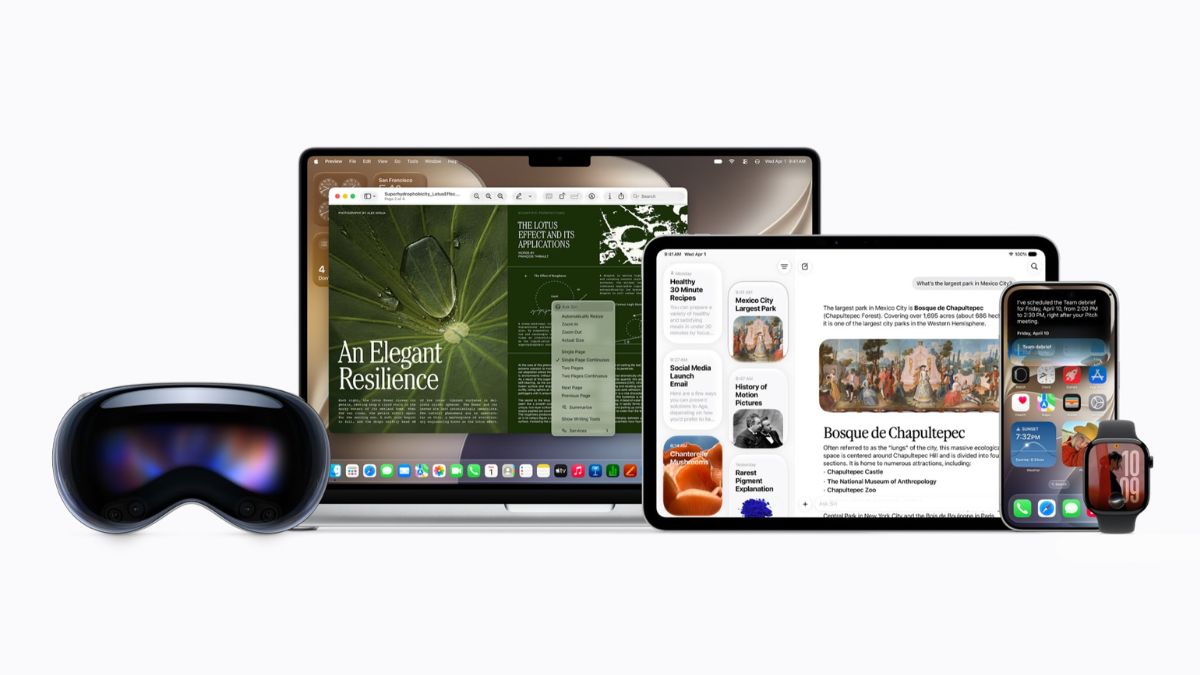
Rather than turning AI into a destination, Apple wants AI to become part of the operating system itself. Siri AI is designed to work across apps, understand context, and help users complete tasks without forcing them into a separate chatbot experience.
In Apple’s ideal world, users should not have to think about whether they are using AI. The technology should simply work in the background and make their devices smarter.
It is an interesting approach because it plays to Apple’s biggest strength: integration. No other company controls the hardware, software, and services used by so many customers.
If Apple can execute this vision successfully, Siri AI could become more useful than a standalone chatbot. But if it fails, users will continue opening ChatGPT, Gemini, and other AI tools whenever they need help.
That vision is powerful. But it is also difficult to execute.
The Siri that Apple showed at WWDC 2026 looks promising. It appears smarter, more capable, and much closer to what users have wanted for years. However, Apple is no longer introducing a brand-new category as it did in 2011. This time, it is entering a race that is already well underway. The company spent years watching competitors push AI forward while Siri remained largely unchanged. Now it is trying to make up for lost time.
Apple certainly has the resources, ecosystem, and engineering talent to succeed. The question is whether it can convince users to give Siri another chance.
Apple may have finally fixed Siri. But after spending years watching users move to ChatGPT, Gemini, and other AI tools, fixing Siri was only the first step. The bigger challenge is proving that Siri deserves a place in users’ daily lives again.
Apple is betting that AI should disappear into the operating system instead of living inside a chatbot. If that vision works, Siri could become relevant again. If it doesn’t, users already have plenty of alternatives.