
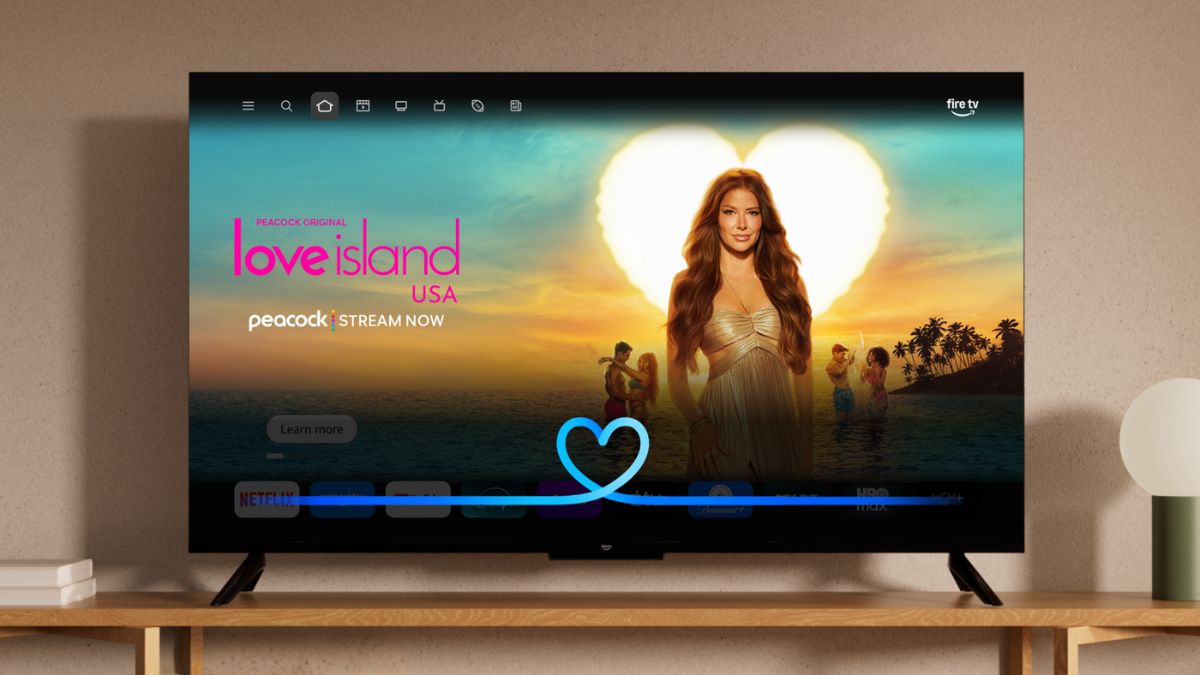

Amazon is making its Alexa+ AI assistant free on compatible Fire TV devices in the US, removing the $19.99 monthly fee that previously applied to customers without an Amazon Prime subscription.
The change will be automatic. Users do not need to install a separate app or sign up for Alexa+. Amazon says the update will reach current-generation Fire TV Sticks, Fire TV Cube, Amazon Ember smart TVs and compatible televisions from manufacturers including Hisense and Panasonic.
The decision turns Alexa+ from a paid add-on into a standard part of the Fire TV experience. More importantly, it gives Amazon a much larger audience for an AI assistant that the company is still trying to establish as a meaningful part of everyday consumer technology.
The biggest difference from traditional Alexa is that users can describe what they want instead of searching for a specific title. A viewer could ask for a highly rated thriller, a historical drama with a strong female lead or something matching a particular theme. Alexa+ can interpret those conversational requests and use them to recommend content.
That solves a genuine problem with streaming services. There is now so much content spread across different platforms that knowing what to watch can sometimes be harder than finding something to watch. Natural-language search could make that process less dependent on knowing exact titles, actors or categories.
But it also gives Amazon more control over discovery. Once an AI decides which titles best match a vague request, the recommendation itself becomes part of the platform’s power. Amazon will need to convince users that Alexa+ is helping them find something relevant rather than simply steering them toward content it has an incentive to promote.
The TV is becoming a smart home screen
Alexa+ is also being positioned as a control layer for the connected home.
Users can control compatible smart home devices through the assistant and display Ring camera feeds on their television. That makes the TV useful even when nobody is watching a movie or show.
This is an important distinction from AI-powered search. Amazon is effectively turning Fire TV into another interface for its wider hardware ecosystem, connecting entertainment, security cameras and smart home controls through the same assistant.
It also gives Alexa+ a reason to exist beyond answering questions. The more devices it can control, the more useful it becomes as an everyday interface.
The move is part of a wider shift in the TV industry.
Google has been bringing Gemini capabilities to Google TV, including conversational search, while Roku has upgraded its voice assistant with AI features. TV platforms are increasingly treating generative AI as the next evolution of the remote control.
The interesting part is that these companies are not waiting for consumers to actively seek out AI. They are putting it directly into products people already own.
That could make TV one of the biggest testing grounds for consumer AI. Unlike smartphones, where users can choose from dozens of AI apps, TV platforms control the operating system, search experience and remote. Whoever gets the assistant right could have a direct influence over how viewers discover and interact with content.
Amazon says Alexa+ users are having nearly twice as many conversations on Fire TV as they did with the original Alexa. That is a useful signal, but it does not tell us whether people are actually getting better results. More interactions could simply mean that users are experimenting with the new system.
Still, Amazon’s decision to remove the $19.99 monthly fee is revealing. The company appears to be prioritising scale and usage over direct subscription revenue.
A paid Alexa+ service limits the number of people willing to experiment with it. Making it free removes that barrier and gives Amazon access to far more interactions from real users. Those interactions can potentially help Amazon improve the assistant while making Alexa+ more familiar.
There is also a retention angle. If Alexa+ becomes the easiest way for someone to search for content, control their smart home and access Amazon services, it gives Fire TV a stronger reason to remain at the centre of the household.
There is still a question Amazon cannot answer with usage numbers alone: do people actually want to talk to their TV?
Television has traditionally been a low-interaction device. People sit down, choose something and watch. AI introduces another layer of interaction, and not everyone will see that as an improvement.
For viewers who struggle to decide what to watch, conversational recommendations could be genuinely useful. For others, a simple remote and a familiar search box may still be faster. That is why Amazon’s decision to make Alexa+ free is significant. It removes the biggest reason for users not to try it.
Amazon can now put Alexa+ in front of a much larger Fire TV audience and see whether conversational AI becomes a natural part of television or just another feature that sounds impressive but gets ignored.
For the company, that experiment may ultimately be worth more than the $19.99 subscription it was charging.