


Artificial Intelligence companies need data. A lot of it. And they are now even resorting to unethical methods to get that data.
The AI boom that started with chatbots and image generators is now expanding into the real world. Companies are no longer just training AI on websites, books, and online videos. They now want real-world human activity data to train the next generation of AI systems. And that is where the recent controversy around Pronto has started raising serious questions about privacy, surveillance, and the future of work.
Reports and social media discussions around Pronto claim that some workers associated with the company were using wearable head-mounted cameras while performing household tasks. The stated goal appears to be collecting real-world visual data that can later be used for AI training.
For many people, it may look like a simple technology experiment. But the internet reacted strongly for good reason. People immediately started asking genuine questions.
- Were customers properly informed that activities inside their homes could be recorded?
- How much data is being collected?
- Who owns the footage?
- How long is the data stored?
- Can workers fully understand how this data might eventually be used?
And perhaps the biggest question of all:
- Are these workers unknowingly helping train AI systems that may one day replace human labor?
The controversy has quickly become much larger than just one company. It is now part of a growing global discussion about how far AI companies are willing to go in collecting data.
AI Wants Real-World Human Data
Modern AI systems are hungry for data. Large language models like ChatGPT were primarily trained on massive amounts of text from books, articles, forums, and websites. AI image generators learned from billions of images collected from the internet.
But companies developing robotics, humanoid systems, and real-world AI assistants need different data to compete with humans. They need to understand how humans interact with the physical world.
That includes:
- cleaning
- cooking
- repairing appliances
- driving
- walking through crowded areas
- handling tools
- organizing objects
- performing repetitive tasks
This type of real-world activity data is incredibly valuable. A camera mounted on a worker’s head can capture exactly how humans perform tasks from a first-person perspective. It can show hand movements, object handling, body coordination, movement patterns, decision-making behavior, and environmental awareness. This is the kind of data that companies building robotics and humanoid AI systems desperately want.
And this is why the Pronto controversy matters far beyond one startup. What has made this discussion even more interesting is that several people online have claimed they have started noticing workers in Bengaluru wearing head-mounted cameras during various tasks.
Some posts mention carpenters. Others mention repair workers, electricians, vegetable sellers, and even weavers.
While not all such claims can be independently verified, the growing number of observations has triggered speculation that companies may already be collecting large-scale real-world human activity data for AI training.
If true, this would represent a major shift in how AI systems are being trained.
Until now, most AI data collection has happened online. But the next stage of AI development may require companies to record real human labor in the physical world. And that raises entirely new ethical and legal concerns.
Your Home Is Not a Public Dataset
One reason why the Pronto discussion became so controversial is that homes are deeply personal spaces. Unlike public roads or shopping malls, homes contain highly sensitive information about people’s lives.
A camera inside a customer’s home could potentially capture family members, children, conversations, financial information, personal belongings, computer screens, documents, and daily routines Even if the company claims that the footage is secure or anonymized, many people are uncomfortable with the idea of private household activity becoming training material for AI systems.
There is also the issue of consent.
- Did customers explicitly agree to AI training-related recording?
- Were they informed clearly?
- Did workers themselves fully understand how the footage could be used in the future?
These questions matter because AI data collection is becoming increasingly aggressive. And in many cases, users do not fully understand what they are agreeing to.
The reason companies are now looking toward real-world data may be because the internet alone is no longer enough.
Over the past few years, AI companies have already used massive amounts of publicly available internet data for training. This includes websites, articles, books, code repositories, discussion forums, videos, and images. This has already sparked lawsuits and copyright battles across the world.
Publishers, artists, writers, musicians, and photographers have accused AI companies of using their content without proper permission.
Some companies are now signing licensing deals for training data, while others continue arguing that public internet content can legally be used for machine learning.
But even after consuming huge amounts of online data, AI systems still struggle with real-world tasks.
A chatbot can explain how to wash dishes, but a humanoid robot must physically perform the task.
That difference is enormous and that is why companies now want human behavioral data.
This Could Be About Humanoid Robots
One of the biggest fears people have expressed online is whether this data could eventually be used to train humanoid robots.
Honestly, that concern is not unrealistic.
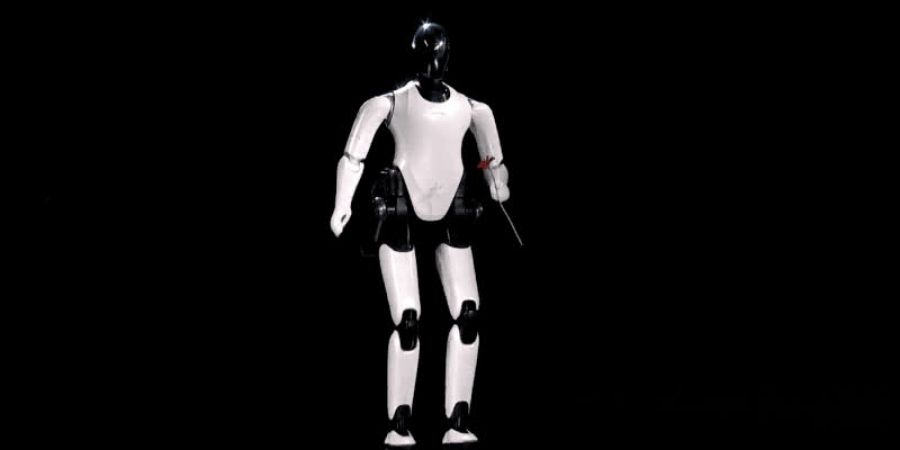
Several major tech companies are already investing heavily in humanoid robotics. We have early prototypes of humanoids by Tesla, Xiaomi, and other companies. They are trying to build machines that can eventually perform physical tasks currently done by humans. That could include warehouse work, domestic tasks, industrial labor, delivery work, retail assistance, elderly care, and construction support.
To make humanoid robots useful, companies need to train them on how humans interact with the world. And first-person camera footage from real workers may become one of the most valuable datasets for that purpose.
Imagine thousands of hours of footage showing:
- carpenters handling tools
- electricians fixing wiring
- cooks preparing meals
- cleaners organizing spaces
- repair technicians troubleshooting appliances
That data could help train AI systems to understand physical workflows. And human workers, who are getting paid to work with head-mounted cameras, may unknowingly be teaching machines how to replace human workers.
That idea sounds futuristic, but parts of it are already happening.
For years, AI mostly existed inside software. Chatbots answered questions, recommendation systems suggested videos, and algorithms sorted or categorized photos. But the industry is now moving toward what many companies call “physical AI.” This includes robots, autonomous systems, smart assistants, AI-powered wearables, AI navigation systems, and computer vision systems
Physical AI requires understanding the real world. And real-world understanding requires massive amounts of sensory data.
That includes:
- video
- audio
- movement
- spatial awareness
- object interactions
This is why companies increasingly value wearable camera footage. It gives AI systems a human perspective of the world. But this also creates a dangerous possibility. Humans themselves may slowly become data collection tools.
Workers Become Data Sources
One of the most uncomfortable aspects of this trend is how workers may be transformed into walking data generators. Traditionally, labor meant performing tasks. Now, labor may also involve generating AI training data at the same time. This changes the relationship between workers and companies.
A house help cleaning a kitchen may no longer just be doing household work. Their movements, decisions, and behavior may also become machine learning inputs. And unlike factory automation, where machines replaced repetitive industrial work, AI systems may now learn directly from human experience itself.
That raises serious ethical questions.
- Should workers receive additional compensation if their data is being used to train AI systems?
- Do they retain any rights over that data?
- Can companies continue using the footage indefinitely?
- Could that data eventually help automate the worker’s own profession?
These are questions governments and regulators are still struggling to answer.
India’s Privacy Laws Are Still Evolving
Another reason this controversy matters is that India’s AI and privacy regulations are still developing. India has introduced data protection rules, but AI-specific regulation remains limited compared to regions like the European Union.
Many startups are experimenting aggressively because clear boundaries do not yet exist. But AI data collection involving homes, workplaces, and human behavior could eventually attract much stricter regulation, especially if public backlash grows.
Consumers are becoming more aware of surveillance concerns. People are already uncomfortable with:
- smart TVs tracking usage
- apps collecting location data
- smart speakers listening for commands
- websites tracking browsing habits
Now imagine wearable cameras inside homes becoming normalized. That crosses a psychological line for many people.
Technology Companies Often Push Boundaries First
One pattern repeatedly seen in the tech industry is that companies often test boundaries before regulations catch up. Social media companies collected massive behavioral data long before privacy laws became stricter. Ride-sharing platforms disrupted transportation before governments fully understood how to regulate them. AI companies may now be entering a similar phase.
The technology is advancing faster than ethical discussions and legal protections. And because AI development is extremely competitive, companies are under pressure to collect more data than ever before.
The fear of falling behind may encourage aggressive experimentation. That does not automatically mean every company has bad intentions. But it does mean users should pay closer attention.
Convenience Often Wins Over Privacy
One reason these systems continue spreading is that convenience usually wins. People trade privacy for convenience all the time. They allow apps to access contacts, platforms to track location, assistants to process voice recordings, and websites to monitor behavior. Most users rarely read privacy policies. And many companies intentionally make data collection terms difficult to understand.
The same thing could happen with AI training systems. Customers may eventually accept recording-based services simply because they are cheaper, faster, or more efficient.
Over time, society may normalize levels of surveillance that previously seemed unacceptable. That possibility worries privacy advocates.
The Future of Work May Change Faster Than Expected
The larger concern behind this controversy is not just surveillance. It is automation. For years, many people believed AI would mostly affect office jobs and digital work. But modern AI development suggests physical labor may also face disruption.
Humanoid robotics combined with computer vision and AI reasoning could eventually automate tasks that currently require human workers. That future is still far away in many areas, but this is still concerning.
Robots today remain expensive, limited, and unreliable in unpredictable environments. But AI development is moving surprisingly fast. Even partial automation could reshape industries over the next decade.
And if companies are already collecting first-person labor data today, it suggests they are preparing for a future where machines perform increasingly human-like tasks.
That is why the Pronto discussion feels unsettling to many people. It gives a glimpse into what AI development may look like in the real world. Not just chatbots. Not just image generators. But machines are learning directly from human labor itself.
This Is Probably Just the Beginning
Whether or not Pronto intended to trigger a larger AI ethics debate, the controversy has clearly touched a nerve. Because people are starting to realize that AI’s hunger for data is expanding far beyond the internet.
The next generation of AI systems may require real homes, real workplaces, real conversations, and real human behavior. And companies collecting that data may increasingly blur the line between service and surveillance.
At the same time, AI development is unlikely to slow down. The financial incentives are simply too large. The global AI race is becoming more intense every year, and companies are searching for any advantage they can get.
That means society now faces an important challenge.
- How do we balance innovation with privacy?
- How do we benefit from AI without turning every human activity into training data?
And perhaps most importantly, how do we ensure workers are not unknowingly helping build systems designed to replace them?
The answers are still unclear.
But the Pronto controversy may eventually be remembered as one of the early moments when people started realizing that the future of AI would not just be digital.
It would be deeply physical, personal, and increasingly tied to everyday human life.