


Google has announced a new set of Android theft protection updates aimed at reducing financial fraud and data misuse when a phone is lost or stolen. The changes focus on stronger authentication, better recovery tools, and default protection for new devices in select markets.
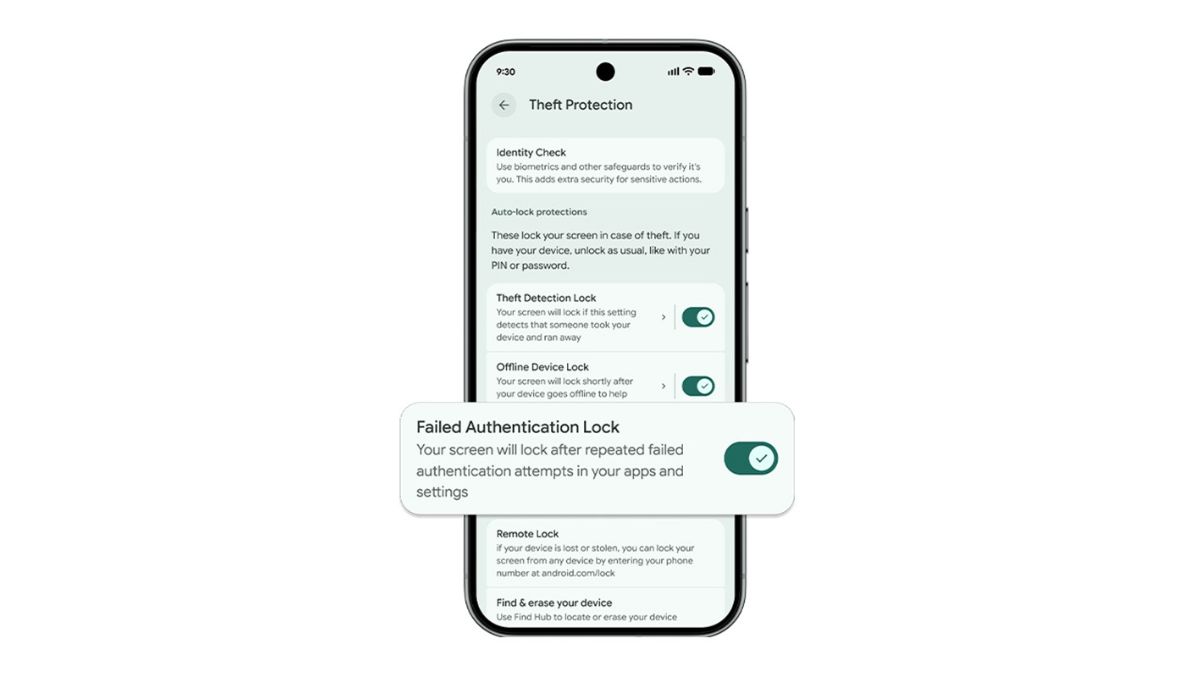
The update brings improvements to how Android device handles repeated failed unlock attempts. Failed Authentication Lock, which was introduced with Android 15, automatically locks the device after multiple incorrect attempts. Google has now added a clear on and off toggle in settings, giving users better control over how this protection works.
Google is also expanding Identity Check, a feature designed to protect sensitive actions when a phone is outside trusted locations. Identity Check requires biometric authentication for actions such as changing security settings or accessing saved passwords. Earlier this year, the feature was limited in scope, but it has now been extended to cover all apps and features that use the Android Biometric Prompt. This means third-party banking apps and Google Password Manager now receive the same level of protection.
To prevent screen lock guessing, Android is increasing lockout times after repeated failed PIN, pattern, or password attempts. This makes it harder for someone to brute-force access to a stolen phone. At the same time, Android will no longer count repeated identical wrong attempts toward the retry limit, reducing the risk of accidental lockouts for genuine users.
Google is also improving device recovery features. Remote Lock, which allows users to lock a lost phone from any web browser using android.com/lock, is getting an extra layer of security. Users can now add an optional security question or challenge to ensure that only the device owner can trigger a remote lock.
In Brazil, Google is taking an extra step by enabling theft protection features by default on new Android devices. Theft Detection Lock uses on-device AI to detect snatch-and-run theft patterns and automatically locks the screen when suspicious activity is detected. Remote Lock will also work without prior setup, making it easier for users to secure their devices quickly.
The new protections are rolling out in stages. Devices running Android 16 and above will receive expanded authentication safeguards, including stronger Identity Check coverage and improved lockout protection. Devices running Android 10 and above will get the updated Remote Lock tools. Default-on theft protection features will apply to new Android device activations in Brazil.