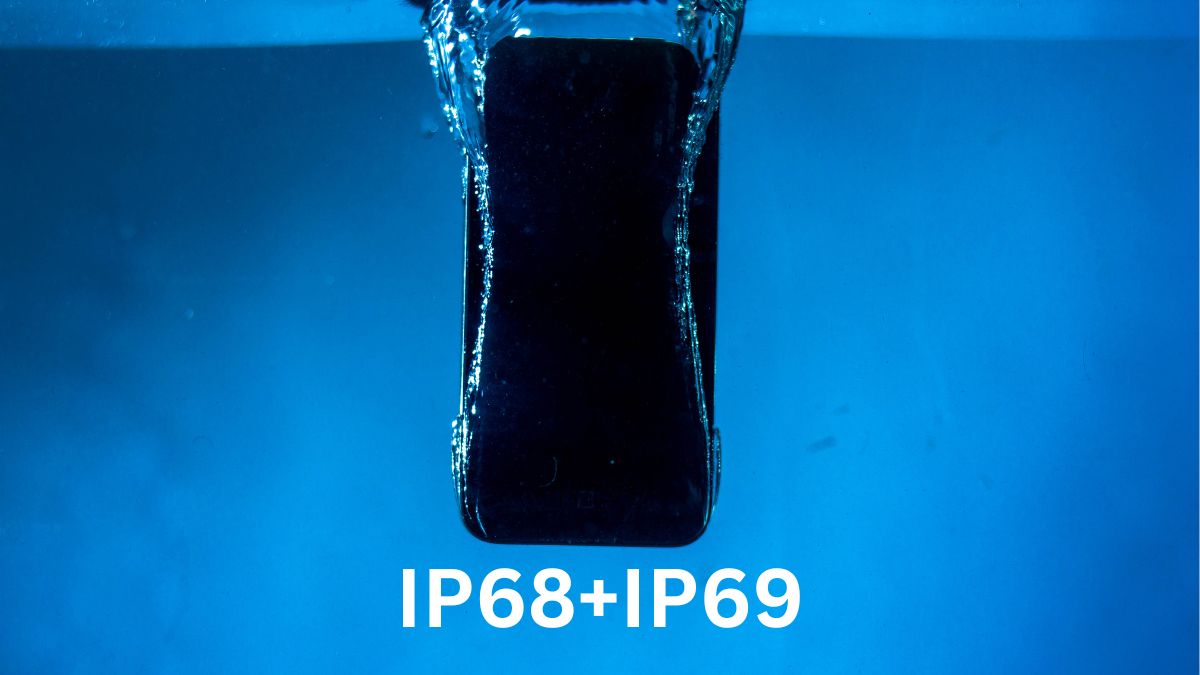

In recent months, more smartphones have been released with IP68+IP69 ratings. This can be confusing for consumers, as companies typically specify just one IP rating. So, why are some manufacturers now listing both IP68 and IP69? The reason lies in the process of assigning IP ratings to devices.
While I have already explained IP ratings in a detailed article, this one focuses specifically on IP68 and IP69 to clarify why companies mention both.
Also read: What is an IP54 Rating
Understanding IP Ratings
IP ratings follow the format IPXX, where:
- The first digit (X) indicates the level of protection against solid particles like dust.
- The second digit (X) indicates the level of protection against water and moisture.
The higher the value of each digit, the better the protection. For example:
- A device with an IP68 rating provides better water resistance than an IP67 device.
- IP67 devices can be submerged in water up to 3 feet (1 meter) for 30 minutes.
- IP68 devices can survive immersion in water deeper than 3 feet, often specified by the manufacturer.
However, things change with IP69. IP68 and IP69 address different aspects of water protection rather than forming a strict hierarchy. Let’s understand IP69.
How IP69 Differs from IP68
While IP68 ensures protection against immersion in water, IP69 addresses a different aspect of water exposure. IP69 protects devices against high-pressure and high-temperature water jets, making it essential for rugged or industrial environments.
This difference is why IP68 and IP69 do not follow a strict hierarchy. Neither rating is better than the other because they are designed to handle different conditions
IP68 vs. IP69
| Feature | IP68 | IP69 |
|---|---|---|
| Water Protection | Immersion in water at a specific depth | High-pressure, high-temperature water jets |
| Best Use Cases | Swimming, diving, or prolonged water exposure | Industrial cleaning, pressure washing, or outdoor use |
| Dust Protection | Both are completely dust-tight | Both are completely dust-tight |
Why Devices Are Labeled as IP68+IP69
A device with IP69 protection might survive high-pressure jets but may not necessarily handle prolonged underwater immersion. Similarly, a device rated IP68 is protected in underwater conditions but may not withstand high-pressure cleaning.
By specifying IP68+IP69, companies indicate that their devices:
- Support underwater activities (IP68).
- Withstand industrial cleaning and pressure washing (IP69).
This dual certification demonstrates that the device is capable of handling both everyday water exposure and demanding industrial environments.
Wrap Up
IP68 and IP69 address different challenges in water protection, so they complement rather than replace each other. A device with IP68+IP69 certification ensures comprehensive durability. It offers both immersion resistance and resilience against high-pressure jets. Understanding this distinction makes it clear why smartphone brands are mentioning both IP68 and IP69 ratings in their products.