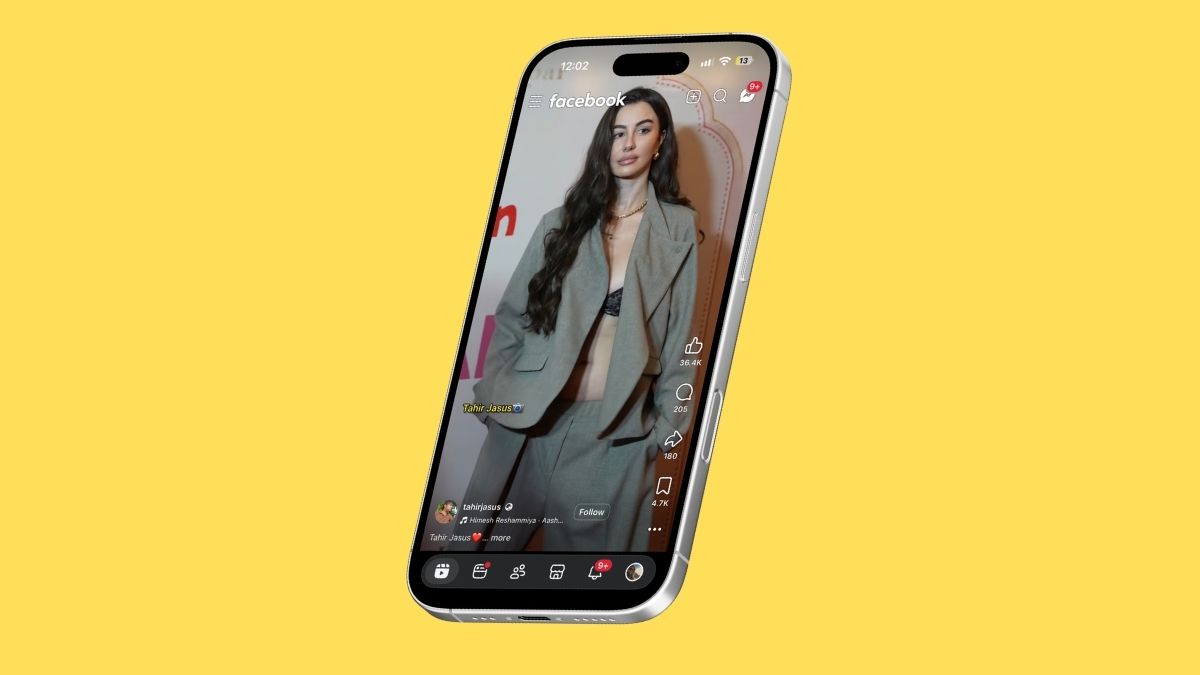

Facebook is testing a new video-first experience in India that could change what some users see when they open the app. Instead of opening directly to the traditional Facebook Feed, some users will now be taken to a full-screen video experience. The test is designed for people who Facebook believes want to see more video content and will give them a more visual way to discover videos, creators and conversations on the platform.
This does not mean Facebook is replacing the traditional Feed for everyone. Meta says the new experience is being tested with a subset of users, and people will have the option to switch back to a Feed-first experience if they prefer it. Classic Feed will also remain available as a second tab. The India test is part of Facebook’s broader push to make video a bigger part of the platform as the company tries to adapt to the way people increasingly consume content on social media.
Meta announced the broader plan in July in a post by Tom Allison, Head of Facebook. The company called the feature “Immersive Video” and said it would begin testing a redesigned experience that puts people who want more video into full-screen video as soon as they open the app. Meta said the test would begin internationally in video-heavy countries, with the company exploring a US rollout next year. The company is now testing this experience in India.
The change is interesting because Facebook already has Reels and a dedicated video experience. What is different this time is that Meta is experimenting with making video the starting point of the entire Facebook experience for some users. Instead of opening the app to a mixed Feed containing posts from friends, Groups, pages and videos, these users will immediately see full-screen video and can continue watching through a more immersive interface.
Facebook says the decision is based on how people are using the platform. In its announcement, Meta said users are showing a growing interest in immersive, visual and video-forward experiences. The company also sees video becoming a place where conversations happen, communities form and even commerce takes place. That is a significant change from the way Facebook was originally designed, where the News Feed was primarily about keeping up with friends, family and pages.
India is a logical market for this experiment. Short-form video has become a major part of internet usage in the country, and Meta has been pushing Reels heavily across its platforms. Meta said earlier this year that 97% of surveyed users in India watch video on its platforms every day, while 89% of surveyed Gen Z users in India engage with Reels daily. These figures come from Meta-commissioned research conducted by Ipsos, so they should not be treated as a measurement of the entire Indian internet population, but they still show why India is an important market for Meta’s video strategy.
The company has already experimented with similar changes on Instagram. In 2025, Instagram tested a Reels-first experience for a limited group of users in India, where the app opened directly into Reels for some people. Facebook’s current experiment is not exactly the same, but the direction is similar. Meta is testing whether users who already spend a significant amount of time watching video would prefer to start their session with video instead of the traditional Feed.
There is also a bigger reason why this matters. Social media platforms are increasingly competing for attention through recommendation systems rather than simply showing users content from the people and pages they follow. A traditional Facebook Feed requires users to scroll through different types of posts, while a full-screen video feed can continuously recommend content based on what a person watches, skips, likes or shares. If Facebook can show an interesting video immediately after the app opens, it has a better chance of keeping that user engaged for longer.
This is where the experiment could become strategically important for Facebook. The company is not simply adding another video feature. It is testing whether video can become the primary entry point for people who already show a strong preference for it. If the test results in longer sessions and higher engagement, Meta could eventually expand the experience to more users or make it a more prominent part of Facebook.
However, Facebook is clearly aware that not everyone uses the platform for entertainment. Many people still open Facebook to check posts from friends and family, participate in Groups, browse Marketplace or follow local communities and pages. For those users, opening directly into a stream of videos could make the app feel less useful. That is probably why Meta is keeping the traditional Feed available and allowing people in the test to opt out of the video-first experience.
The test could also have a significant impact on creators. If video becomes the first thing some users see when they open Facebook, creators could get more opportunities to reach audiences without users having to actively navigate to Reels. It could also encourage more creators to focus on short-form video for Facebook, especially if the recommendation system starts giving more visibility to video content.
Meta is already building more tools around this strategy. In its July announcement, the company said Facebook Creator Studio is returning as a dedicated app, while creators can also use Creator Assistant to brainstorm content ideas, understand performance and get personalized guidance. Meta is also improving recommendations across Feed, Video, Search and other parts of Facebook. Taken together, these changes suggest that the company is trying to make Facebook more recommendation-driven rather than simply adding another video section to the existing app.
That could eventually change the role of the traditional Facebook Feed. For years, the Feed was the central part of the platform because it connected users with people and pages they had chosen to follow. Recommendation algorithms have gradually changed that model by introducing content from accounts users may not follow. A video-first experience takes this approach even further by allowing Facebook to decide what users should see immediately after they open the app.
It is still too early to say whether this will become the default Facebook experience. The current rollout is only a test, and Meta has deliberately kept the traditional Feed available. The company will likely look at how long users watch videos, how often they switch back to the Feed, whether they continue using other Facebook features and whether the new experience improves overall engagement.
For users in India, the change may simply appear as a different opening screen when they launch Facebook. But the experiment could tell us a lot about the direction of the platform. Facebook is no longer treating video as just another type of post inside the Feed. For users who consume a lot of video, Meta is now considering making it the first thing they see.
If the experiment performs well, the traditional Facebook experience could gradually become less central, while video and algorithmic recommendations take a much bigger role. Meta is not saying that this is happening yet, but by testing a video-first Facebook experience in India, it is clearly exploring what the platform could look like when watching content becomes just as important as connecting with people.