
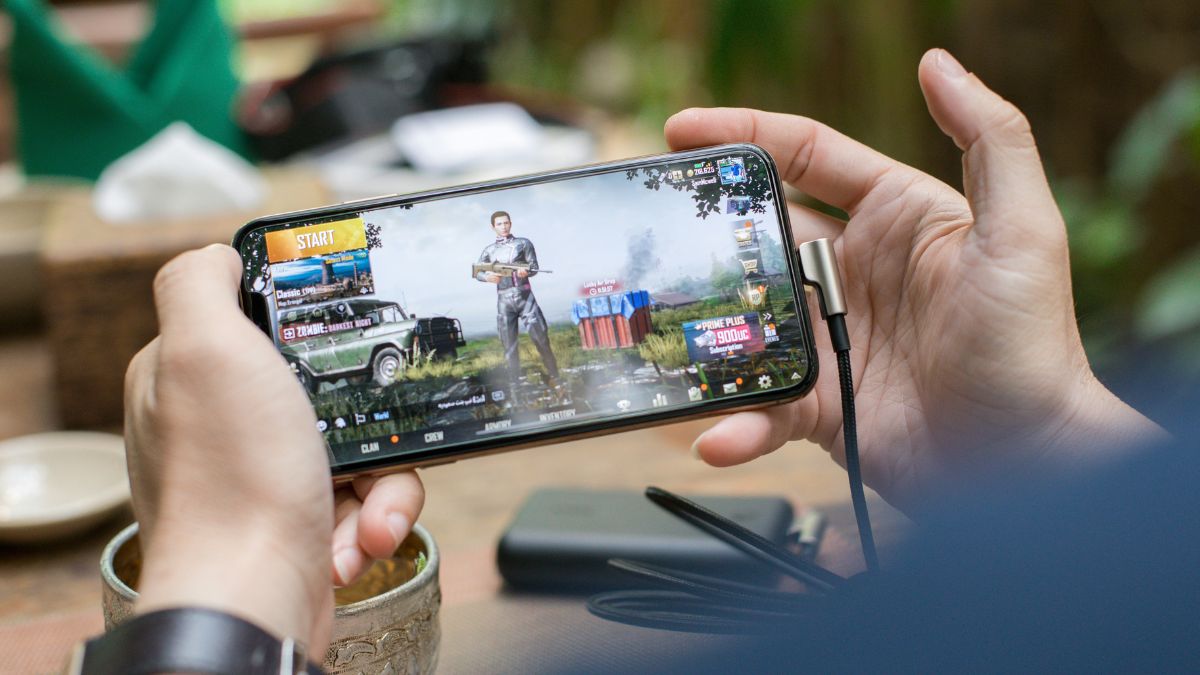

I did not expect the word “Lite” to become interesting again in mobile gaming.
A few years ago, Lite versions of apps and games were mostly seen as something made for affordable phones. Facebook and Google were among the companies that used Lite versions of their apps to make them work better on entry-level devices. They were useful, but they were hardly exciting. Smartphones were getting faster every year, storage was becoming cheaper, and upgrading to a better phone was usually the easier solution. This was especially true for gamers. If a game did not run smoothly, you could simply move to a better phone. And that upgrade did not always cost a fortune because even mid-range phones were getting surprisingly good at gaming.
That is becoming harder to do now. Smartphone prices have gone up sharply over the past year, and we are seeing price increases even weeks after some phones launch. At the same time, it is becoming harder to find an affordable phone that delivers the kind of gaming performance we could get at the same price a few years ago. The hardware is getting better, but the cost of getting that hardware is also going up.
That makes the return of Lite versions more interesting.
KRAFTON has now announced PUBG MOBILE LIGHT, a new app that promises a lighter way to play PUBG MOBILE. Pre-registration starts on August 25, with the game expected to launch later this year. Around the same time, KRAFTON India also confirmed BGMI Lite, which is scheduled to launch in India by the end of 2026.
These may look like two simple game announcements, but I think they say something much bigger about where mobile gaming is heading.
Mobile games are getting bigger at a time when smartphones are getting more expensive.
So, you can understand that the two separate announcements are trying to solve the same problem. That is why I think the timing of these two Lite games is much more important than it initially looks.
I remember when 4GB of RAM was considered enough for almost everything on a smartphone. Gaming phones were still a niche product, and most people were not buying a phone specifically for gaming. If you had a reasonably good mid-range phone, you could play popular games without thinking too much about hardware.
But smartphones did not stay at that level. The interesting part of the last few years is that affordable phones actually managed to keep up with the growing demands of mobile games. We saw phones with 6GB RAM become common in the ₹10,000 to ₹15,000 price range, while processors in this segment became much more capable. Displays also improved quickly. High refresh rate screens moved from expensive flagships to affordable phones, and better GPUs made games like PUBG Mobile, Call of Duty Mobile and Free Fire much more enjoyable on mid-range devices.
So, even though mobile games were becoming bigger and more demanding, the hardware was improving at the same time. You did not necessarily need a flagship phone to get a good gaming experience. A decent mid-range phone was often enough.
The flagship segment, meanwhile, was pushing mobile gaming in a completely different direction. Gaming phones started adding features that had very little to do with simply having a faster processor. Physical shoulder triggers, extremely high touch sampling rates, high refresh rate displays, advanced cooling systems and bypass charging became part of the gaming phone experience. Some companies even offered external cooling fans to keep temperatures under control during long gaming sessions.
That was an important period for mobile gaming because the industry was not just making phones faster. It was building phones specifically around the way people played games.
And games kept getting bigger too.
PUBG MOBILE is a good example. What started as a relatively straightforward battle royale game has grown into a much larger platform with multiple maps, game modes, events, collaborations, cosmetic items and a constant stream of downloadable content. The same pattern can be seen across other major mobile games. Developers have moved from releasing a game and occasionally adding new content to running games as live services that are updated throughout the year.
For a while, both sides benefited from this cycle. Games became more ambitious, while smartphones became powerful enough to run them. Even users buying affordable phones could get a surprisingly good gaming experience.
But there is a limit to this model.
A faster processor does not solve everything. Games also need storage, and modern games can become extremely large after players download additional maps, textures, resources and updates. You can have a phone that is powerful enough to run a game smoothly and still decide not to install it because you do not want it consuming a large part of your storage.
I have run into this myself. Even when using phones with plenty of storage, I have removed games that I was not playing regularly simply because they were taking up several gigabytes. It sounds like a small problem, but when several large games, photos, videos and apps compete for the same storage, it starts affecting how you use the phone.
And this is where the current situation becomes different from a few years ago.
Smartphone prices in India are under pressure because memory and other component costs have increased. India’s overall smartphone shipments fell 4.1% year over year in Q1 2026, while the sub-₹10,000 segment suffered a much sharper decline. IDC data reported showed that the entry-level segment fell 59% year over year in the quarter, with its share of the market dropping from 18% to 8%.
There is another strange development. Entry-level 5G phones, which were supposed to make 5G accessible to almost everyone, are becoming harder to sell at very low prices because of rising component costs. Some manufacturers are looking at 4G again because it is easier to keep those phones affordable.
Think about what that means for gaming.
The game developers are moving forward. The hardware market at the affordable end is struggling to keep up.
A player who would normally replace a three-year-old phone with a new ₹15,000 or ₹18,000 model may now have to spend more for a meaningful upgrade. And if that player primarily uses the phone for social media, video, messaging and gaming, there may not be enough reason to spend around ₹30,000 just to get better gaming performance.
This is exactly the kind of gap a Lite game can fill.
KRAFTON may have realized that asking everyone to upgrade is not enough. If someone cannot run BGMI properly on their phone, KRAFTON does not really benefit from that person buying a different phone. The money goes to the smartphone manufacturer. But if KRAFTON can make BGMI work well on more devices, that player can remain inside the BGMI ecosystem. That player can play matches, buy cosmetics, use the battle pass, and continue spending time inside the game.
From KRAFTON’s point of view, this is much more useful than waiting for gamers to upgrade their phone.
The company says BGMI Lite is intended to expand access to the BGMI ecosystem across a wider range of hardware. It has not yet revealed the exact specifications, download size or gameplay differences, so we should not assume that it will simply be a smaller version of the current BGMI.
But the objective is clear. Get more people playing.
PUBG MOBILE LIGHT appears to have the same philosophy on a global level. The developers have talked about making the experience lighter, reducing storage requirements and making it easier to enter the game.
This is also why I don’t think Lite is only for cheap phones. And I don’t think it would be fair to call these games “budget phone versions” because some people may think so. And this would surely miss an important part of the story.
Storage is a problem for everyone.
You can spend ₹80,000 on a phone and still run out of storage because modern apps, photos, videos and games keep getting larger. Many flagship phones also start with storage configurations that sound large until you actually start using them.
A smaller game is therefore useful even if the phone has a powerful processor.
A huge game takes longer to download. Large updates consume more data. If the game can give players the basic experience first and let them download additional content when required, it becomes easier to install and maintain.
This matters even more in a country like India, where mobile gaming has grown around smartphones rather than dedicated gaming hardware.
A Lite game can therefore be about convenience, not just performance.
But we have seen the Lite experiment fail before. This is the reason I would be careful about getting too excited.
KRAFTON already had PUBG MOBILE LITE. It was created for lower-end devices and offered a smaller version of the PUBG experience. But it did not become a permanent replacement for the main game. It was also a more separate experience, which meant players using the Lite version were not simply part of the same game as everyone else.
That is an important lesson for the company.
A Lite game cannot just be smaller. It needs to solve the problems created by being smaller. If Lite players are placed into a completely separate ecosystem, there may not be enough players for good matchmaking. If the game does not get the same updates, players may feel that they are getting an inferior product. If too many features are removed, people may simply prefer the full version.
And there is another problem.
If the Lite version becomes successful and developers keep adding content to it, it can eventually become the exact thing it was designed to avoid.
A lightweight game can slowly become a heavy game. And I am not making this up. We have seen this happen with apps as well.
Now the biggest question is how much KRAFTON will remove, and I am curious to know about it
KRAFTON needs to decide what can be removed without damaging the experience.
Does it reduce texture quality? Does it reduce the number of downloadable maps? Does it remove certain modes? Does it reduce visual effects? Does it limit the number of players? Does it use lower-quality assets but keep the same gameplay?
These decisions will determine whether Lite feels like a smart optimization or simply a cut-down version.
For BGMI Lite, we currently do not have those answers. KRAFTON has only confirmed the launch window and its broader accessibility goal.
That is why I would not believe every “BGMI Lite APK” or leaked system requirement circulating online right now. There is no official BGMI Lite pre-registration or downloadable build yet.
It could actually be good for smartphone buyers.
If games like BGMI Lite and PUBG MOBILE LIGHT work well, they could reduce the pressure on consumers to buy expensive phones purely for gaming.
A person should not have to buy a ₹30,000 phone because the game they want to play has decided that a budget phone is no longer good enough.
Of course, there will always be a difference between a ₹20,000 phone and a flagship. I am not suggesting that software optimization can magically remove that gap. But there is a big difference between saying, “This phone cannot deliver the same graphics as a flagship” and saying, “This phone cannot run the game at all.”
Lite versions can help move the industry toward the first situation. They could also make older phones useful for longer. If a three-year-old phone can run a properly optimized version of BGMI, its owner has less reason to replace it immediately.
That is better for the consumer and, indirectly, better for reducing electronic waste.
But there is a downside for gamers too.
People with expensive phones get the full experience, and other gamers would get the Lite version. That is fine until the differences become too large.
Imagine a situation where Lite players have fewer maps, fewer events, lower graphics, and delayed updates. They may technically be playing the same game, but the experience could feel very different.
There is also a risk that developers use Lite versions as an excuse to keep pushing the main version toward higher hardware requirements. Instead of optimizing the full game, they could simply say that players with weaker phones should use Lite.
I would not want that to become the industry standard. The better approach would be to keep optimizing the main game while offering Lite as an additional option.
KRAFTON could be starting a bigger trend at the very right time. This is where these announcements become bigger than PUBG and BGMI.
If PUBG MOBILE LIGHT and BGMI Lite succeed, other major mobile games will notice it for sure. There are millions of players who want to play popular games but do not necessarily own gaming phones. A developer can either ignore those players or create a version that works for them.
The second option makes a lot of business sense.
We could eventually see more games offering different versions based on hardware, rather than forcing everyone to download the same huge package.
And I believe this may be the right time to stop chasing hardware.
I have seen the obsession of smartphone companies pushing powerful specs in smartphones. Every generation brings a better processor. More RAM. Faster storage. Higher refresh rates. Better cooling. That is great, but there is a limit to how much consumers are willing to spend.
The current smartphone market is already showing signs of that pressure. Rising memory and component costs are pushing prices higher, while India’s smartphone shipments have come under pressure.
At the same time, gaming companies cannot simply stop making better games. So perhaps the next big improvement should not come from making the hardware faster. It should come from making the software smarter.
That is why I think PUBG Mobile and BGMI are going Lite at exactly the right time. KRAFTON is not necessarily admitting that its games became too demanding. It is recognizing that not every player will keep upgrading their phone just to follow the game.
There are still plenty of questions about how these two versions will work, especially BGMI Lite. But if KRAFTON gets the balance right, Lite could stop being the version you use when you cannot afford a better phone.
It could simply become the smarter way to play.