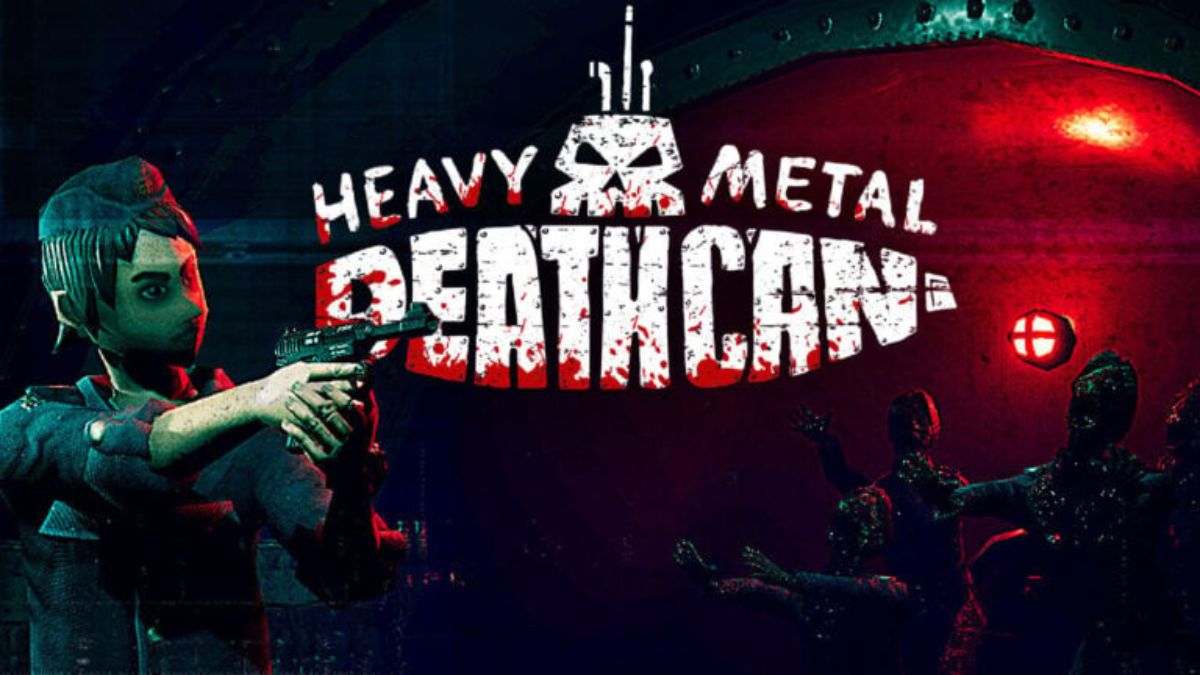

Heavy Metal Death Can is heading to PS5 this fall, giving the unusual survival horror game another chance to find an audience after a quiet PC launch.
Developer Krufs Productions announced the PS5 version on August 24, although it has not revealed an exact release date yet. The game originally launched on PC via Steam on May 28, 2026.
What makes Heavy Metal Death Can interesting is not just its retro presentation. It takes the familiar survival horror formula and puts it inside a Swedish Cold War-era submarine. This creates a setting that is very different from the abandoned mansions, police stations and hospitals usually associated with the genre.
The game is set aboard the HMS Domherren, a Swedish submarine operating in an alternate-history version of the late 1970s. Something has gone terribly wrong. A mysterious substance called Sludge has affected the crew and turned them into zombie-like creatures. Players have to explore the submarine, find survivors and uncover what caused the incident.
The submarine is an important part of the experience. Its narrow corridors and cramped rooms make movement feel dangerous even before the enemies appear.
Krufs Productions also deliberately uses classic survival horror mechanics. There are fixed camera angles, limited ammunition, inventory management and tank controls, although modern control options are available. The game also encourages players to avoid unnecessary fights because ammunition is limited.
That makes Heavy Metal Death Can less like a modern action-horror game and more like a lost survival horror title from the late 1990s.
The visual style follows the same idea. It takes inspiration from PS1-era horror and adventure games but uses modern rendering technology instead of simply reproducing the original low-resolution look.
The interesting thing about Heavy Metal Death Can is the gap between its reception and its reach. The game currently has a Very Positive rating on Steam. Steam lists 64 reviews with 92% positive feedback, while other trackers show the total review count has since crossed 80, with roughly 94% positive reviews.
The reviews also suggest that the game’s core idea works.
GameReactor praised its claustrophobic submarine environments and the way limited resources make players think before engaging enemies. Its review described the game as a successful, if uneven, attempt to recreate the feeling of classic Resident Evil and Silent Hill. It also criticized the slow opening and relatively sparse environments.
The game is also Steam Deck Verified, and supports Windows, macOS and Linux.
Despite the positive reception, Heavy Metal Death Can has struggled to attract players. Techlomedia Gaming records an all-time peak of 27 concurrent players, reached on May 28, the day of its PC launch. It currently has only a handful of players online at a time.
That makes the PS5 release more interesting than it might initially appear. This is not a game that failed because everyone disliked it. The available data points in the opposite direction. The people who played it generally liked it, but very few people appear to have discovered it.
That is a difficult problem for a small indie game. A good Steam rating does not necessarily translate into visibility, especially when a game launches into an extremely crowded PC market.
The PS5 version could help change that. Survival horror has a natural audience on PlayStation, and Heavy Metal Death Can is clearly designed around the kind of experience that works well with a controller and a big-screen setup. Its fixed cameras, slow exploration and resource management are also closer to traditional console survival horror than many modern PC horror games.
The game is unlikely to suddenly become a major hit just because it is coming to PS5. Its deliberately old-school design could still limit its appeal. The slow pace and restrictive combat are part of what makes it interesting, but they could also turn away players looking for a more modern horror experience.
Still, the PC version gives Krufs Productions something useful going into the console launch: proof that the concept works for the people who actually play it.
The challenge now is getting more people to play it.