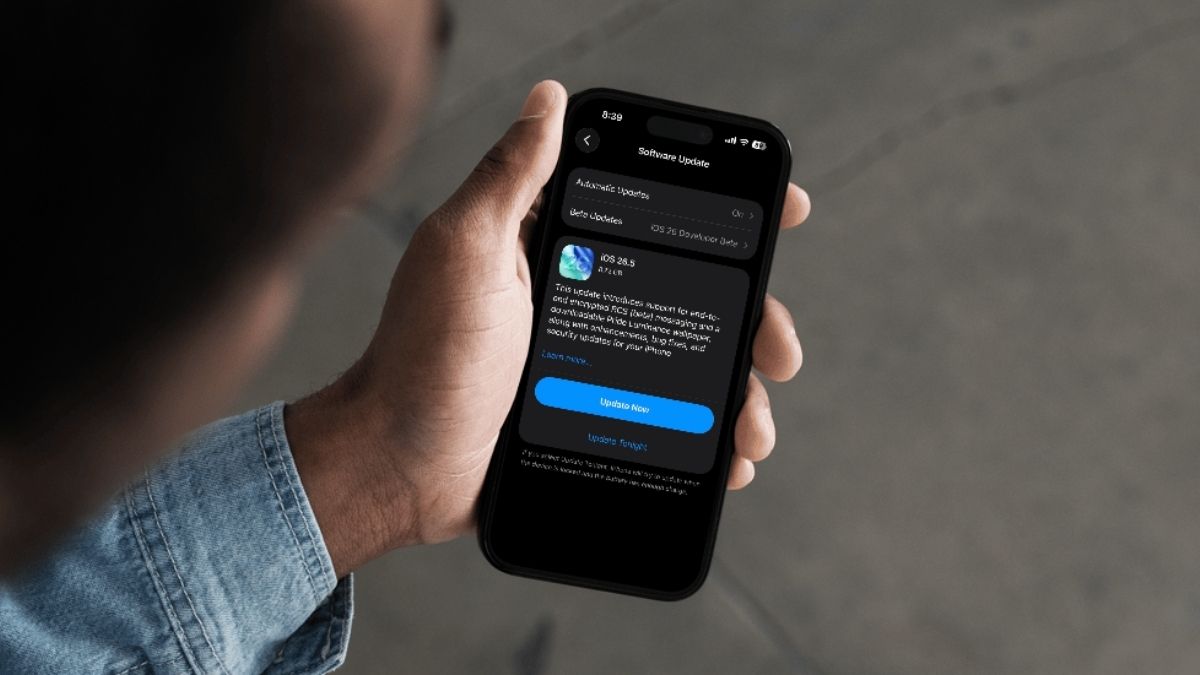

Apple is finally taking a major step toward improving cross-platform messaging security. With the upcoming iOS 26.5 update, the company is set to introduce end-to-end encryption (E2EE) for RCS messages exchanged between iPhone and Android users.
This change has been spotted in the latest iOS 26.5 beta, where Apple has confirmed that “end-to-end encrypted RCS messaging (beta)” will roll out gradually, depending on carrier support. The feature will be enabled by default, which means users will not need to manually turn it on.
For years, messaging between iPhone and Android users has been a weak point in terms of both features and security. While Apple’s iMessage already supports end-to-end encryption, conversations with Android users have relied on older SMS or limited RCS features without full encryption.
Once iOS 26.5 rolls out, iPhone users will start seeing a lock icon in the Messages app when chatting with Android users over encrypted RCS. On the Android side, apps like Google Messages will show similar indicators, just like they do for encrypted chats between Android users.
This creates a more consistent and secure messaging experience across platforms, something users have been waiting for a long time.
Apple introduced RCS support starting with iOS 18, which marked a shift away from traditional SMS. However, the lack of encryption between platforms remained a concern. The foundation for this update comes from the GSM Association, which added support for cross-platform end-to-end encryption in RCS last year. Apple had already hinted that it would bring this feature in a future update, and iOS 26.5 appears to be that moment.
Interestingly, Apple had started testing this feature earlier with iOS 26.4, but chose not to release it at that time. Now, it seems ready for a wider rollout, even if it begins as a beta feature.
End-to-end encryption ensures that only the sender and receiver can read the messages. Not even Apple, Google, or carriers can access the content. This improves privacy, especially for users who frequently communicate across platforms.
Another important detail is that the feature depends on carrier support. So while Apple will enable it by default, availability may vary initially depending on your network.