
Gaming has changed a lot over the years. Not just in graphics or gameplay, but in how we actually get our games. There was a time when buying a game meant true ownership. Today, that is no longer the case. So, it is really important to talk about this.
Era of real game ownership
In the early days, games came on cartridges and cartridges. Later, CDs and DVDs became standard. I still remember blowing into those cartridges before putting them into the console, hoping the game would load properly. A few years later, I started buying gaming magazines just for the free CDs that came with them. I even kept a CD folder filled with game discs collected over time. We just need to install the game and keep playing it forever. Even after Windows reinstallation, we could reinstall the game using the CD.
Then things evolved again. Games started installing on the system, but you still needed the DVD inside the drive to play. Even then, the idea of ownership did not change.
Whether it was on console or PC, once you bought a game, it was yours. You could play it anytime without worrying about servers or logins. There was no need for an internet connection. You could lend it to a friend, resell it, or keep it for years. Even if the company behind the game shut down, your copy still worked without any issue.
The shift to digital ownership
Things started changing in the early 2000s. Platforms like Steam launched in 2003 and slowly brought digital downloads into mainstream gaming.
At first, it felt like a big upgrade. You did not have to manage discs or worry about losing them. Everything was just a download away. But there was a bigger change happening in the background that most people ignored. People thought they were buying the game, but it wasn’t the case.
At that time, very few people paid attention to this difference. It only became clear years later, when gamers started losing access to titles and realised that ownership had quietly changed in a way that did not favor them.
The illusion of ownership
Today, when you buy a digital game, you do not actually own it. Legally, you are only getting a license to play it. This is not just a technical detail or my assumption. It is clearly written in the terms and conditions of almost every platform. Companies have the right to remove access if needed. Even regulators have started acknowledging this. A recent rule in California now requires stores to clearly tell users that they are buying a license, not ownership.
Despite this, most users still treat digital purchases like they own the game. That is where the real problem begins.
When games started disappearing
This problem became more visible when games started disappearing from user libraries, not because they stopped working, but because licensing deals expired or platform agreements changed.
A well-known example is Teenage Mutant Ninja Turtles: Turtles in Time Re-Shelled. It was released only on PlayStation Network and Xbox Live Arcade. When the license expired, the game was completely removed. Since there was no physical version, players who deleted it later could not download it again. It remained in their purchase history, but access was gone.
A similar case happened with OutRun Online Arcade. Due to the end of Ferrari licensing, the game was delisted from all platforms. Users who had not kept it installed lost access, even though the game itself was fully playable.
Another example is Deadpool, which has been removed multiple times from stores like Steam and PlayStation Store due to licensing issues with Marvel. The game kept disappearing and reappearing depending on deals.
Games published by Activision based on Marvel properties, like Spider-Man: Shattered Dimensions and X-Men Origins: Wolverine, were also removed from digital stores after licensing deals expired. These were fully playable single-player games, but are no longer available digitally.
Another important case is Alan Wake, which was temporarily removed from digital stores due to expired music licenses. It later returned after rights were renewed, but it showed how even single-player games can disappear overnight.
More recently, Marvel’s Avengers was removed from stores like Steam, PlayStation Store, and Microsoft Store after licensing agreements ended. While it is still downloadable for now, it shows how quickly availability can change once deals expire.
There have also been cases at the platform level. In 2023, users on Sony platforms were informed that purchased Discovery content could be removed due to licensing changes. The decision was later reversed, but it clearly showed that even paid content in your library is not fully under your control.
These situations make one thing clear. The game does not need to break for you to lose access. If the agreement behind it ends, the platform can simply remove it.
The cloud gaming problem
Cloud gaming has made this situation even more fragile. Services like Google Stadia promised a future where you would not need expensive hardware. Everything would run on the cloud, and you could access your games from anywhere. But when Google shut down Stadia in 2023, the entire platform disappeared. Even though users had paid for games, their access depended completely on the service staying alive. Google did issue refunds, but the issue remained. If the platform goes away, your games go with it.
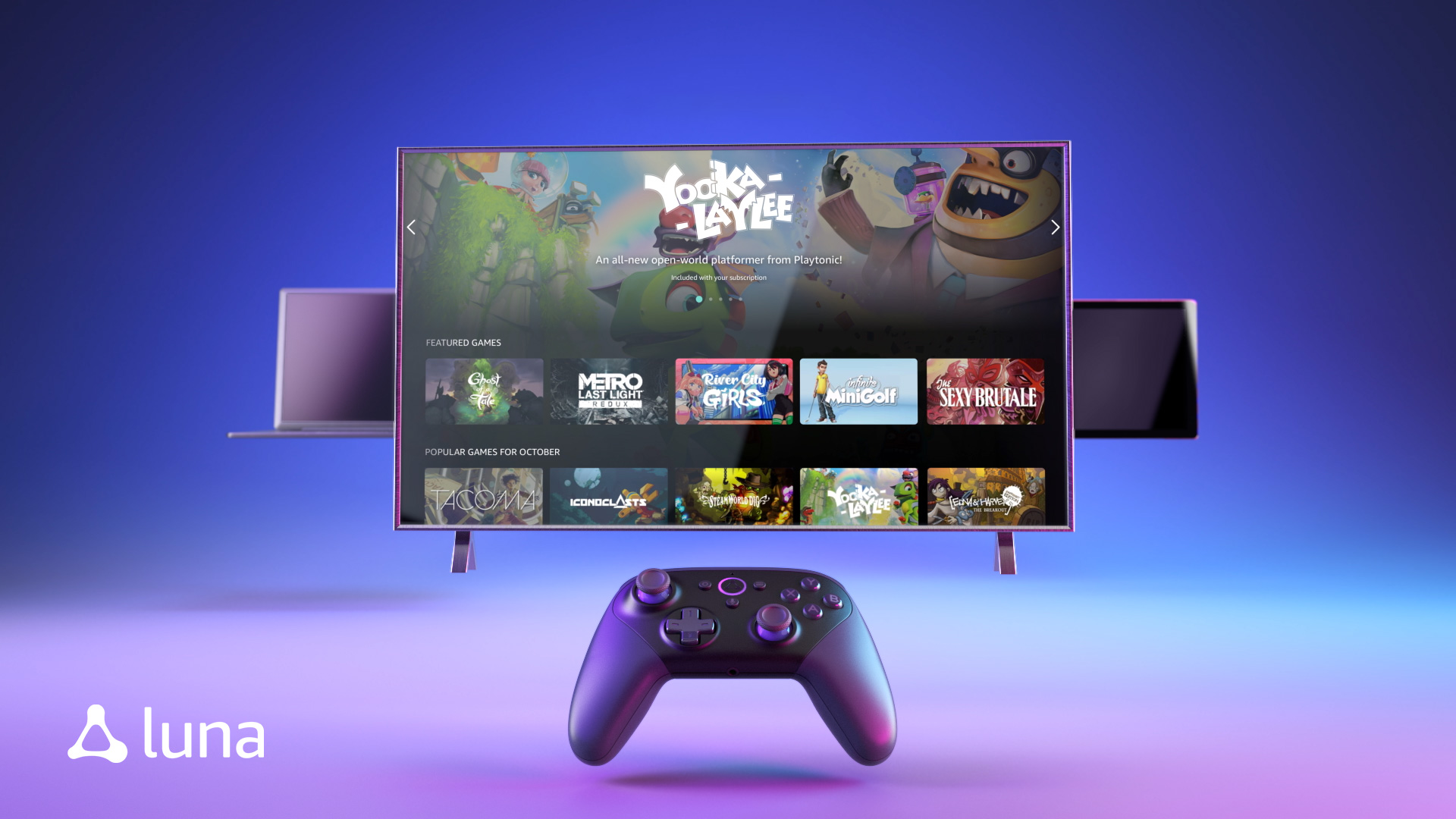
Now we are seeing a similar change with Amazon Luna. Amazon is removing game purchases and third-party subscriptions, and users will lose access to certain titles after June 2026. This is not a shutdown, but it still shows how quickly access can change when the platform changes direction.
Cloud gaming takes control even further away from users. Everything depends on the company running the service. That makes digital ownership feel even more temporary.
This is happening more often now
Initially, there were occasional cases. But now it is happening more often, and this is happening across platforms like Steam, PlayStation Store, and Microsoft Store.
The bigger concern is pricing. Digital games usually cost the same as physical copies. Sometimes they are even more expensive at launch. But the value is not the same. A physical copy gives you games to keep forever. A digital purchase only gives you access, and that access depends on factors outside your control.
How does this affect gamers?
This shift is not just about the ownership, it also affects in another way. Previously, we used to borrow game DVDs from friends to play the game and return them after completing them. But we cannot do this now.
You cannot resell your digital games. You cannot lend them easily. You cannot pass them on in the future. And most importantly, you cannot guarantee that you will always have access to them. Your entire library depends on servers, licenses, and platform policies.
For long-time gamers, this is a clear step back.
Are companies doing anything for this?
Some companies are trying to address the concerns around digital ownership, but the progress is limited. Nintendo, for example, has started offering digital versions of some games at discounted prices compared to physical copies. This is a small but important step. It shows an understanding that a digital purchase does not offer the same long-term value as a physical product.
There are also occasional efforts from platforms to allow re-downloads of previously purchased titles, even after delisting. But these are not guaranteed policies. They depend on licensing agreements and platform decisions, which can change at any time.
Right now, these improvements feel more like exceptions than a clear industry standard. Most platforms still operate in a way where user access depends heavily on backend agreements that are not visible to the buyer.
What game stores should do
If digital distribution is going to remain the main way of buying games, companies need to rethink how they treat ownership. Platforms should clearly explain what users are paying for. Terms like “buy” and “own” should not be used if access can be taken away later.
There should also be better support for offline access. If a game is single-player and does not depend on servers, it should work offline without requiring access to the internet.
Another important step is to allow users to download and preserve their purchases without restrictions. I know this isn’t possible for games that depend on servers, but what about those games that don’t need servers? This is where platforms like GOG stand out. GOG offers DRM-free games, which means once you download the game, you can keep it, back it up, and play it without depending on the store.
This shows that a better model is possible. Pricing also needs to reflect reality. If digital games do not offer the same permanence as physical copies, they should not always cost the same. Nintendo is right to offer discounts on digital purchases.
Most importantly, platforms should ensure that paid games remain accessible for a reasonable period, even after they are removed from sale. Right now, there is no clear guarantee, and that is the biggest concern for gamers.
The reality gamers need to accept
Digital gaming has made access easier than ever. You can buy, download, and start playing within minutes. There is no need to manage discs or worry about storage space. But this convenience comes with trade-offs that are becoming harder to ignore.
When you buy a digital game today, you are not buying a product in the traditional sense. You are paying for access that depends on servers, licenses, and platform policies. As long as those systems are active, your games are available. The moment something changes, that access can be limited or removed.
This does not mean digital gaming is bad. It just means the idea of ownership has changed. And unless platforms take stronger steps to protect user access, that ownership will continue to feel temporary.