
Unlike other electronic devices, the iPhone still uses a lightning port in iPhone and some iPad models. Although the company is being forced to use USB-C, the company is still trying to resist. Apple always sells accessories at a really high price. So, charging cables also cost high. This is the reason people usually think of buying third-party charging cables. If you look at different charging cables available in different online stores, you see some listed with Apple MFi certification. So, what exactly is MFi certification? In this detailed blog post, I will explain MFi certification. I will also explain why MFi certification matters.
What is MFI certification?
MFI stands for “Made for iPhone/iPad/iPod.”
MFI is a certification program created by Apple to ensure that third-party accessories, such as charging cables, are compatible with Apple devices and meet Apple’s quality standards. It ensures that the accessories you purchase for your Apple device are safe to use with your Apple device and will not damage it. MFi also guarantees that the accessories will work properly with your device and won’t cause any compatibility issues.
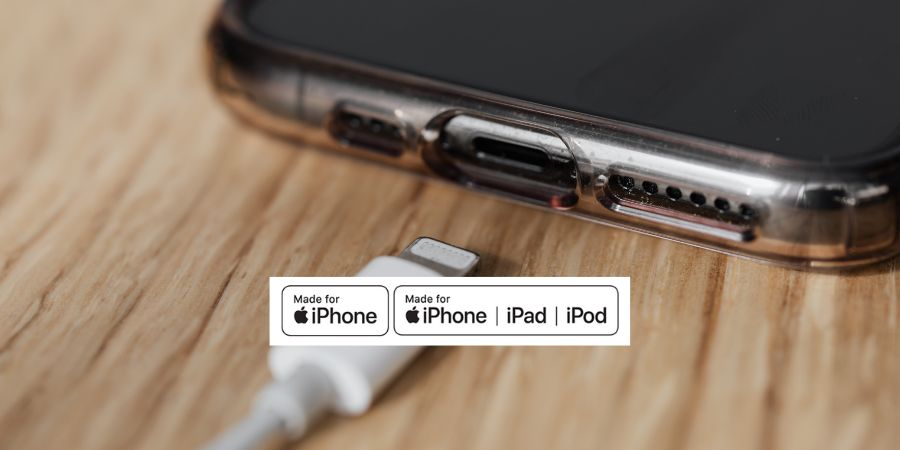
The program involves a rigorous testing process, and companies that meet the requirements are authorized to use the “Made for iPhone/iPad/iPod” logo on their products. When purchasing a charging cable or other accessory for your Apple device, it is always a good idea to look for the MFI certification logo to ensure that you are getting a high-quality, compatible product.
Here’s what the MFI logo on the product box looks like.

This certification initially began with the iPod when Apple launched the Made for iPod program at the Macworld Expo on 11 January 2005. When Apple launched the iPhone, the program name extended to “Made for iPod and Made for iPhone. After the release of the iPad, it became Made for iPod, iPhone, and iPad. In 2010, Apple renamed this program to MFi.
Also see: Best Lightning Cables for iPhone or iPad
What If I Don’t Use An Apple MFi-Certified Product?
If you don’t use an Apple MFi-certified product, there is a risk that the product may not be compatible with your iPhone or other Apple device. Non-certified products may not meet Apple’s quality standards, and they may cause damage to your device or malfunction in some way.
Using a non-certified charging cable could provide slow charging and can also damage the product’s battery. It can void the warranty on your device. If Apple finds that the damage was due to a non-certified accessory, it may also refuse to repair or replace it under warranty.
So, I also recommend people use Apple MFi-certified charging cables and other accessories with their Apple devices to ensure compatibility and prevent any potential damage or warranty issues.
List of companies that provide MFI Certified products
There are several companies that sell MFI-certified products for Apple devices. Any company can opt for MFI certification if they think their product can meet Apple’s quality criteria. Here is a list of some companies that offer MFI-certified products:
- Belkin
- Anker
- Griffin Technology
- Amazon Basics
- Moshi
- Monoprice
- Scosche
- Native Union
- Nomad
- Incipio
MFi stands for “Made for iPhone/iPad/iPod.” MFi certification is Apple’s program that ensures third-party accessories, such as charging cables, are compatible with Apple devices and meet certain quality standards.
Yes, MFi certification matters. MFi certification ensures that the accessory you purchase is safe to use with your Apple device and will not damage it. It also guarantees compatibility.
To get MFi certified, a company needs to apply to Apple’s MFi Program and submit their accessory for testing.
Yes, Apple MFi Chargers are safe. They have undergone rigorous testing and meet Apple’s quality standards.
Yes, Apple MFi certification ensures that the third-party accessory meets Apple’s quality standards and is safe to use with Apple devices.
While it is not required for iPhone chargers to be MFi certified, it is highly recommended to use MFi-certified chargers to ensure compatibility and safety. Using non-certified chargers may cause slow charging, a short circuit, or even damage to the battery.