
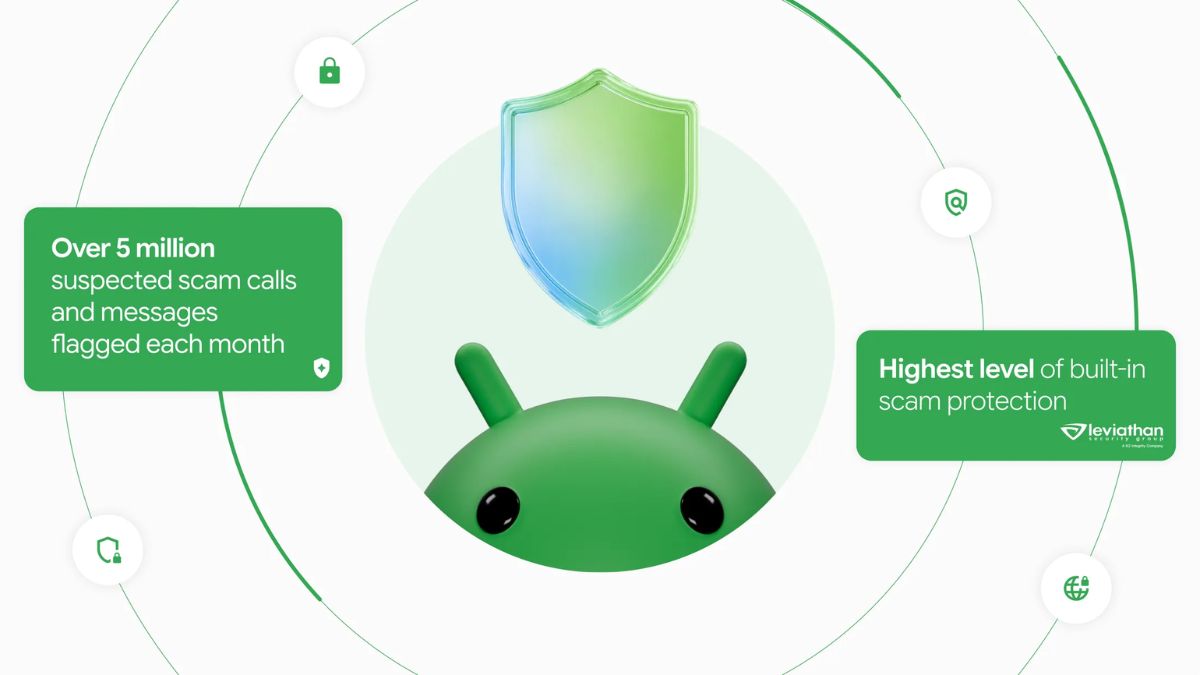

Google is expanding Android’s built-in scam protection with new AI-powered features designed to stop fraudsters from stealing money, passwords, and one-time passwords (OTPs). The update adds stronger scam detection in Google Messages, warnings for suspicious chat messages, automatic privacy protection during screen sharing, and safeguards against call-forwarding scams. Google is also expanding a system that verifies whether calls claiming to come from banks are genuine.
The update comes as mobile scams become harder to identify. Criminals now use fake bank alerts, spoofed phone numbers, phishing websites, and AI-generated voices to make their attempts look legitimate. According to a Google and YouGov survey conducted across the US, Canada, and Australia, 40% of smartphone users said they were very or extremely concerned about mobile fraud. Google also says its existing AI-powered scam detection tools in Phone by Google and Google Messages flag more than five million suspected scam calls and text messages every month.
The most notable is the Enhanced Protection mode in Google Messages. This optional setting will enable stronger scam detection for conversations with unknown senders. Instead of checking individual messages alone, Google’s Gemini models will analyse the context of a conversation to identify scams that develop over several messages. These scams often begin with an ordinary conversation before the sender introduces a fake investment opportunity, payment request, or malicious link.
Google will use its Private AI Compute platform to process these conversations with its cloud-based Gemini models. The company says the information is encrypted and processed in a secure environment that keeps it inaccessible to Google employees. Enhanced Protection is expected to roll out in the coming weeks.
The new mode will also improve protection against phishing links. Google Messages already warns users about links to known malicious websites, but scammers frequently register new domains that are not yet listed in threat databases. With Enhanced Protection enabled, Gemini Nano will combine on-device analysis with real-time web signals to assess unfamiliar links before users open them. Redesigned warnings will also give users more context before they tap links received from numbers that are not saved in their contacts.
Google is extending scam detection beyond its own messaging app, too. Its Scam Detection in chat notifications feature can identify suspicious messages from supported third-party chat apps and display warnings directly in the notification panel. This means users can receive an alert before opening a potentially dangerous message. The feature was previously available on Pixel devices, but Google is working with manufacturers including Samsung’s competitors such as OnePlus, OPPO, Motorola, Xiaomi, realme, and vivo to bring it to hundreds of millions of additional Android users later this year. Availability will depend on the device and manufacturer.
Another important change targets scammers who ask victims to share their phone screens during fake banking or technical support calls. These criminals may guide users through a payment process while watching everything on their screens. Android already hides certain sensitive information in its native apps, and Google is extending this protection to Chrome and Android WebView. During an active screen-sharing session, login fields and payment screens will automatically be hidden to prevent someone watching the screen from seeing passwords, card details, and other sensitive information. The feature is rolling out to devices running Android 15 and newer.
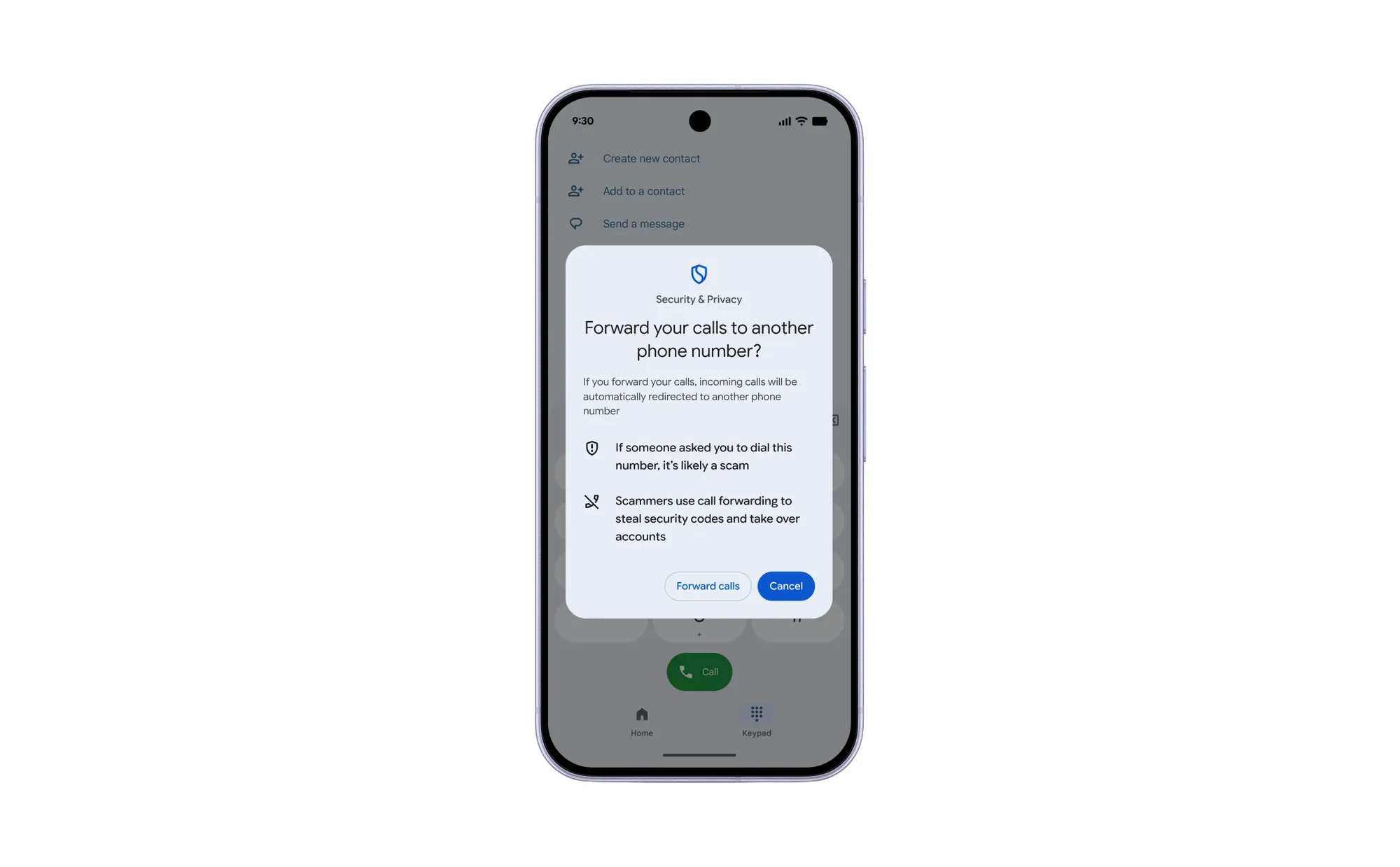
Android is also getting protection against call-forwarding scams. In these attacks, criminals convince victims to enter a special code into the phone dialler, redirecting incoming calls to a number controlled by the attacker. This can help fraudsters intercept verification calls and take over accounts. Android will block apps from silently enabling call forwarding in the background and warn users before manually entered call-forwarding codes take effect. Google says this protection will begin arriving on Pixel and selected other devices in early December.
Google is also expanding its verified financial calls feature, which helps users distinguish genuine bank calls from impersonation attempts. The system works with official banking apps to check whether a bank actually initiated an incoming call. If a caller claims to represent a participating bank but fails verification, Android can automatically end the call and alert the user.
The feature was developed with financial institutions including Banco do Brasil and Itaú Unibanco. Google says Android has blocked more than three million spoofed calls involving these two banks since the feature launched in June. It is also protecting customers of other financial institutions, including Revolut, with plans to add more partners.
Google is using the announcement to highlight an independent assessment of smartphone scam protection conducted by Leviathan Security Group. The cybersecurity firm evaluated four devices: the Google Pixel 11 Pro, Apple iPhone 18 Pro, Samsung Galaxy S26, and Motorola Razr 2026. The assessment, commissioned and funded by Google, found that Android devices offered stronger built-in scam protection than iPhones across several tested features, including proactive call screening, fake-call detection, and Circle to Search threat warnings. The findings apply to the specific devices and default protections tested, rather than every Android phone or every possible scam scenario.
The Google and YouGov survey also covered 4,500 smartphone users in the US, Canada, and Australia. It found that concerns about mobile fraud remain high, while users’ experiences with scam protection varied by device. Google reported that iPhone users in the survey were more likely than Pixel users to say they had fallen victim to a scam or that their device was not effective at protecting them. These are survey findings shared by Google, not proof that every Android phone is safer than every iPhone.
The new features show how Google wants Android to handle scams before users lose money or access to their accounts. Rather than relying only on spam filters and lists of known malicious websites, the company is combining AI analysis, real-time warnings, screen privacy, and call verification to address different stages of a scam. However, these safeguards will not catch every threat, and some features will take time to reach compatible devices.
Users should continue to avoid sharing OTPs, passwords, recovery codes, or banking details with callers and message senders. Even a familiar phone number or a convincing bank alert can be part of a scam. Android’s new protections are designed to add another layer of security, but users still need to be careful when handling unexpected calls, links, and payment requests.
Users can also consider a password manager to improve their account security. Services such as NordPass and Proton Pass help users generate and store unique passwords for different accounts, reducing the risk of attackers accessing multiple accounts if one password is compromised. While these tools cannot prevent every scam, they can make it easier to maintain stronger password security across online services. Users should still avoid sharing OTPs, recovery codes, or other sensitive information with unknown callers and message senders.