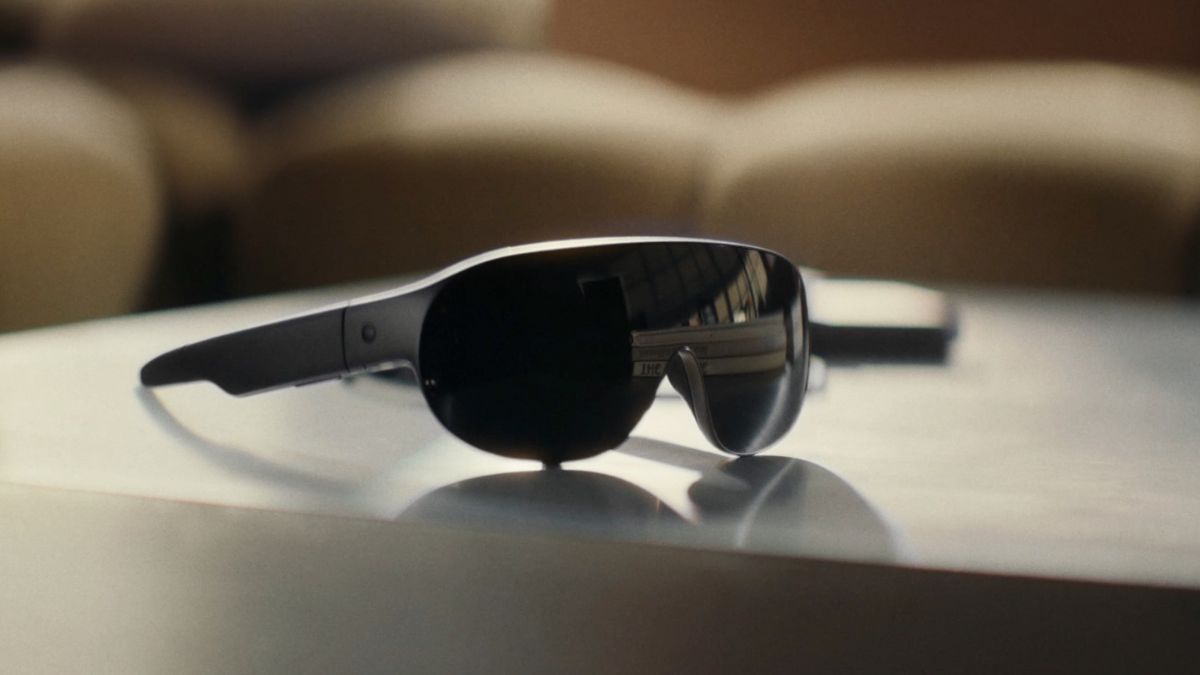

Meta has announced a new pair of VR glasses that aim to bring a full virtual reality experience into a much lighter form factor. Called Meta VR Glasses, the device weighs around 100 grams and uses 5K micro-OLED displays with 37 pixels per degree.
The glasses are connected to a separate computing and battery unit through an optical cable. The external unit handles the processing, storage and battery, which allows Meta to keep most of the weight off the user’s face. Meta says the battery can provide up to three hours of continuous high-resolution media playback.
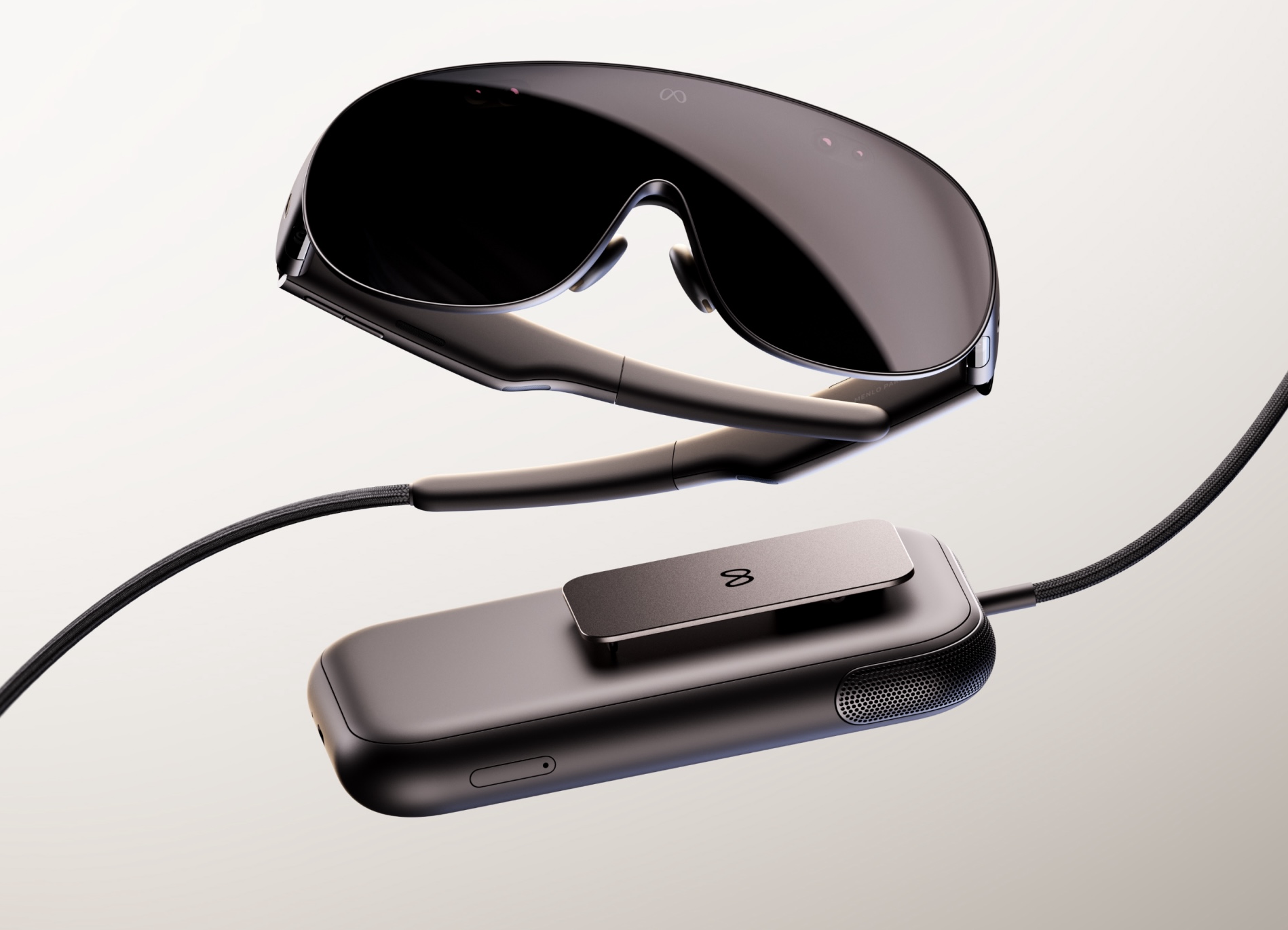
The Meta VR Glasses will launch in spring 2027 with a price of $1,299.99.
The glasses feature Meta’s 5K Infinite Display based on micro-OLED panels. They offer 37 pixels per degree and use compact pancake lenses. Meta has also added Dolby Vision and Dolby Atmos support, along with IMAX Enhanced certification.
Meta has not yet published all the display specifications, including the field of view and other panel details. However, the company is clearly positioning the device around high-quality video and immersive entertainment.
The 100-gram weight is arguably the more interesting part. Meta says the glasses are about five times lighter than the Quest 3 because the processor, battery and storage are moved to the separate computing unit.
Meta is also targeting productivity with the new glasses. The device can create multiple virtual screens and turn a flat surface into a virtual keyboard and touchpad. Users can navigate the interface using their eyes and hand gestures without relying on traditional controllers. Meta has also integrated its AI assistant into the glasses.
The company has not yet provided complete details about the operating system, RAM or storage in its official announcement.
Entertainment is a major part of the Meta VR Glasses experience. Meta has partnered with media companies to bring 3D movies and immersive live content to the platform.

The company says users will be able to watch selected live sports events from a 180-degree perspective. Meta is also preparing more than 75 games that can be played using hand gestures. Xbox Cloud Gaming will provide access to additional games through cloud streaming.
The glasses are also the first VR device to receive IMAX Enhanced certification, giving Meta another selling point for its focus on movies and other video content.
Meta is introducing a feature called Hologram Calling for video calls. It can create a photorealistic digital version of the person you are talking to and place it in your surroundings.
The feature works with calling services including WhatsApp and Zoom. The virtual caller can appear in front of the user with spatial audio, making the conversation feel more like having another person in the same room.
Meta VR Glasses vs Apple Vision Pro
The Meta VR Glasses are clearly entering the same conversation as Apple’s Vision Pro, but the approach is very different. Apple’s current Vision Pro weighs 750 to 800 grams, excluding its 353-gram external battery, while Meta’s glasses themselves weigh around 100 grams. Apple’s headset also starts at $3,499 in the US, compared with $1,299.99 for Meta’s device.
Apple’s Vision Pro also has a much more detailed display specification, with 23 million pixels across its micro-OLED display system, along with eye tracking, hand tracking, and Apple’s visionOS.
Meta is therefore taking a different route. Instead of putting all the computing hardware on the user’s head, it moves the heavier components to a separate unit and keeps the glasses at around 100 grams. The lower price also puts it much closer to the consumer VR market than Apple’s Vision Pro.
The Meta VR Glasses will be available in spring 2027 for $1,299.99. Meta is expected to reveal more details about the hardware, software, and availability before the launch.