
There was a time when buying a budget smartphone meant choosing between a few obvious compromises. You might get a slower processor, a weaker camera, less storage, or a lower-quality display. But at least you could expect the phone to be reasonably easy to hold.
That is becoming harder to say today.
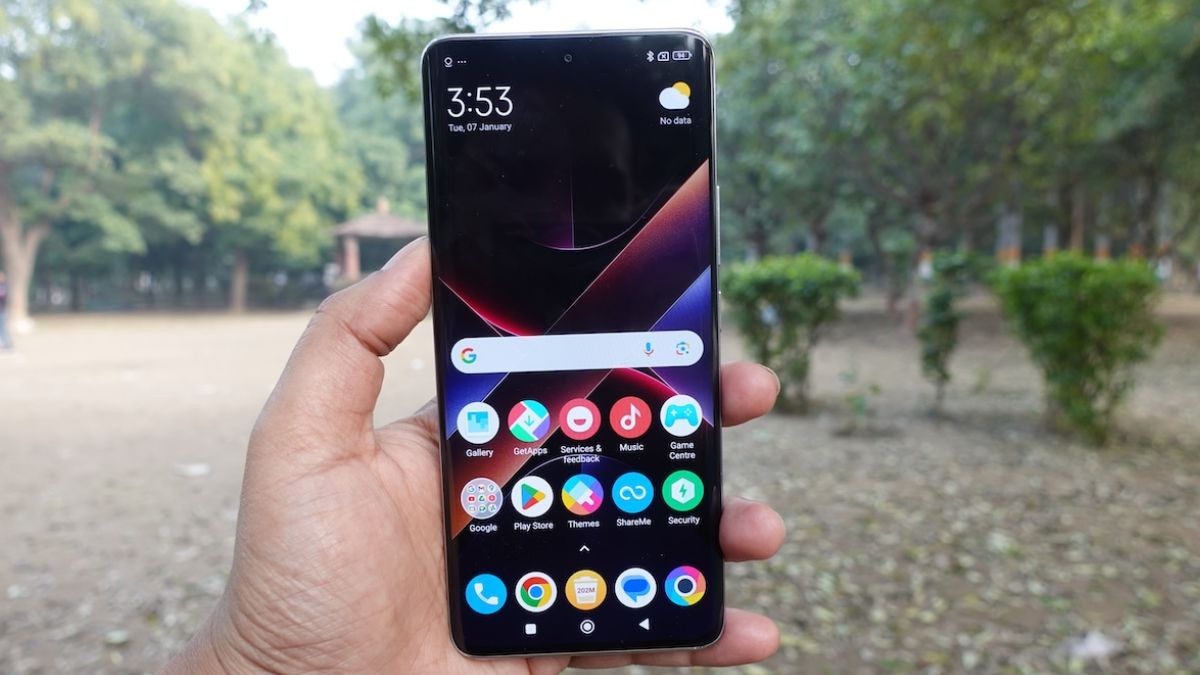
Look at the budget and mid-range smartphone market and one specification appears again and again: a 6.7-inch display. Some phones are now pushing towards 6.8 or even 6.9 inches. Finding a good phone with a 6.1 or 6.3-inch display has become surprisingly difficult, especially if you do not want to spend flagship money.
And I have started noticing this problem in my own daily use.
I switched from an iPhone 11 Pro to the iPhone 17 last year. The iPhone 17 is not an unusually large phone by today’s standards. It has a 6.3-inch display and is much smaller than many Android phones with 6.7-inch screens. Yet I still found it difficult to adjust to the larger size.
That says something about how much smartphone sizes have changed.
The iPhone 11 Pro had a 5.8-inch display and a much more compact body. Moving from that to a 6.3-inch phone does not look like a dramatic change on paper, but you notice it when you use the phone every day. Reaching across the screen takes more effort. One-handed use feels less natural. You become more conscious of how you are holding the phone.
My Android experience tells a similar story, but with an important difference. I moved from the OnePlus 6T to the Motorola Edge 50 Fusion two years ago. The Edge 50 Fusion was also a large phone, but its proportions made it easier for me to handle. It was tall, but the width was still relatively comfortable for my hand. That matters more than the diagonal display size alone.
The problem with many newer phones is that they are not just getting taller. They are getting wider too.
A phone can become taller without becoming dramatically more difficult to grip. But once you keep increasing both dimensions, the ergonomics change. Your thumb has to travel farther, your grip becomes less secure, and using the phone with one hand becomes increasingly difficult.
And this is where the smartphone industry seems to have lost sight of a very basic fact: people have hands of different sizes.
There is an obvious reason phone makers keep making bigger phones. A larger screen looks good on a specification sheet. It gives companies an easy way to advertise an upgrade. A 6.7-inch AMOLED display sounds more impressive than a 6.2-inch AMOLED display. It also makes sense for people who spend hours watching videos, playing games, or reading on their phones.
But not everyone uses a phone that way. Some of us still use it primarily as a phone.
We make calls. We reply to WhatsApp messages. We check emails. We use banking apps, maps and UPI. We browse websites, take photographs and occasionally watch YouTube. We do not necessarily need a screen that is almost the size of a small tablet.
We already have televisions for binge-watching. We have laptops and tablets for many other forms of entertainment and work. Yet smartphone design increasingly seems to assume that every user wants the largest possible display they can carry in a pocket.
That assumption is creating a strange situation where people who simply want a comfortable phone have fewer and fewer choices.
I am not asking manufacturers to stop making 6.7-inch phones. There are plenty of people who prefer them. If someone watches movies on their phone, plays games for hours or simply prefers a large display, they should have that option.
The problem is that the opposite option is disappearing. Give us some good 6.2-inch or 6.3-inch phones at sensible prices. And I do not mean a smaller phone with an entry-level processor, an average camera and a bunch of compromises.
Give us a proper mid-range phone in a compact body.
There are still a handful of phones around with a 6.5-inch display, but options for even that are limited to 3-4 models. Once you start looking for a phone with a smaller-than-6.5-inch display, you get nothing.
The market has effectively decided that people who want smaller phones should either pay flagship prices or accept compromises.
One reason this debate gets confused is that we talk about screen size as if the diagonal measurement tells us everything about the physical size of a phone. But it doesn’t.
Width matters. Height matters. Weight matters. Thickness matters. The shape of the frame matters. The position of buttons matters. Even the texture of the back can affect how securely you can hold a phone.
My experience with the OnePlus 6T and Motorola Edge 50 Fusion is a good example. Both were large phones, but the way the dimensions were distributed made a difference. A taller phone with a manageable width can feel much easier to hold than a phone that grows in both directions.
This is why I do not think the argument should simply be “6.7 inches is too big.” The better question is: Can I comfortably control this phone with my hand?
Research into one-handed smartphone use has already highlighted this problem. As screen sizes increase, reaching distant areas of the display with the thumb becomes harder, particularly the upper corners and areas away from the user’s grip. Researchers have explored interface changes specifically to make large-screen phones easier to operate with one hand.
So, the problem is not imaginary, which I am making up out of personal inconvenience. It is a real design challenge created by larger devices.
I see the same issue with my mother. The phone she uses is simply too bulky and too large for her hand. It is not just a matter of getting used to it. The physical size makes the phone uncomfortable to carry and handle.
There is one very simple example that makes the problem obvious. When my mother goes for a walk, she often leaves her phone at home because it is too bulky to carry comfortably. She usually wears a saree, and carrying a large, heavy phone in her hand while walking is simply inconvenient.
Think about that for a moment. A phone is supposed to be one of the most convenient things we own. It is supposed to stay with us because we can easily carry it. Yet the device has become large enough that someone would rather leave it at home while going for a walk than deal with carrying it.
This is exactly where specifications stop telling the whole story.
The phone may have a good display. It may have a large battery. It may have a good camera. It may look impressive on paper. But if the person does not want to carry it because it is too big, none of those specifications matter.
There is another side to this that deserves more attention: what happens when a device is physically difficult to handle.
A study that tested smartphones of different sizes with people having different hand sizes found that both factors affected how participants gripped the phone during one-handed use. Larger phones changed grip patterns, while people with smaller hands were more likely to adopt additional support to keep the device stable. The researchers also found that one-handed use creates greater challenges for comfort and stability than two-handed use.
This is where the problem becomes more than just an inconvenience. If you repeatedly stretch your thumb across a large screen or hold a heavy phone in an awkward position for long periods, you are putting more demand on your hand and wrist. Research on smartphone use has linked prolonged use and awkward hand positions with discomfort involving the thumb, fingers, hand and wrist.
The same applies to posture. A systematic review of smartphone use found increased neck muscle activity and greater head and neck flexion during smartphone use, along with reported discomfort in areas including the neck, shoulders, arms, wrists, hands and thumbs. A 2025 study also found associations between more flexed neck posture and neck discomfort, while some one-handed holding patterns were associated with hand pain.
None of this proves that a large smartphone directly causes a medical condition. How long you use the phone, how you hold it, your posture, and the size of your hand all matter. But if a phone is difficult to grip or reach across, it can encourage awkward positions that become a problem when repeated for hours every day.
That is why smartphone ergonomics deserves more attention. A phone should not be considered comfortable simply because it fits in your pocket. It should also fit comfortably in your hand.
The iPhone 17 Pro Max, with its 6.9-inch display, is a good example of how popular large phones have become. I see people buying it even when they struggle to use the phone comfortably with one hand. They buy it because they want the biggest iPhone, the most expensive model, and everything that comes with owning the top-end device. There is nothing wrong with wanting that. But many of them also know that they are making their hands and posture adjust to the phone rather than the phone fitting naturally into their hands. That makes it a choice based on desire and luxury, not necessarily comfort.
That feels backwards. Technology is supposed to adapt to people. We should not have to constantly adjust our hands, posture, and habits simply because manufacturers decided that bigger looks better.
The smartphone industry has spent years turning specifications into a race. More cameras. More megapixels. More RAM. More storage. Higher refresh rates. Bigger batteries. Bigger displays. Many of these improvements are genuinely useful. But size is different because there is a physical limit to what a person can comfortably hold.
A bigger battery is useful until the phone becomes too heavy. A bigger display is useful until reaching across it becomes difficult. A larger camera system is useful until the phone becomes uncomfortable to grip.
At some point, the specification stops being an upgrade and becomes a trade-off. The problem is that manufacturers rarely present it that way. A 6.7-inch display is marketed as a benefit. The additional width is not. The extra weight is buried in the specifications. The fact that you may need two hands to use the phone is something you discover after buying it.
I do not want every smartphone to become a compact phone. Large phones have their place. If you watch a lot of content, play games, or use your phone as your primary entertainment device, a large screen can be useful.
But the market needs balance. A person should be able to walk into a store and find a good 6.1-inch or 6.3-inch phone without having to spend flagship money. A smaller phone should not automatically mean an inferior phone. Give us the same attention to cameras, performance, battery, and software in a smaller body. More importantly, give us a choice.
A smartphone is something we hold hundreds of times a day. We carry it in our pockets. We use it while walking, sitting, standing and lying in bed. We hand it to our parents. We use it with one hand while doing something else.
That makes comfort a specification too.
The smartphone industry has become very good at making bigger screens. Maybe it is time to get better at making phones that fit the people using them.