
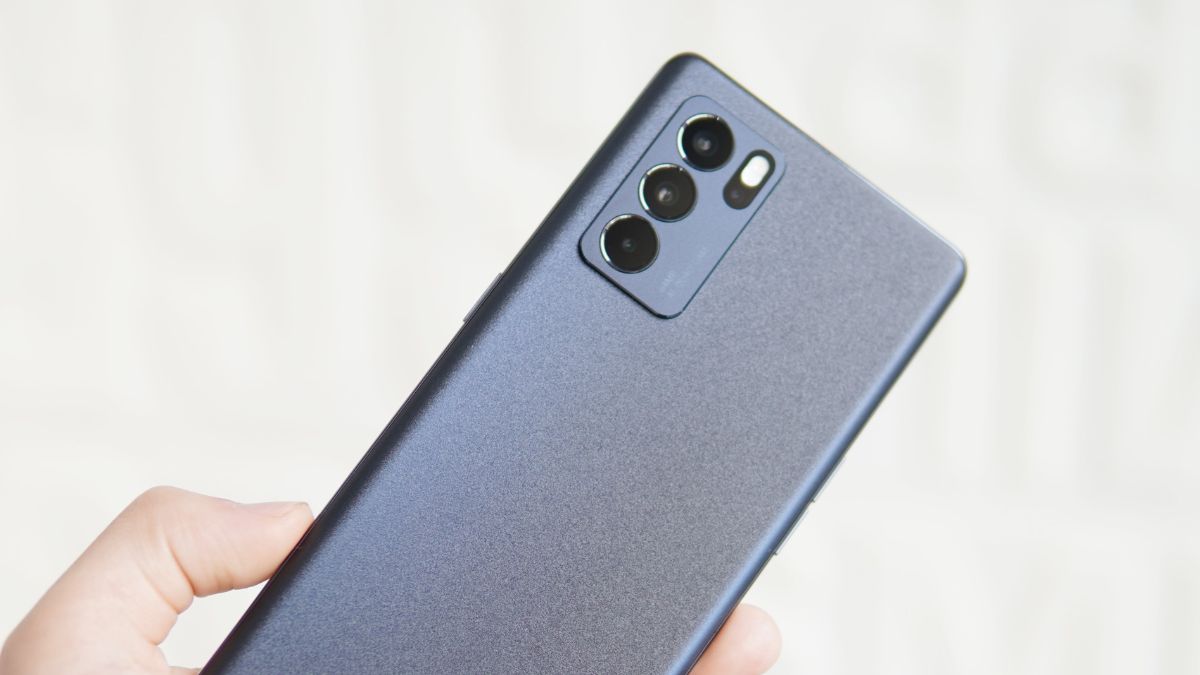

A new Geekbench listing has raised an interesting possibility about the future of flagship smartphone processors. A device identified as the vivo V2573A has appeared on Geekbench with a CPU configuration that matches MediaTek’s Dimensity 9500, but its GPU appears to have 11 cores instead of the 12 cores found on the standard configuration. The device is believed to be the upcoming iQOO Neo 11 Extreme Edition, although its final specifications have not been confirmed.
The listing was spotted running Android 16 and Geekbench 6.7.1, where it recorded 3,445 points in the single-core test and 10,517 points in the multi-core test. The CPU configuration is particularly interesting because there does not appear to be a similar reduction there. The difference is instead found in the GPU, which is listed as an 11-core Mali-G1-Ultra MC11 rather than the 12-core MC12 configuration associated with the Dimensity 9500.
On its own, one Geekbench listing would not be enough to suggest a wider change in MediaTek’s strategy. However, there are already other examples that make the discovery more interesting. MediaTek’s Dimensity 9500s, which is understood to be a reworked or rebranded version of the Dimensity 9400+, has also appeared with different GPU configurations depending on the phone. The Redmi Turbo 5 Max reportedly uses the full 12-core Mali Immortalis-G925 MC12, while the Poco X8 Pro Max has reportedly been listed with the 11-core MC11 configuration.
If these configurations remain unchanged in retail devices, it would mean that phones carrying the same Dimensity 9500s branding could have different GPU resources. That does not necessarily mean they would have dramatically different overall performance, but it would make the processor name alone a less complete description of what is actually inside the phone.
This is where GPU binning becomes interesting.
Modern processors are manufactured as large pieces of silicon containing billions of transistors and many functional blocks. Not every die coming out of a wafer will perform identically. A chip can have one part that does not meet the manufacturer’s requirements while the rest of the silicon works normally. Rather than throwing away the entire die, manufacturers can disable the affected section and sell the chip as a lower configuration.
GPUs are particularly suitable for this approach because they are made up of multiple similar processing units. If one GPU core does not meet the required specifications, it can potentially be disabled while the remaining cores continue to operate. The resulting chip can then be sold as a slightly different configuration.
This has been common in the PC processor and graphics card market for years, but it is more interesting when it starts appearing under smartphone flagship branding. Smartphone SoCs combine the CPU, GPU, NPU, modem, image processing and several other components into a single package, so reducing one part of the chip can create a different product without requiring an entirely different processor design.
The recent examples also raise an important question: are these differences purely the result of defective silicon, or are chipmakers deliberately using different configurations to create new product tiers?
There is not enough evidence yet to answer that question. An 11-core GPU could simply be the result of binning chips where all 12 GPU cores were not suitable for the highest configuration. But if manufacturers consistently use the same reduced configuration in particular devices while keeping the rest of the processor unchanged, it could also become a deliberate way of differentiating products.
Qualcomm has already provided another example of why this possibility deserves attention. The company has introduced a Snapdragon 8 Elite Gen 5 V Series configuration with a reduced Adreno GPU while keeping other major parts of the platform intact. That does not prove that MediaTek and Qualcomm are following exactly the same strategy, but it shows that reducing GPU resources while retaining the rest of a high-end platform is technically and commercially viable.
The reason for doing this is fairly straightforward. CPU performance and AI capabilities are among the easiest specifications to use when marketing a flagship phone. A manufacturer can retain the same high-end CPU architecture, NPU, and other major platform features while making a smaller adjustment to GPU resources. For a phone that is not designed primarily around gaming, the difference could be less important than it would be in a gaming-focused device.
There is also a manufacturing advantage. If a chipmaker can sell more of the silicon produced from each wafer by using different configurations, fewer dies have to be discarded. The same underlying chip design can potentially serve more products, reducing the need to create completely separate silicon for every performance tier. This can make the economics of producing high-end processors more flexible.
However, an 11-core GPU should not automatically be interpreted as an 8.3 percent reduction in real-world GPU performance. One fewer core represents roughly an 8.3 percent difference in core count, but GPU performance does not always scale linearly with the number of cores. Clock speeds, memory bandwidth, cache, thermal limits, drivers, and power limits can all affect the final result. We will need proper graphics benchmarks and retail hardware testing before knowing how much performance separates the configurations.
There is another important detail here. None of this means that consumers are about to see two completely different phones with identical processor names and wildly different performance. The available evidence is still based on Geekbench listings and unofficial information, and the final retail specifications can change. It is also possible that some of these differences are specific to particular devices or silicon batches.
But the early signs are worth watching because they point to a possible change in how smartphone processors are packaged and marketed.
For years, seeing a Snapdragon or Dimensity model number on a phone’s specifications gave buyers a reasonably clear idea of what kind of silicon they were getting. If GPU binning becomes more common, that may no longer be enough. The processor name could identify the platform family while leaving some of the actual hardware configuration to the manufacturer and the particular product.
That would make smartphone specifications a little more complicated, especially for buyers who care about gaming and GPU performance. Reviewers and spec databases may eventually need to record not just the SoC name but also its GPU configuration, clock speeds and other details that can affect performance.
For now, the vivo V2573A listing is only a clue, not proof of a broader industry shift. But the combination of different Dimensity 9500s GPU configurations, the possible 11-core Dimensity 9500 configuration and Qualcomm’s own use of a reduced flagship GPU suggests that GPU binning could become a more important part of smartphone chip design.
If that happens, the next generation of flagship phones may come with a small but important change in the way we think about processors: the same chip name may no longer guarantee exactly the same hardware underneath.
Specifications mentioned in this article are based on Geekbench listings and unofficial device information. Final retail configurations may differ.