

Buying a Windows laptop feels really confusing, while it shouldn’t. If you have ever thought of buying a laptop, you can understand what I am talking about. Not because the technology is complex to understand, but because of the way it is presented to buyers.
Just look at the names.
- Dell Inspiron 15 3530.
- HP Pavilion 14-ek1012TU.
- Lenovo IdeaPad Slim 5 Gen 8.
- ASUS Vivobook 16X M1603QA.
These names do not explain anything useful. One model usually offers many variants with random codes in the name with different processors and performance levels. So, it’s hard for normal consumers to understand what it means. There is no clear way to understand performance, generation, or even positioning. A buyer can easily pick the wrong version without even realizing it.


Companies like Dell, HP, Lenovo, and ASUS have been using such naming systems for years. Each brand has its own logic, but none of them are designed for normal users.
Then comes processor naming, which adds another layer of confusion. Intel has built a hierarchy that many people actually understand at a basic level. Most buyers know that Core i3 is entry-level, i5 is mid-range, and i7 is high-end. But the problem starts after that. Each of these can have multiple variants. For example, Core i5 is no longer just a Core i5. You will see names like i5-1235U, i5-12450H, or i5-13420H. These chips are very different in performance, but the naming does not clearly explain that to a normal user.
The extra letters like U, H, P, or HX define performance categories. U is usually for thin and light laptops with lower power. H is for high performance. HX is even more powerful. But most buyers do not know this.
In some cases, customers often end up buying an older Core i7, thinking it is better because Core i7 is known for the high-end tier. But the newer Core i5 could actually deliver better performance and efficiency.
AMD tried to bring more structure with its newer naming system, but it is still not simple for consumers.
You will see names like Ryzen 5 7530U, Ryzen 5 7640HS, or Ryzen 7 7735HS. These numbers actually follow a logic. The first digit represents the generation, and the other digits define the architecture and segment. For example, a Ryzen 5 7530U is based on an older architecture, while a Ryzen 5 7640HS is much newer and more powerful. Both are called Ryzen 5, but performance is very different. Without knowing the meaning behind the numbers, a buyer cannot tell the difference.
So even though both Intel and AMD have logical naming systems internally, they are not consumer-friendly.
Now, combine this processor confusion with already messy laptop model names, and things become even harder for consumers. A normal consumer does not study detailed specifications. They rely on simple cues like model name, processor label, and price. But when both the laptop name and processor name are unclear, the decision becomes guesswork.
Even reviewers like me cannot fully solve this problem. Most of us usually get access to just one variant of a laptop, and in many cases, it is the top-end model. The exact version that a consumer actually buys is often never reviewed. So even after watching reviews, buyers are still unsure if they are picking the right variant or not.
This clearly shows that there is no proper and reliable guidance system for consumers. While working on this article, I spoke to several people to understand how they choose a laptop. Most of them simply ask someone they trust who knows about tech. Others depend on Amazon filters, ratings, and reviews, which are not always reliable for comparing different configurations.
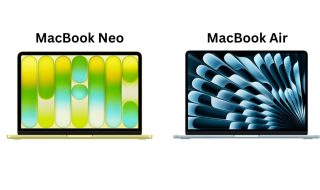
Now compare this with Apple. The company keeps its lineup simple and easy to understand. MacBook Air or MacBook Pro, combined with chip generations like M1, M2, or M3. Even a non-tech user can quickly understand what is newer and what to expect.
Windows laptop makers are offering more options for flexibility, and that is understandable. But they also need to find a way to make things clearer. Too many options without clarity only create confusion.
Right now, laptop brands create multiple variants based on changes in processor, RAM, and storage. These combinations result in many versions with slightly different names. Instead of this, it is time they move towards a more standard approach.
They can keep one clear product name, like they already have. But instead of putting random numbers in variants, they should offer options to choose processor, RAM, and storage, just like we already see in smartphones. This makes things easier to understand and compare, without taking away flexibility.
Laptop brands and chipmakers need to simplify naming so that it reflects real-world performance and positioning. They need to reduce the number of variants and make it easier to differentiate between them.
Because right now, the problem is not the lack of good products.
The problem is that people find it really hard to understand what they are buying.
Also see: