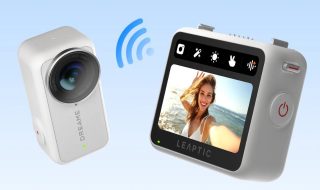

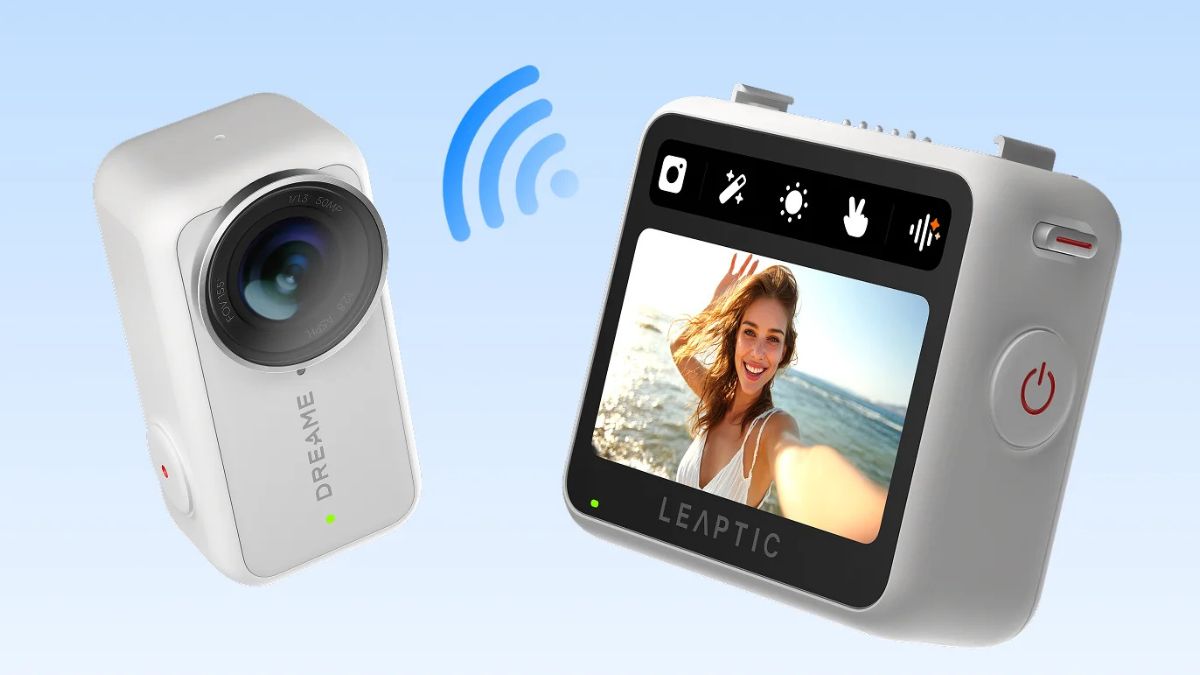

GoPro has long dominated the action camera space, but Dreame is making a bold move into this category with its first camera, the Leaptic Cube. The company, known for robot vacuums and smart home devices, unveiled the camera at CES 2026. It aims to push image quality and AI intelligence further than typical action cameras.
Unlike traditional rugged action cameras, the Leaptic Cube focuses more on sensor size and processing power rather than extreme durability. It is compact and lightweight, designed to prioritize image quality over brute toughness.
- Sensor: 1/1.3-inch CMOS, the largest currently in an action camera
- Lens: Ultra-wide, 155-degree field of view
- Weight and form factor: Small and pocketable
The 1/1.3-inch CMOS sensor is the largest sensor in an action camera today. The bigger sensor helps capture more light. So, it results in better detail, smoother highlights, and richer colours compared to typical tiny sensors in other cameras. The ultra-wide lens covers more scene without fisheye distortion. It is great for adventure shots or immersive action sequences, but still keeps subjects relatively natural.
The camera is lightweight and pocketable, which is ideal if you want a camera that doesn’t get in the way when traveling or filming hands-on activities.
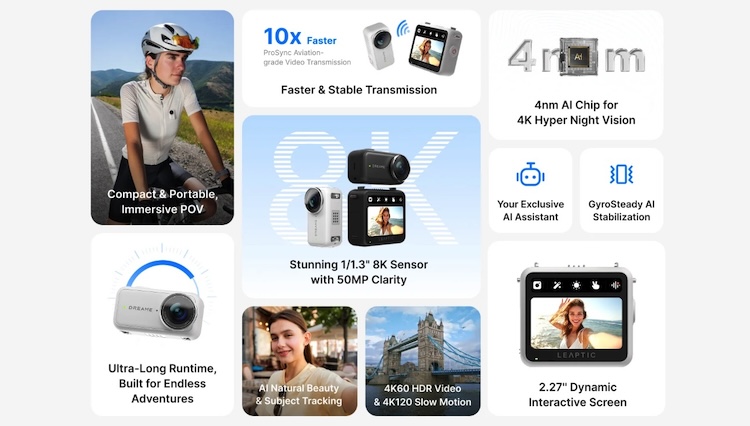
Image and Video Capabilities
The Leaptic Cube wants to go beyond typical action camera specs:
- Video: 8K at 30fps, 4K up to 60fps with HDR
- Photo: 50MP stills with claimed 13.5 stops of dynamic range
- Low-light mode: Dedicated mode for challenging lighting conditions
With 8K video at 30fps, you can crop or reframe shots without losing clarity. It is perfect for cinematic edits later. Where clarity in shadows and highlights matters, you can capture in 4K at 60fps with HDR. It is also really good in photography, offering detailed landscapes and textures with 50MP shots.
The dedicated log-light mode helps retain detail and reduce noise when shooting in evenings or indoor sports.
Also Read: Best Action Cameras
AI Features
The most notable feature of the Leaptic Cube is its AI-powered imaging. It packs a 4nm Qualcomm-based processor that can handle real‑time 8K video capture and complex AI tasks without slowing down. The camera responds to voice commands. You can turn it on, start recording, switch modes, add markers, or change settings simply by speaking. This makes it really comfortable to use in certain situations.
The AI analyzes the scene in real time. It tries to understand the context of the shot. For example, it can balance exposure and focus so faces look clear even in challenging light, or it can prioritize colours and tones based on what is happening in front of the lens.
The camera also uses AI for advanced processing. Instead of applying simple global filters, it adjusts colours, skin tones, dynamic range, and detail at a pixel level. This means the final video or photo can look more natural and well‑balanced without heavy editing on a computer.
These features make it one of the smartest action cameras, capable of assisting creators before, during, and after capture.
Connectivity and Battery
The Leaptic Cube uses Dreame’s NearLink system for stable, long-range connections to a docking station. The NearLink system connects to a docking station with more stable and longer-range control than Bluetooth. This makes monitoring easier during complex shots.
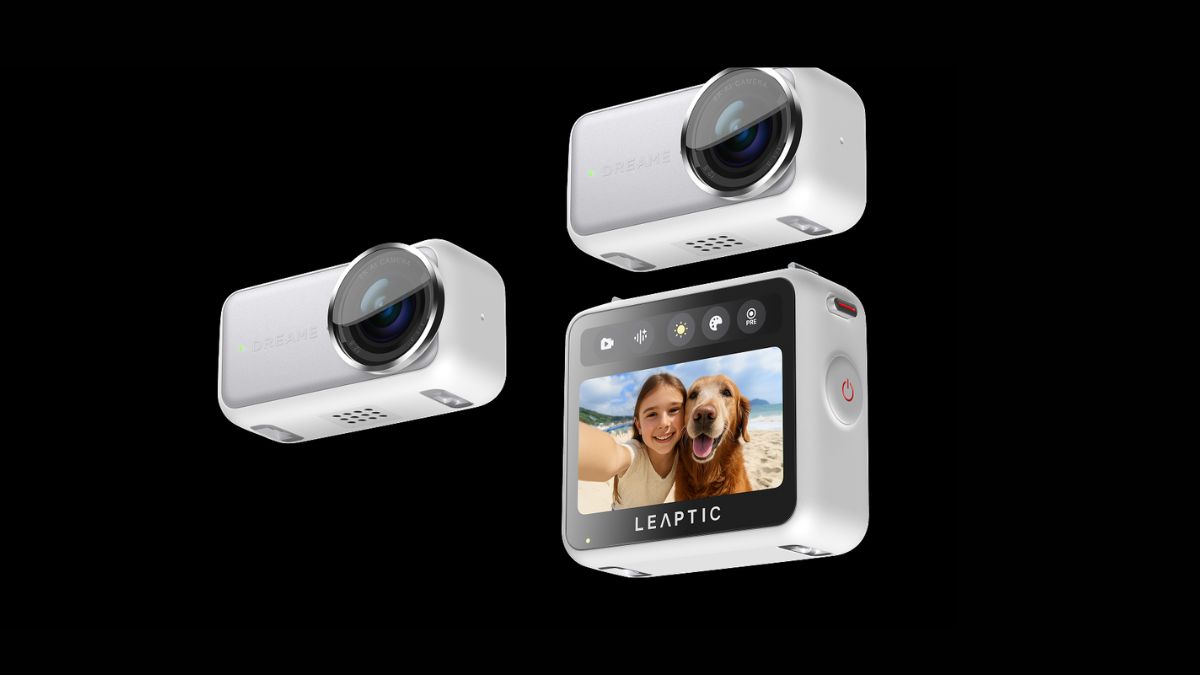
It also has good battery life. You get 90 minutes standalone and 220 minutes with the external dock. This is decent for a high-resolution camera and the dock option helps if you are shooting longer sessions without interruption.
Wrap up
While Dreame is new to cameras, it still came with a strong product. The Leaptic Cube aims at premium users who want a flagship action camera. With 8K video, a large sensor, and AI-powered features, it positions itself against flagship GoPro models rather than entry-level options.
Pricing and availability are yet to be announced.