
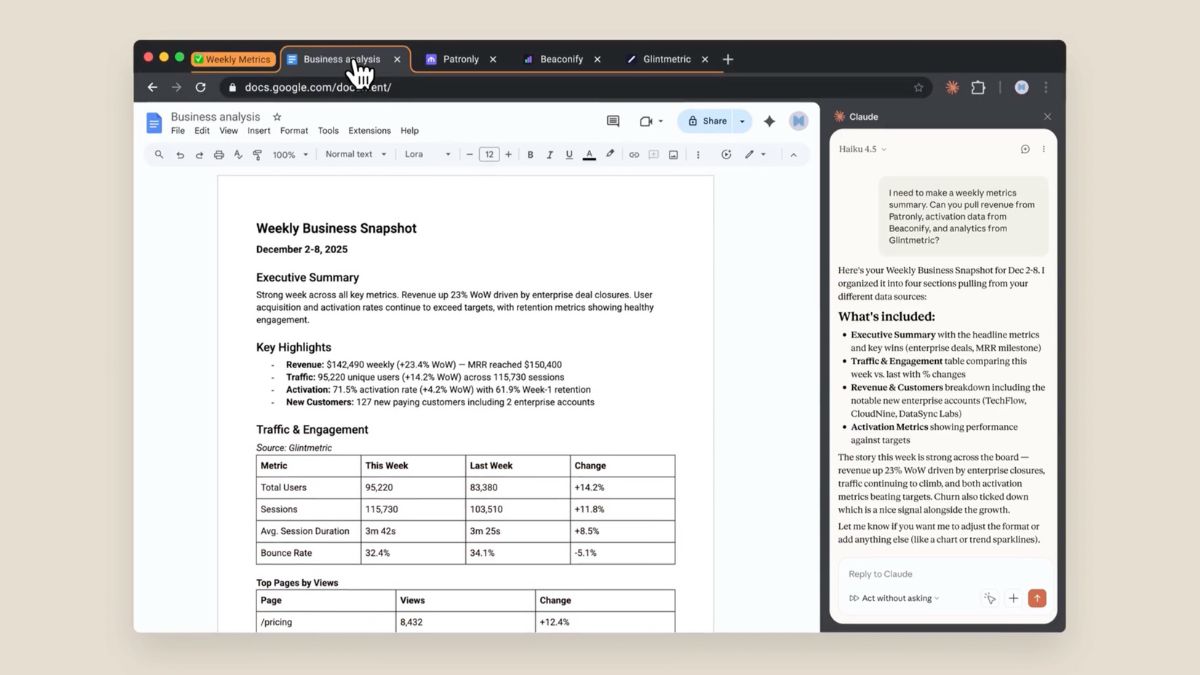

Anthropic has started rolling out wider access to its Claude extension for Google Chrome. Earlier, this browser plugin was limited to users on the costly Max plan, which is priced at around $200 per month. Now, anyone with a regular paid Claude subscription can use it.
The Claude Chrome extension lets users access the AI from anywhere on the web. Instead of copying text into a chat window, users can interact with Claude directly while browsing websites. This makes everyday tasks faster and more natural.
Also see: What is Claude AI?
What makes this extension stand out is its ability to use websites on the user’s behalf. Anthropic says Claude can fill out forms, manage emails, update calendars, and handle multi-step tasks based on a single prompt. Users can also record a workflow and train Claude to repeat the same steps later. This turns the AI into more of a digital assistant rather than just a chatbot.
The latest update also brings support for Claude Code. This allows developers to combine browser actions with coding tasks. For example, Claude can read documentation online and then help write or edit code based on what it finds.
This feature is not completely new in AI. Before the current focus on AI agents, many companies worked on what they called computer use. The idea was simple. Teach AI how to understand buttons, menus, and layouts on a screen. That work is now paying off, as tools like the Claude extension can interact with real websites in a practical way.
OpenAI and Perplexity already offer similar browser-based AI tools with agent-like abilities. These tools can browse pages, take actions, and complete tasks for users. Right now, Google is the main exception. While Gemini works inside Chrome and can explain web pages, it cannot yet take actions on the user’s behalf. Google has shown early demos of this idea under Project Mariner, so it is likely coming later.
I think opening the Claude extension to more users is a smart move. Limiting such a useful feature to a very expensive plan made it feel out of reach. With wider access, more people can test how useful AI agents really are in daily browsing. At the same time, it raises questions about trust and safety, since giving AI control over websites is a big step.