

Water that comes from our taps may contain impurities such as bacteria, viruses, chemicals, and other contaminants. These things can be harmful to our health. This is the reason people use water purifiers. Purifying water removes these impurities, making it safe for consumption and other uses.
Also see: Best Deals on Water Purifiers
Quality of your tap water can vary significantly, depending on where you live. In some areas, the water may be treated with chemicals like chlorine to kill bacteria and other microorganisms, but it may still contain high levels of minerals, heavy metals, and other pollutants. A water purifier can help remove these impurities by filtering the water through various methods, such as reverse osmosis, ultraviolet sterilization, activated carbon, and other advanced technologies. This can improve the taste, odor, and quality of the water, making it safe and healthy to drink.
But there are different types of water purifiers and you need to know about each to understand what water purifier you need for your home. Different types of water purifiers are designed to remove specific contaminants and impurities from water. So, I decided to write an in-depth guide to tell you how different types of water purifiers differ and how they work. In this article, we will discuss the most common types of water purifiers, their working, advantages, and disadvantages.
Also see: Best Water Purifiers
Types of water purifiers
1. Reverse Osmosis (RO) Water Purifier
RO water purifiers use a semi-permeable membrane to remove impurities and contaminants from water. This membrane has very small pores that allow only water molecules to pass through, while larger molecules like dissolved salts, minerals, and other contaminants are trapped and removed from the water.
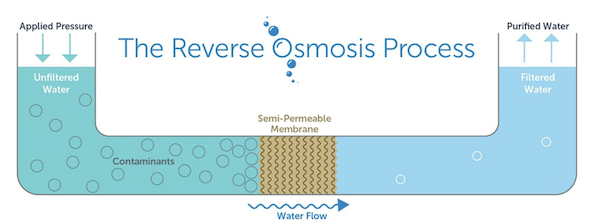
Here are different stages involved in RO water purifiers.
- Pre-filtration: Water from the source (tap or well) first passes through a pre-filter to remove larger impurities like sediments, dirt, and debris.
- Reverse Osmosis: The pre-filtered water then passes through the semi-permeable membrane under high pressure. The membrane traps impurities and allows only pure water to pass through.
- Post-filtration: The purified water is then passed through another post-filter to remove any remaining impurities and improve the taste and quality of the water.
- Storage: The purified water is stored in a tank for later use.
- Final stage: The purified water can also pass through an additional final stage filter, which can remove any residual odors or flavors and ensure that the water is of the highest quality.
Advantages:
- RO water purifiers are highly effective at removing impurities and contaminants from water.
- They can remove up to 99% of dissolved solids and contaminants from water.
- RO water purifiers are relatively easy to maintain.
Disadvantages:
- The filtration process of an RO purifier can be slow and may require a high amount of water pressure.
- RO water purifiers are expensive compared to other types of purifiers.
- The filtration process can remove beneficial minerals from the water.
2. Ultraviolet (UV) Water Purifier
UV water purifiers use ultraviolet light to kill bacteria, viruses, and other microorganisms present in water. The process involves passing water through a chamber where it is exposed to UV light, which kills microorganisms.
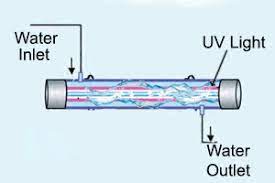
UV water purifiers are effective against bacteria and viruses but not effective against other contaminants such as chemicals, heavy metals, or minerals. This is the reason UV water purifiers are include other filtration systems, such as activated carbon to ensure good quality of drinking water.
Here are different stages involved in UV water purifiers
- Pre-filtration: Water from the source (tap or well) first passes through a pre-filter to remove larger impurities like sediments, dirt, and debris.
- UV chamber: The pre-filtered water then enters the UV chamber, where it is exposed to UV-C light.
- UV exposure: As water passes through the UV chamber, the UV-C light penetrates the cell walls of microorganisms, disrupting their DNA and preventing them from reproducing.
- Final Stage: The purified water is then free of harmful microorganisms and safe to drink.
Advantages:
- UV water purifiers are highly effective at killing bacteria and viruses in water.
- They do not use any chemicals, making them environmentally friendly.
- They are relatively easy to maintain.
Disadvantages:
- UV water purifiers do not remove impurities such as dissolved solids, heavy metals, and other contaminants.
- They may not be effective against all types of bacteria and viruses.
- The bulb used in the purification process may require replacement.
3. Ultrafiltration (UF) Water Purifier
UF water purifiers use a membrane with smaller pores than an RO purifier to remove impurities such as bacteria, viruses, and other microorganisms from water. The process involves forcing water through the UF membrane, which filters out impurities.
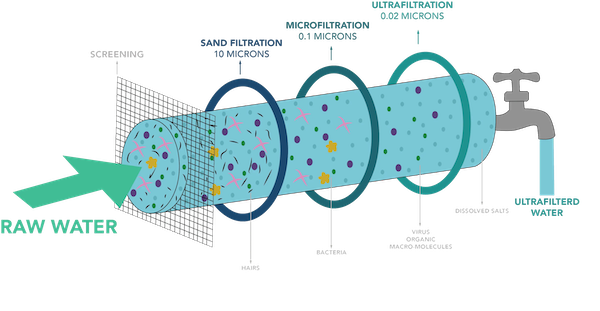
It is effective in removing bacteria, viruses, and other contaminants from water. UF water purifiers are for places where water source is contaminated with bacteria and viruses, but not with chemicals or heavy metals.
Here are the stages involved in how a UF water purifier:
- Pre-filtration: Water from the source (tap or well) first passes through a pre-filter to remove larger impurities like sediments, dirt, and debris.
- Ultrafiltration: The pre-filtered water then passes through a UF membrane, which has pores that are smaller than those in a standard activated carbon filter but larger than those in a reverse osmosis membrane.
- Membrane filtration: As water passes through the UF membrane, impurities, bacteria, viruses, and other contaminants are trapped and removed from the water. The membrane allows only pure water and some dissolved minerals to pass through.
- Safe water: The purified water is then free of impurities and safe to drink.
Advantages:
- UF water purifiers are effective at removing bacteria and viruses from water.
- They do not require electricity, making them easy to use in areas with no power supply.
- They are relatively easy to maintain.
Disadvantages:
- UF water purifiers may not be effective against impurities such as dissolved solids and heavy metals.
- The membrane used in the purification process may require replacement.
- The filtration process can be slow and may require a high amount of water pressure.
4. Activated Carbon Water Purifier
Activated carbon water purifiers use activated carbon to remove impurities such as chlorine, pesticides, and other organic compounds from water. It uses special type of carbon that has been treated with oxygen to make it more porous and increase its surface area. The process involves passing water through a bed of activated carbon, which absorbs impurities.

Activated carbon water purifiers are effective in improving the taste and odor of water. But is is important to note that activated carbon filters have a limited capacity and you need to keep replacing the filters to ensure their effectiveness.
Here are different stages involved in Activated Carbon water purifiers
- Pre-filtration: Water from the source (tap or well) first passes through a pre-filter to remove larger impurities like sediments, dirt, and debris.
- Activated carbon filter: The pre-filtered water then passes through an activated carbon filter, which contains carbon granules or blocks that have been treated with oxygen to increase their porosity and surface area.
- Absorption: As water passes through the activated carbon filter, the porous carbon traps and absorbs impurities, chemicals, and other contaminants. This includes chlorine, pesticides, herbicides, volatile organic compounds (VOCs), and some heavy metals.
- Final State: The purified water is then free of impurities and safe to drink.
Advantages:
- Activated carbon water purifiers are effective at removing impurities such as chlorine and pesticides from water.
- They can improve the taste and odor of water.
- They are relatively inexpensive compared to other types of purifiers.
Disadvantages:
- Activated carbon water purifiers may not be effective against impurities such as dissolved solids and heavy metals.
- The carbon bed used in the purification process may require replacement.
- They may not be effective against all types of impurities.
Wrap Up
Choosing the right type of water purifier depends on several factors such as the quality of the water source, the level of impurities and contaminants, and your budget. Consider the advantages and disadvantages of each type of purifier before making a purchase, and ensure that the appliance you choose meets your requirements. Remember to follow the manufacturer’s instructions for maintenance and replacement of filters to ensure that the appliance continues to function efficiently.
Now that you know different types of water purifiers, you also need to know what is best for you. Selecting the right water purifier depends on several factors, including the source of water, the level of contamination, and level of purification. One of the notable factors is Total Dissolved Solids (TDS) level of the water. Here’s a table that can help you select the right purifier based on the TDS level of your water:
| TDS Level (in ppm) | Recommended Purifier Type |
|---|---|
| Less than 200 | UV or UF water purifier |
| 200-500 | UV or UF water purifier or RO water purifier (with inbuilt TDS controller) |
| Greater than 500 | RO water purifier (with inbuilt TDS controller) |
I will write a detailed guide on how to select the right water purifier later.
Also see: Best TDS meters for water testing at home