

Google has introduced a new set of open translation models called TranslateGemma. The models are built on the company’s open weight Gemma 3 AI and are designed to make high quality translation easier for developers and researchers.
TranslateGemma supports up to 55 languages. This includes widely used languages such as Spanish, French, Chinese, and Hindi. Google says this release is a major step forward for open translation tools, especially for those who want more control and transparency than closed AI systems offer.
TranslateGemma is available in three model sizes. The 4B model is optimized for mobile devices and low-power systems. The 12B model is designed for consumer laptops and desktops. The largest 27B model is meant for cloud use and requires powerful hardware to run efficiently.
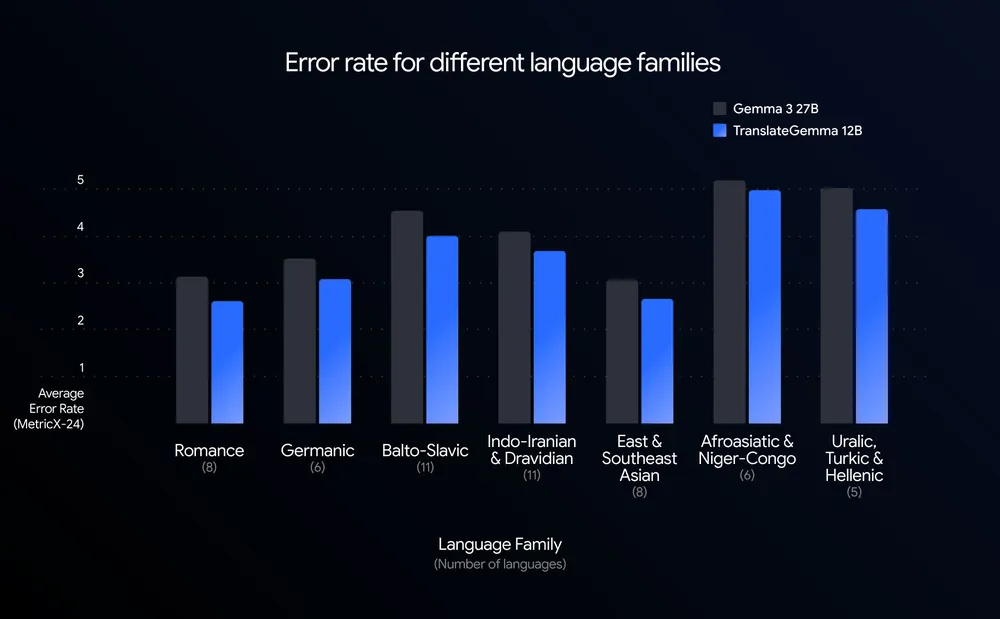
According to Google, the 12B model performs better than the older Gemma 3 27B model on translation benchmarks. This means developers can get faster results and lower latency without sacrificing accuracy. For many use cases, this balance between performance and efficiency is more important than raw model size.
Google also tested TranslateGemma on image-based translation tasks. Even without special tuning, the model was able to translate text inside images more accurately than expected. This opens the door for use cases like translating signs, menus, and documents directly from photos.
The company explained that TranslateGemma was trained using a two-step process. First, the models were fine tuned using a mix of human translated text and high-quality synthetic data. In the second stage, reinforcement learning was used to improve how natural and context aware the translations feel.
The timing of the launch is also interesting. Google announced TranslateGemma just hours after OpenAI introduced ChatGPT Translate. While ChatGPT Translate focuses on tone and context for end users, TranslateGemma is clearly aimed at developers who want to build translation tools into their own products.
TranslateGemma is fully open and available for download. Google has published the models on platforms like Kaggle and Hugging Face, allowing anyone to experiment with them or build new tools on top.