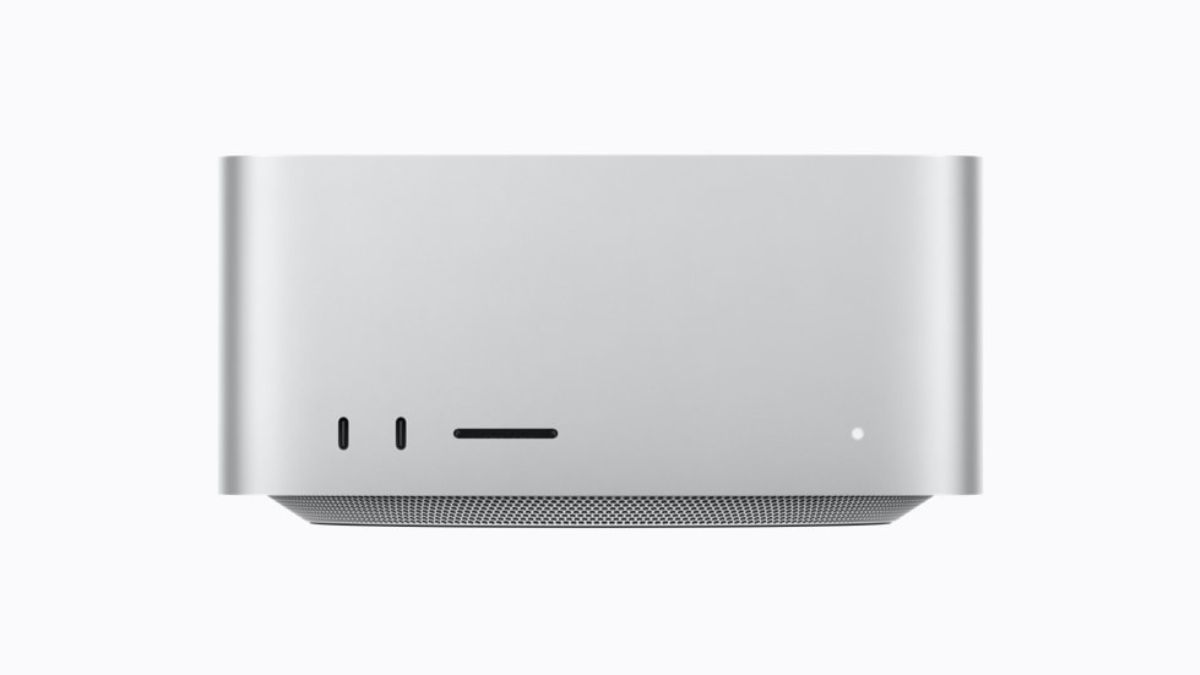

Apple and Meta have teamed up to bring Meta’s new Muse Spark OpenAI model to Apple’s Mac Studio desktops. The model has 816 billion parameters and can run locally on a setup with two Mac Studio computers powered by Apple’s M5 Ultra chips. The collaboration is notable because the two companies have had a difficult relationship, particularly over Apple’s privacy policies and Meta’s advertising business.
Meta announced Muse Spark Open on October 15, describing it as its most capable open-weight model to date. It is designed for coding, complex software development, multi-step reasoning and tasks that use AI agents. The model also supports a context window of up to one million tokens, allowing it to process large amounts of information in a single context.
The model has 816 billion parameters in total, with 42 billion active at a time. This approach helps it handle demanding tasks without activating every parameter for each step. However, its size still makes it difficult to run on a regular desktop computer. Meta worked with Apple to optimise the model for Mac Studio using Apple’s MLX framework, which is designed for machine learning on Apple silicon.
According to Meta, two Mac Studio systems with up to 512GB of unified memory each can hold the entire model. The machines work together as a single system, which gives the model access to up to 1TB of combined memory. Developers can use this setup for software development, video analysis and AI agents that perform multi-step tasks. Meta says it has tested workflows that include making changes to an iOS app and using DaVinci Resolve to review footage and select clips for vertical videos.
Running the model locally is one of the main advantages of this setup. Developers can process prompts and work with the model on their own hardware instead of sending every request to a cloud-based AI service. This could be useful for people working with private code, internal documents or other sensitive material. However, privacy still depends on the tools and services connected to the workflow, so local execution alone does not guarantee that all data stays on the device.
The setup is also far from affordable for most people. A Mac Studio with an M5 Ultra chip and 256GB of memory starts at $10,799, according to reports. That is the price of one machine, while running the full model requires two compatible systems with sufficient memory. Apple is expected to offer a 512GB configuration, which is better suited to this workload. The hardware cost makes this more relevant to AI developers, researchers, and businesses than ordinary consumers.
The partnership is also interesting given the history between Apple and Meta. Apple’s privacy changes in 2021 limited how apps could track users across other apps and websites. Meta said those changes would cost it around $10 billion in revenue in 2022, and the dispute became a major point of tension between the companies.
Meta chief AI officer Alexandr Wang said the companies had worked together for several months. He also credited Daniel Gross, a former Apple executive who now works at Meta, with helping bring the two sides together. Meta CEO Mark Zuckerberg publicly thanked Apple CEO John Ternus for the work, while Ternus praised the ability to run a model of this scale efficiently on Mac Studio.
It remains unclear whether this collaboration will lead to a broader partnership. Apple and Meta have not announced plans to bring Muse Spark Open to Apple Intelligence or Siri. For now, the work is focused on helping developers run a large AI model on local hardware.
Muse Spark Open is available through platforms including Hugging Face, while Meta has also listed several cloud inference providers. The model is released under Meta’s Muse Model License, which permits many uses but includes limits on commercial use. That makes it an open-weight model rather than an unrestricted open-source release.
This new development shows that powerful AI models are not limited to data centres anymore, although running them locally still requires expensive hardware. Apple’s high-memory Mac Studio systems give developers another option for working with large models, while Meta gets a way to make its latest open-weight technology more practical for local use. Whether this becomes a lasting partnership between the two rivals remains to be seen.