
Live-service games have become one of the biggest ambitions in the modern gaming industry. Publishers want games that can keep earning money for years instead of selling a game once and then moving on to the next project. The idea makes a lot of sense from a business perspective. Build one game, keep adding content, bring players back every season, sell cosmetics and battle passes, and create a long-running ecosystem around the game.
The problem is that keeping players is much harder than attracting them in the first place. We have seen both sides of the model over the last decade. Fortnite, League of Legends, Counter-Strike 2, Genshin Impact, Roblox, Warframe, Call of Duty and Destiny 2 have shown how powerful a successful live-service game can become. At the same time, games such as Concord, Anthem, Redfall, Marvel’s Avengers and Suicide Squad: Kill the Justice League struggled to build sustainable audiences, with some eventually being shut down.
What makes these failures interesting is that they are not always caused by obviously bad games. Some had talented developers, enormous budgets, famous IPs, strong marketing and years of development behind them. The problem is that a live-service game has to solve several difficult problems at the same time, and failing in just one of them can damage the entire ecosystem.
I think this is where publishers have often misunderstood the opportunity. They looked at the revenue generated by successful live-service games and tried to reproduce the business model without fully understanding why those games became successful in the first place.
The fundamental shift from product to platform
A traditional game has a relatively simple commercial journey. A publisher makes the game, markets it, launches it, sells copies and then supports it with patches and perhaps expansions. A live-service game does not really have a finished product because launch is only the beginning.
The developer needs to convince players to return next week, next month and next year. That means the game needs a strong core gameplay loop, regular content, progression, social systems, matchmaking, community management and a reason for players to keep investing their time. The studio is not simply shipping a product. It is committing to operating an evolving platform.
That changes almost everything about development. The team has to think about retention before launch, content cadence after launch, monetization throughout the game’s life and community health years into the future. A traditional game can eventually reach the point where development ends. A successful live-service game is effectively designed never to reach that point.
This is also why the economics are so attractive to publishers. A traditional game can generate most of its revenue around launch, while a successful live-service game can continue generating revenue from the same audience for years. The problem is that the same model that creates enormous upside also creates enormous risk because the publisher is committing to a much longer and more expensive development and support cycle.
The real competition is for player time
The first major problem is that players already have games they love. Live-service games compete for ongoing attention rather than simply competing for a purchase. If I spend 500 hours playing one multiplayer game, those 500 hours are not available for another multiplayer game.
I have experienced this myself. When I started playing Valorant, I was often confused about whether I should spend my limited gaming time on Valorant or go back to Counter-Strike, a game I had already been enjoying for years. Counter-Strike already had my familiarity, experience and established habits, and depending on the people I was playing with, it could also have the social advantage of friends already being there. Valorant had to give me a reason to change that routine.
This is an important difference from single-player games. If I finish Black Myth: Wukong, I can move to Cyberpunk 2077 or God of War Ragnarök. Playing one does not necessarily reduce the value of another because I am not expected to maintain a long-term relationship with either game. A new live-service game has a much harder job because it needs to become part of my routine.
Newzoo’s latest PC and console market analysis shows how difficult that can be. Its full-year 2025 data found that engagement remained heavily anchored around long-running live-service ecosystems, with many of the most-played games being established platforms rather than new releases. Newzoo also notes that sustained engagement and post-launch support have become increasingly important in determining where player attention goes.
The company’s 2025 PC and Console Gaming Report also highlighted how players are becoming increasingly difficult to reach, with the number of games people play declining on Steam and Xbox. That does not mean there is no room for new games. Newzoo’s newer data actually shows the PC market becoming somewhat more distributed, with games outside the Top 20 accounting for a larger share of playtime between 2022 and 2025. But the biggest games still have a major advantage because they already have established communities and habits around them.
This means the biggest competitor for a new live-service game may not be another game launching at the same time. It may be a game that has existed for eight or ten years. Fortnite is not simply competing with another battle royale. It is competing against a player’s friends, cosmetics, progression, memories and established routine.
A new game therefore needs to offer something that is compelling enough to make players change those habits. That is a much harder task than convincing someone to buy a new single-player game for a 20-hour campaign.
The social lock-in effect
Time is only one part of the problem. Established multiplayer games also benefit from something that is much harder to reproduce: their communities.
If five of my friends play Fortnite, convincing all five of us to move to another game is much harder than convincing one person. The value of the game increases because other people are already there. This creates a network effect that is particularly powerful in multiplayer gaming.
The effect goes beyond friends. More players create more matches and more active communities. Those communities create content for YouTube and Twitch. Streamers and creators bring more visibility, which can attract more players. A larger population can also support more game modes and faster matchmaking, which improves the experience and makes the game more attractive to new players.
This creates a feedback loop where success creates the conditions for more success. Once a game reaches a certain scale, its player base itself becomes part of the product.
That is why switching costs can be surprisingly high even when a competing game is technically good. Players have already invested time, learned mechanics, unlocked items and developed relationships around an established title. I do not have to convince myself only that your game is better. I have to decide whether it is worth changing something I already enjoy.
This is one reason Counter-Strike, League of Legends, Fortnite and other long-running games are so difficult to challenge. Their advantage is not just the quality of the current version of the game. It is everything that has accumulated around it over many years.
A weak launch can become a death spiral
The social nature of these games creates another major problem. A live-service game needs enough players to provide the experience that attracts more players.
If a multiplayer game launches with a small population, matchmaking can become slower and some modes can become difficult to fill. Players start encountering the same opponents repeatedly, queue times increase and the overall experience can become less attractive. Some of those players leave, which makes the population smaller and the original problem even worse.
The same thing can happen with content creators. If fewer people are watching videos or streams about the game, creators have less incentive to cover it. Reduced coverage means fewer potential players discover the game, which makes it even harder for the game to grow.
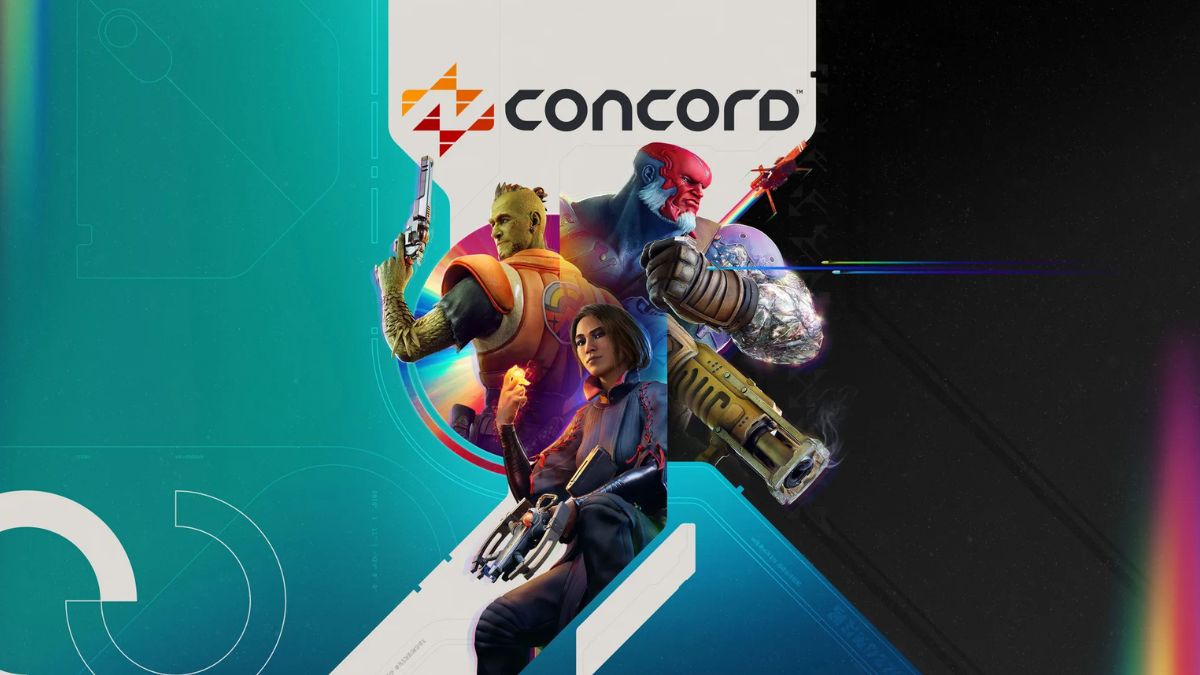
Concord is an extreme example of how quickly this can happen. Sony launched the game on August 23, 2024, and on September 3 announced that it would take the game offline on September 6, stop sales and provide full refunds to customers.
Steam tracking showed that Concord peaked at fewer than 700 concurrent players on the platform. That number comes from third-party tracking rather than Sony, so it should be treated as a measurement of Steam activity rather than an official total player figure. The exact sales number is also difficult to establish because Sony did not publish one, but the extremely low Steam population was enough to show how little traction the game had on PC.
This is particularly damaging for a team-based game because the player population is not just a metric. It is part of the experience itself. A single-player game can remain perfectly functional with one person playing it. A competitive multiplayer game needs enough other people to make the game work.
Once the population falls below a certain level, the game can become trapped in a cycle where the declining community itself makes the product less attractive.
Pricing can add another layer of friction
Free-to-play is often presented as the natural model for live-service games because removing the upfront price makes it easier for people to try them. That certainly helps. If I can download Fortnite or Valorant for free, I can decide whether I like the game without making a financial commitment.
But premium live-service games face a different challenge because they have to overcome an additional barrier before the player even enters the ecosystem.
Concord, for example, launched at $39.99 for its standard edition. Sony’s own announcement confirmed that price before launch. Suicide Squad: Kill the Justice League launched at $69.99, while Marvel’s Avengers also entered the market as a full-price game. In these cases, players were being asked to pay a substantial upfront price for a game that would then compete for hundreds of hours of their future time against established alternatives, many of which were free or already owned.
That does not mean premium pricing and live service cannot work. Helldivers 2 is a useful counterexample because it launched at $39.99 and still became a major success. The difference is that its cooperative gameplay, clear identity and strong word of mouth gave players a convincing reason to buy it.
The lesson is not that free-to-play automatically wins. It is that the pricing model has to match the value proposition. A premium live-service game has to justify both the initial purchase and the commitment it is asking the player to make afterward. A free-to-play game removes the first barrier, but it still has to win the much more important battle for the player’s time.
Monetization cannot replace a good game
Recurring revenue is one of the biggest reasons publishers want live-service games, but monetization is also one of the easiest ways to damage the relationship with players.
Battle passes, cosmetic stores, premium currencies and limited-time items can work extremely well when they are built around a game people already enjoy. Problems begin when players feel that monetization has become more important than the experience itself.
I do not think players inherently hate monetization. Many players happily spend money on skins, characters and other optional items when they believe the underlying game is worth supporting. The frustration comes when monetization feels manipulative, excessive or designed to create artificial pressure.
Fortnite is a good example of the difference. The game sells an enormous amount of cosmetic content, but the reason people spend money is not simply because there is a shop. The game already has a huge audience, a strong gameplay loop and an ecosystem of events, collaborations, creator content and constantly changing experiences. The monetization system sits on top of that foundation.
A weaker game can copy the battle pass, premium currency and cosmetic store, but those systems cannot manufacture demand. If players do not enjoy spending time in the game, giving them another cosmetic reward for doing so is unlikely to solve the underlying problem.
The content machine has to run indefinitely
The phrase “live service” sounds simple until you think about what it actually requires. Players consume content and then ask for more. Developers create another season, another event, another map, another character or another progression system. Players eventually consume that content too, and the cycle starts again.
A successful live-service game therefore needs a production pipeline that can continuously create content without destroying the people making it. This is difficult even for large studios because the team needs designers, programmers, artists, writers, engineers, community managers, security specialists and support staff working continuously.
The content also has to be meaningful. If every update is simply another battle pass and a handful of cosmetic items, players can become bored. But if developers make major changes, they risk upsetting the existing community. The game has to evolve enough to remain interesting while staying familiar enough that existing players still recognise the experience they originally liked.
This is one of the reasons live-service development is fundamentally different from making a sequence of traditional games. A studio is not just creating another product. It is maintaining an ecosystem whose users have increasingly high expectations.
Developers have to live with the game too
The pressure is not limited to players. Live service also changes what development feels like for the people making the game.
Traditional game development can be exhausting, but there is at least a clear finish line. The game ships, patches arrive, post-launch support eventually slows down and the team can move on to something else. Live service can feel endless because there is always another update, another season and another deadline waiting after the current one.
The 2025 GDC State of the Game Industry survey found that 16% of developers surveyed were working on a live-service game, rising to 33% among AAA developers. At the same time, only 13% said they were interested in developing live-service games, while 41% said they were not interested at all. Developers who expressed concerns pointed to declining player interest, creative stagnation, predatory practices, microtransactions, burnout and market oversaturation.
The same survey found that 11% of developers had been laid off during the previous year, showing how difficult the wider industry environment has become.
This matters because a live-service game needs a sustainable development process. If the team is constantly under pressure to produce more content with fewer people, quality can decline. Once players notice that updates are becoming slower or less interesting, retention can suffer, which creates even more pressure on the development team.
The business therefore needs to balance three things at the same time: the amount of content players want, the amount of money the game generates and the cost of producing that content.
Successful games eventually accumulate baggage
There is another problem that often appears only after a live-service game becomes successful: its own history becomes difficult to manage.
After several years, a game may have hundreds of weapons, characters, maps, quests, currencies, systems and events. Veteran players understand these systems because they have experienced them gradually. A new player sees all of it at once.
Warframe and Destiny 2 demonstrate this challenge particularly well. Their enormous amount of content is a major advantage because it gives existing players plenty to do, but it can also make onboarding difficult for someone who arrives years after launch.
Developers therefore have to solve two competing problems. They need to keep giving veteran players reasons to return without making the experience so complicated that new players feel lost. Removing old content can upset existing players, while continuing to add new systems can make the game increasingly difficult to understand.
This is another reason successful live-service games increasingly behave like platforms rather than traditional games. Developers are not simply producing new content. They are managing an ecosystem that has accumulated years of history.
A famous IP cannot guarantee success
It is tempting to think that a famous franchise automatically gives a live-service game an advantage. It certainly helps with awareness, but it does not guarantee long-term engagement.
Suicide Squad: Kill the Justice League had one of the most recognisable superhero brands in the world behind it, yet that brand did not automatically create a sustainable audience for its live-service structure. The audience that enjoys Batman, Superman or other DC characters is not necessarily the same audience that wants to spend years playing a particular multiplayer game.
This is an important distinction because publishers often assume that a strong IP can solve the acquisition problem. It can help get people to look at the game, but it cannot force them to keep playing it.
The same applies to famous developers. A respected studio can generate initial interest and trust, but players ultimately judge the experience they receive.
Sony’s strategy shows both the opportunity and the risk
Sony provides one of the clearest examples of the industry’s live-service ambitions because the company made live service a major part of its PlayStation strategy while also continuing to invest heavily in its traditional single-player franchises.
Sony originally planned to release 12 live-service titles by fiscal 2025. After reviewing the pipeline, it reduced that target to six, saying that some projects did not meet the expectations of gamers and that quality should take priority over simply reaching a numerical target.
The results have been dramatically different across its projects. Helldivers 2 became a major success, while Concord was shut down after only two weeks. Sony later acknowledged that it had learned from both outcomes and said it wanted to improve how it managed live-service development and post-launch content.
The comparison between the two games is particularly interesting because both were part of the same broad corporate strategy. Helldivers 2 had a simple and distinctive pitch. Four players cooperate, land on hostile planets and fight enormous numbers of enemies. The gameplay loop was easy to understand, the game had a strong identity and word of mouth helped it grow.
Concord had a much harder problem. It entered an already crowded hero-shooter market and needed to persuade players to leave games and communities that they already knew.
This is why I think the lesson from Sony’s experience is not that publishers should abandon live service. The lesson is that live service has to emerge from a compelling game rather than being treated as the primary product strategy.
The best live services start with the game
When I look at the biggest surviving live-service games, I notice that their core gameplay is usually strong enough to stand on its own.
Counter-Strike has shooting, economy and competitive mastery. League of Legends has deep competitive gameplay and a huge champion ecosystem. Fortnite combines shooting with building, social experiences, creator content and constant reinvention. Genshin Impact combines exploration, combat, collection and progression. Warframe has deep progression and years of content.
None of these games became successful simply because they added a battle pass. Their monetization exists on top of an experience that people already want to spend time with.
This is where I think the industry sometimes gets the order backwards. A publisher sees a successful game generating recurring revenue and starts thinking about recurring revenue first. But the recurring revenue is a consequence of sustained engagement. Players spend money because they continue to value the game, and they continue to value the game because the underlying experience gives them reasons to return.
The battle pass is not the product. The game is the product.
Live service changes the definition of success
There is also a deeper business problem because live-service games require publishers to measure success differently.
A traditional premium game can be judged largely by units sold, revenue, reviews and perhaps the performance of its post-launch content. A live-service game has to be evaluated through a much larger set of metrics. Publishers need to know how many people are playing, how often they return, how long they stay, how much they spend, how many players are monetized and how much it costs to acquire new players.
This makes the business much more complicated.
A game can have millions of downloads and still be unhealthy if most players leave quickly. It can have excellent reviews and still fail commercially if the audience is too small. It can make good money for several months but still be unable to justify years of future development if the cost of maintaining the service remains too high.
This is why launch numbers alone do not tell the full story. A huge launch is useful, but what matters is whether those players become a stable community.
Retention matters more than curiosity
Getting someone to try a game is relatively easy. Getting that person to return repeatedly is much harder.
A player might download a game because they saw a trailer, watched a streamer or simply wanted to understand what everyone was talking about. That initial curiosity is valuable, but it does not tell a publisher whether the game has become part of the player’s routine.
This is why live-service developers pay so much attention to retention. Day-one retention can show whether players came back after their first session, while longer-term retention provides a better indication of whether the game has developed a lasting habit among its audience.
A game can have a huge launch because of marketing, influencers and curiosity, but if most of those players disappear after a few weeks, that initial success may not translate into a sustainable business.
For a traditional premium game, a huge launch can sometimes be enough to make the project financially successful. For a live-service game, a huge launch followed by a rapid decline can actually expose the problem.
The game needs a community that continues participating, not just customers who bought or downloaded it once.
Marketing can buy attention, but not loyalty
Publishers can spend millions promoting a game. They can buy advertisements, work with creators, release trailers and organise launch events. All of that can help a game get noticed, but awareness is only the first step.
After the player arrives, the game has to convince them to stay.
This is another reason Helldivers 2 and Concord make such an interesting comparison. Helldivers 2 benefited from strong word of mouth and a simple gameplay concept that was easy for players to understand and share with others. Concord had significant production and marketing investment, but its audience did not develop at the scale required to sustain the service.
That does not mean marketing is unimportant. It means marketing cannot compensate for weak product-market fit. You can spend money to get people to try a game, but you cannot spend your way into a loyal community if the game itself does not give players a strong reason to stay.
Not every game needs to become a live service
At this point, it would be easy to conclude that live service is simply a bad model. I do not think that is true.
The model can be extremely successful when the underlying game has the right characteristics. The strongest examples usually have a compelling core loop, a reason to return, a strong community, a scalable content pipeline and a clear identity. They also understand their audience and evolve without destroying what players originally liked.
Most importantly, they give players a reason to choose them.
Fortnite was not simply another shooter. Genshin Impact was not simply another free-to-play RPG. Warframe was not simply another online action game. Helldivers 2 was not simply another co-op shooter. Each found a combination of gameplay, identity and community that gave players a reason to spend their time there.
That is the part publishers cannot copy simply by adding seasons, daily challenges and a battle pass.
The biggest mistake is starting with monetization
If I had to reduce the entire problem to one idea, it would be that publishers should not start by asking how they can make players spend money every month. They should start by asking why players will still want to play the game three years from now.
If the answer is strong, monetization can follow. If the answer is weak, no battle pass, premium skin or seasonal event can permanently fix the problem.
This is why some live-service games feel natural while others feel engineered. When I play a successful live-service game, I generally do not feel like I am participating in a monetization strategy. I feel like I am playing a game that happens to keep receiving new content.
That difference is important because recurring revenue is ultimately a result of recurring engagement. Publishers can design systems that encourage players to return, but they cannot force players to genuinely care about a game for years.
So, do most live-service games fail?
If by “fail” we mean that most live-service games do not become the enormous, long-running businesses their publishers initially hoped for, then I think the answer is yes. The market is simply too competitive for every project to become the next Fortnite or League of Legends.
But I would also be careful with the word fail. A live-service game does not need to become a billion-dollar platform to be successful. A smaller game can build a loyal community, recover its development costs and provide years of entertainment. The problem begins when publishers build their financial expectations around the assumption that every successful live-service game will become a massive platform.
The potential upside makes that assumption tempting. A successful live-service game can generate revenue for many years, which makes the model extremely attractive compared with repeatedly launching completely new products. But that upside exists precisely because the game has managed to build something very difficult: a large group of people who voluntarily continue giving it their time.
The history of the last few years has made one thing clear. Live service is not a shortcut to recurring revenue. It is one of the hardest forms of game development because the work does not end when the game launches. In many ways, the real test begins after launch.
A publisher is not just building a game. It is building a community, an economy, a content pipeline and a long-term relationship with players, while competing against games that may already have millions of people who are deeply invested in them.
That is why I do not think we are going to see the end of live-service games. Instead, I think publishers will become more selective about which games actually deserve the model. Sony’s experience is a good example of that shift. The company continues to see live service as an important part of its portfolio, but it has also reduced its original ambitions and acknowledged the need to learn from both the success of Helldivers 2 and the failure of Concord.
The future will probably belong to games where live service is a natural extension of the experience rather than the entire reason the game exists. Players are willing to spend years with a game when they genuinely enjoy being there, but they have no reason to give that time simply because a publisher has designed a monetization system around it.
For me, that is the biggest lesson from the live-service boom and the failures that followed. The question should never be how a publisher can make players stay for years. The better question is what kind of game can make players want to stay for years.
If a game can answer that question, the business model has a chance to work. If it cannot, adding another season, another battle pass or another cosmetic store is unlikely to change the outcome.