
If you look at player data on Steam today, one thing is very clear. Action games sit comfortably at the top. They are not just leading, they are dominating by a huge margin. But this is not something that happened overnight. It is the result of years of evolution in gaming, changing player behavior, and the way games are designed today.
I have been playing games for more than 20 years now, and when I look at this trend, it does not surprise me at all. In fact, it feels like a natural outcome of everything gaming has become.
My journey started in a very different era. Games like Project I.G.I. and Wolfenstein 3D were among the first titles I played.
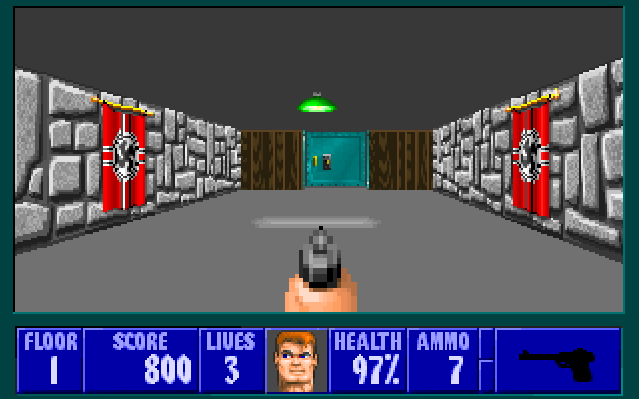
Back then, things were simple. There was no concept of massive updates, no live service models, no battle passes. Just pure focus and gameplay.
Then I came to college, where we used to play multiplayer competitive games. I still remember spending hours playing Counter-Strike 1.6. It was fast, competitive, and extremely addictive. That was my first real taste of how powerful Action and Shooter games can be when combined with multiplayer.
Over the years, I moved through titles like Max Payne, Grand Theft Auto, and Tomb Raider. Each of these games added something new, but they all had one thing in common. They kept me engaged moment to moment.
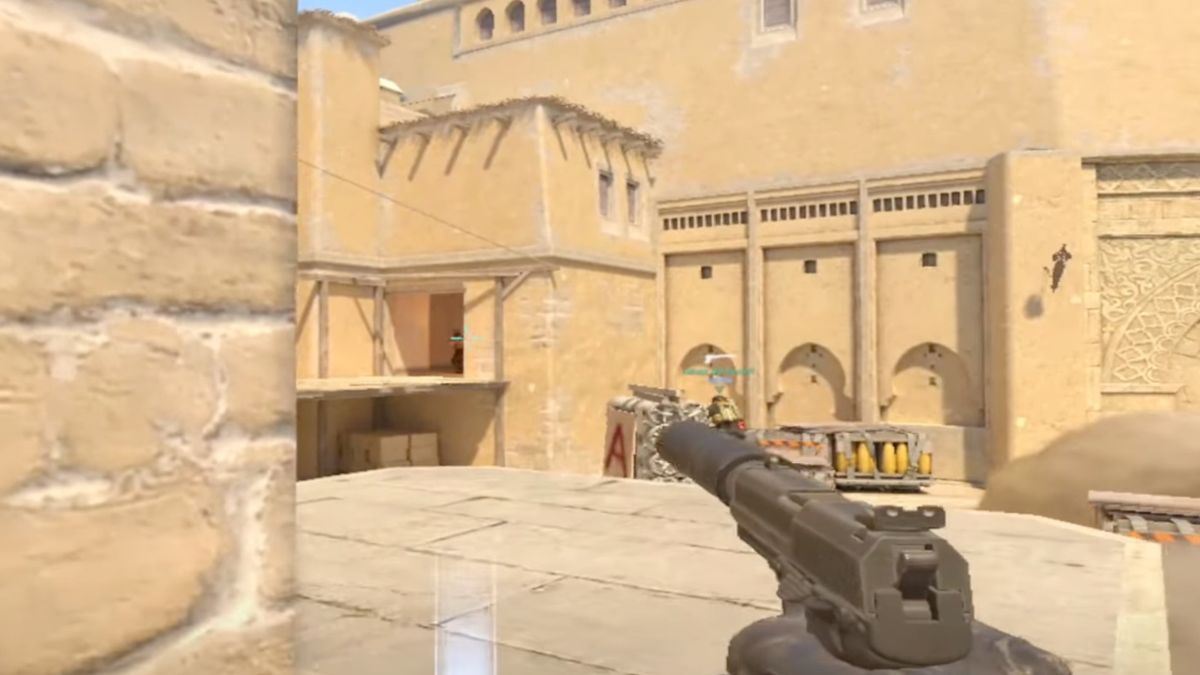
Fast forward to today, and I still find myself playing games like Counter-Strike 2 and Valorant. The technology has changed. The graphics are better. The competition is tougher. But the core feeling remains the same.
When we look at recent 30-day player averages on Steam collected by Techlomedia Gaming, Action games lead with a massive player base. They are far ahead of Shooter, Adventure, RPG, Simulation, and Strategy. This is important because Shooter is actually a subcategory of Action. So when you combine them mentally, the dominance becomes even more obvious. A huge portion of the player base is actively choosing fast-paced gameplay over slow or strategic experiences.
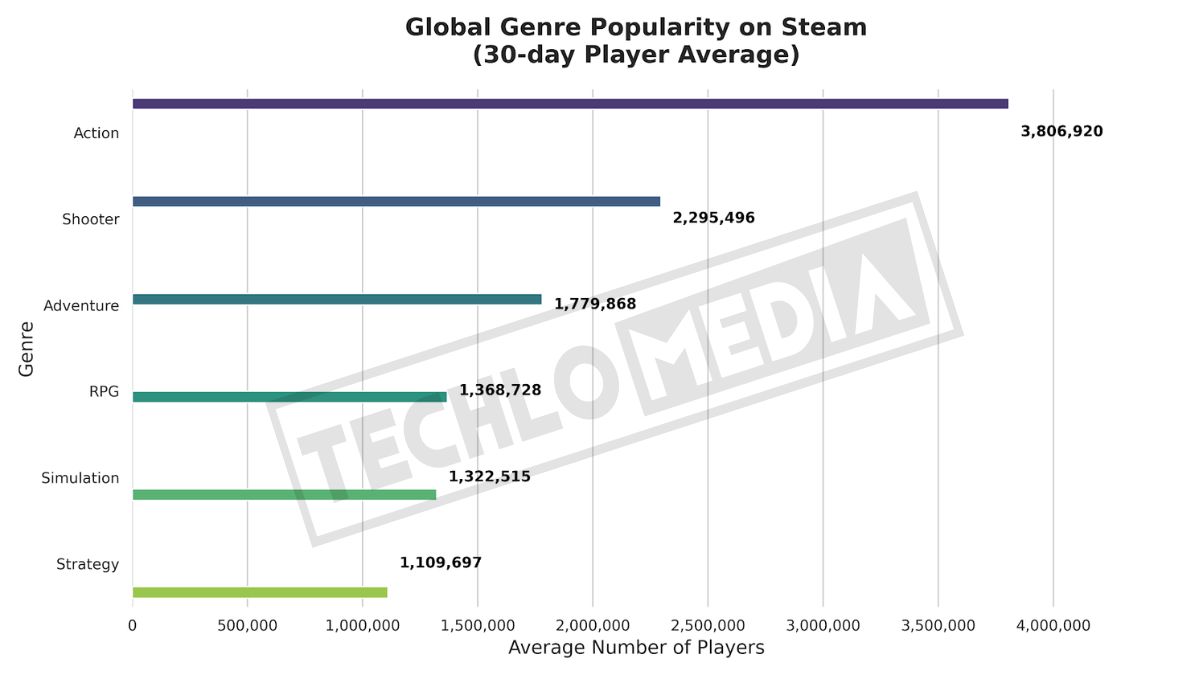
This confirms one important thing. Most players today want instant action.
One of the biggest reasons behind the dominance of Action games is how quickly they engage players. You do not need hours to understand the mechanics. You do not need to read long tutorials. You jump in, and within seconds, you are doing something meaningful. Compare this with Strategy or Simulation games. They require patience. They require planning. They require time investment before you start enjoying them.
In today’s world, attention spans are shorter. So, people want quick sessions. Many players log in after work or studies and want immediate fun. Action games deliver exactly that.
Another major factor is multiplayer. Games like Counter-Strike 2 and Valorant are not just games. They are competitive platforms. They offer ranking systems, matchmaking, and constant updates.
This creates a loop. You play, you improve, you compete, and you come back again to further improve yourself for a better ranking. Now that competition is global, this has made Action games even more addictive.
We cannot ignore the impact of streaming. Platforms like YouTube and Twitch have changed how games grow. Action games are simply more fun to watch. It is because we keep seeing fast movement, intense fights, and clutch moments. These things create exciting content. A slow Strategy game may be deep, but it is not always entertaining for viewers.
This visibility directly increases popularity. The more people watch, the more they want to play.
Another reason Action dominates is that it blends easily with other genres.
Take the example of Grand Theft Auto V. It is not just Action. It has elements of Adventure, Simulation, and even RPG. Or look at Elden Ring. It is technically an RPG, but its combat system is deeply rooted in Action mechanics.
This blending means that even when players choose other genres, they are still experiencing Action gameplay at the core.
Another interesting thing is that action games are highly replayable. In a game like Counter-Strike 2, no two matches feel the same. The maps may be the same, but player behavior changes everything. This unpredictability keeps the game fresh. You do not feel like you are repeating content. Instead, you feel like you are constantly facing new challenges.
Compare this with story-driven games. Once you finish the story, the motivation to replay is limited.
Action games are also easier to get into. You do not need deep knowledge. You do not need to understand complex systems. Even a new player can jump into a match and start playing. You just need to learn a few keys.
Of course, mastering the game takes time. But entry is simple, and you can keep playing to master it. This is very important for platforms like Steam, where millions of new users join every year.
There is also an emotional factor that data cannot fully explain, but every gamer understands it. Action games create adrenaline. I have already explained it in one of my previous articles, where I explained why Counter-Strike still refuses to die even after so many years.
That feeling when you win a clutch round in Counter-Strike 2. That moment when you land a perfect shot in Valorant. That chase sequence in Grand Theft Auto V. These moments stay with you. You record it and share it online. You discuss it with friends.
Strategy games may satisfy your brain. RPGs may tell great stories. But Action games hit your reflexes and emotions at the same time.
This does not mean other genres are weak. RPGs like The Witcher 3: Wild Hunt offer deep storytelling. Simulation games like Microsoft Flight Simulator provide realistic experiences. Strategy games like Age of Empires II challenge your thinking. But these genres appeal to specific audiences. Action games appeal to almost everyone.
Modern hardware and internet speed have also helped Action games grow. Low latency connections, high refresh rate monitors, and powerful GPUs make fast-paced gameplay smoother than ever. This directly improves the experience.
Earlier, lag could ruin a match. Today, competitive gaming feels much more responsive. This technical improvement has made Action games more enjoyable and accessible.
Looking ahead, I do not see Action losing its top position anytime soon. In fact, it may grow even more. With the rise of live service games, cross-platform play, and esports, Action games are becoming stronger.
However, other genres will continue to evolve as well. RPGs are becoming more action-oriented. Simulation games are becoming more interactive. Strategy games are becoming more user-friendly.
But at the core, Action remains the foundation.
When I look back at my journey from Project I.G.I. to Counter-Strike 2, I see how gaming has changed over the years. But the love for Action has remained constant.
The data we see today is not just numbers. It reflects how players think, what they enjoy, and how they spend their time.
Action games dominate Steam charts because they fit perfectly into modern gaming life. They are fast, engaging, competitive, and emotional.
And for players like me, who have grown up with these games, it just feels right.