
For years, tools like Google Workspace and Microsoft 365 have basically owned the workplace. These platforms offer everything from email and document editing to cloud storage and video meetings. They are reliable, feature-rich, and deeply integrated into how modern teams work. But there has always been a trade-off. Most of these services are built around data. Whether it is for improving services, analytics, or AI, user data plays a role in how these platforms operate.
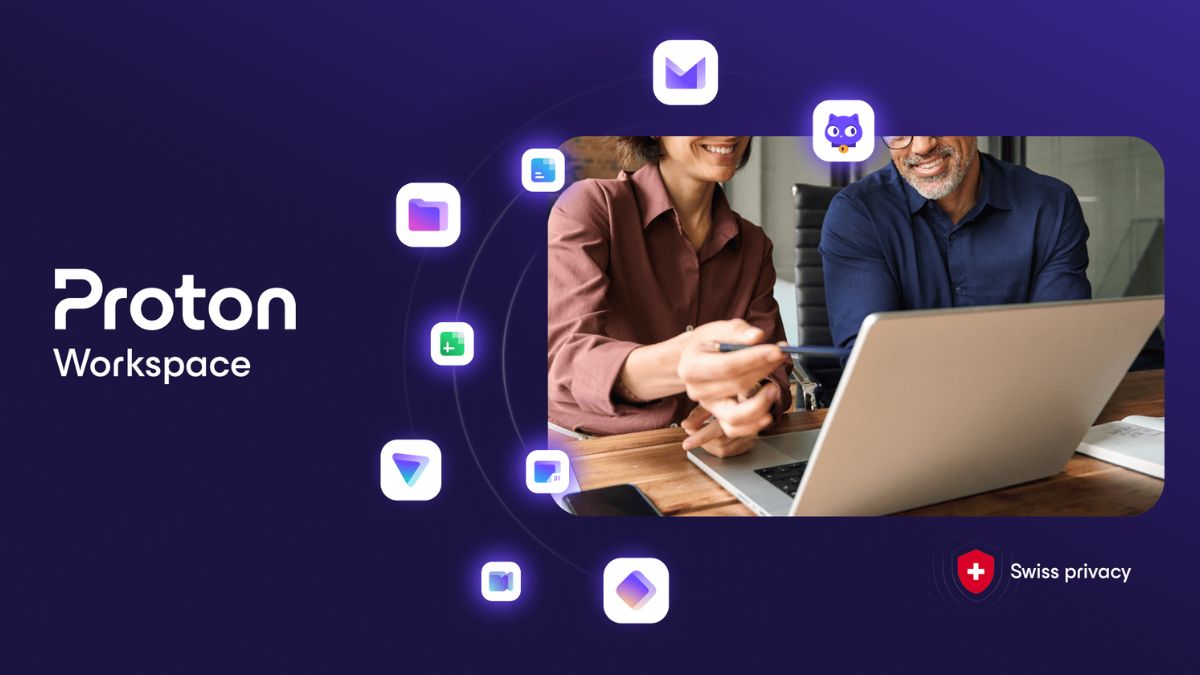
Proton is now trying to offer a different approach. The company has launched Proton Workspace, a complete productivity suite designed with privacy at its core. Instead of treating encryption as an optional feature, Proton is making it the default across all its tools.
Proton Workspace brings together multiple tools under one subscription. These include:
- Proton Mail for encrypted email communication
- Proton Calendar
- Proton Drive for file storage and sharing
- Proton Docs and Sheets for collaboration
- Proton VPN
- Proton Pass
- Proton Meet for video conferencing
The company is offering two plans. The Standard plan starts at $12.99 per month, while the Premium plan costs $19.99 per month and includes up to 3TB of storage, higher limits for meetings, and access to its AI assistant.
If you look at pricing, Proton is positioning itself directly against existing enterprise solutions.
One of the most notable additions is Proton Meet, a new video conferencing tool. It uses end-to-end encryption based on the Messaging Layer Security protocol. This means that only participants in a meeting can access its content. Even Proton cannot read or listen to the conversation.
Another useful detail is that users can join meetings without creating an account. This reduces friction and also limits unnecessary data collection.
Proton is also introducing an AI assistant called Lumo as part of its workspace. While many AI tools rely heavily on user data for training and improvement, Proton claims its assistant does not store conversations or use them for training models. This aligns with the company’s broader focus on privacy.
The main advantage of Proton Workspace is integration, combined with privacy. Businesses can manage email, documents, storage, and meetings within a single platform where encryption is built in by default. This can reduce the need for additional security layers or third-party tools.
Proton also supports compliance with regulations such as GDPR, HIPAA, and CCPA. It operates under Swiss jurisdiction, which is known for strong data protection laws.
For industries like healthcare, finance, and legal services, these factors can be important when choosing a productivity platform.
It is clear that Proton is not trying to replace these platforms overnight. It is targeting a growing segment of users who are more aware of privacy risks and are actively looking for alternatives. The core features remain familiar. What changes is how user data is handled.