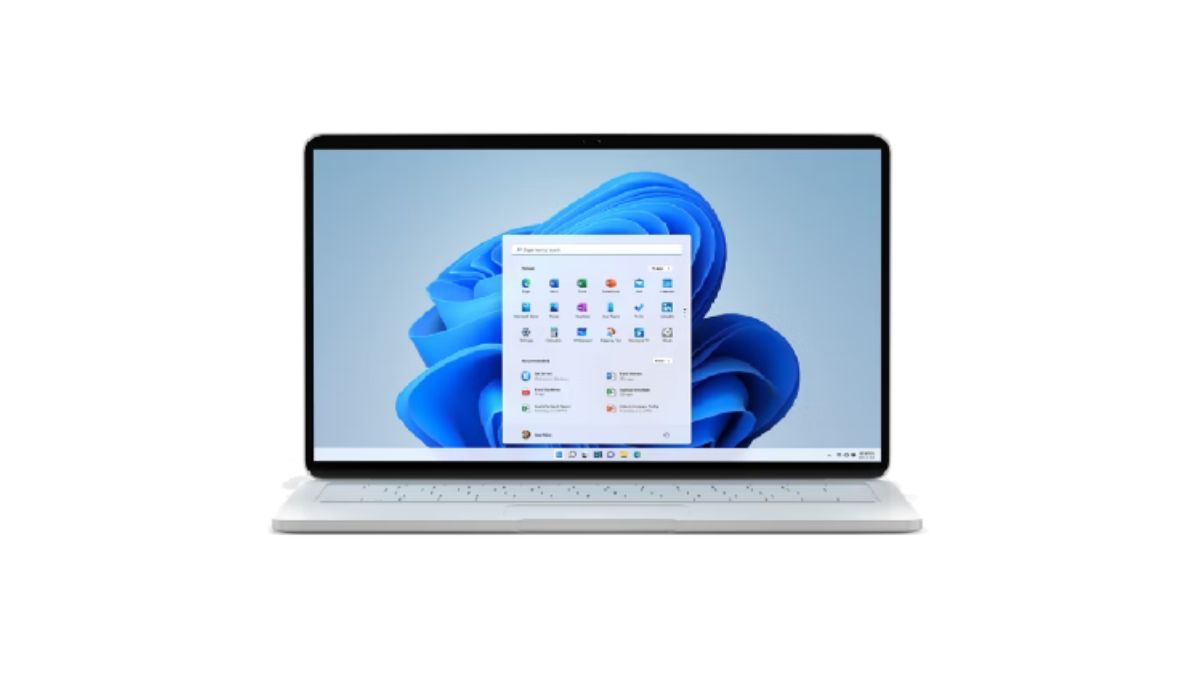
Windows 11 adoption has accelerated sharply in early 2026 and it has forced analysts to rethink what they assumed about Windows 11. After briefly dipping to 50.73% market share in December 2025, the operating system has now recorded two consecutive months of double-digit growth, according to data from Statcounter.
The latest figures show Windows 11 at 72.78% of the total Windows market worldwide. That is a massive jump from 62.41% at the start of February, and nearly 22 percentage points higher than its December low. In just two months, the platform has gained more than 22 points.
At the same time, Windows 10 has fallen to 26.27%. The decline has been equally dramatic. Windows 7, which still had about 3.8% share at the beginning of 2026, has now slipped below 1%. Windows 8, Windows 8.1, and Windows XP are also sitting in the sub 1% range, effectively disappearing from mainstream usage.
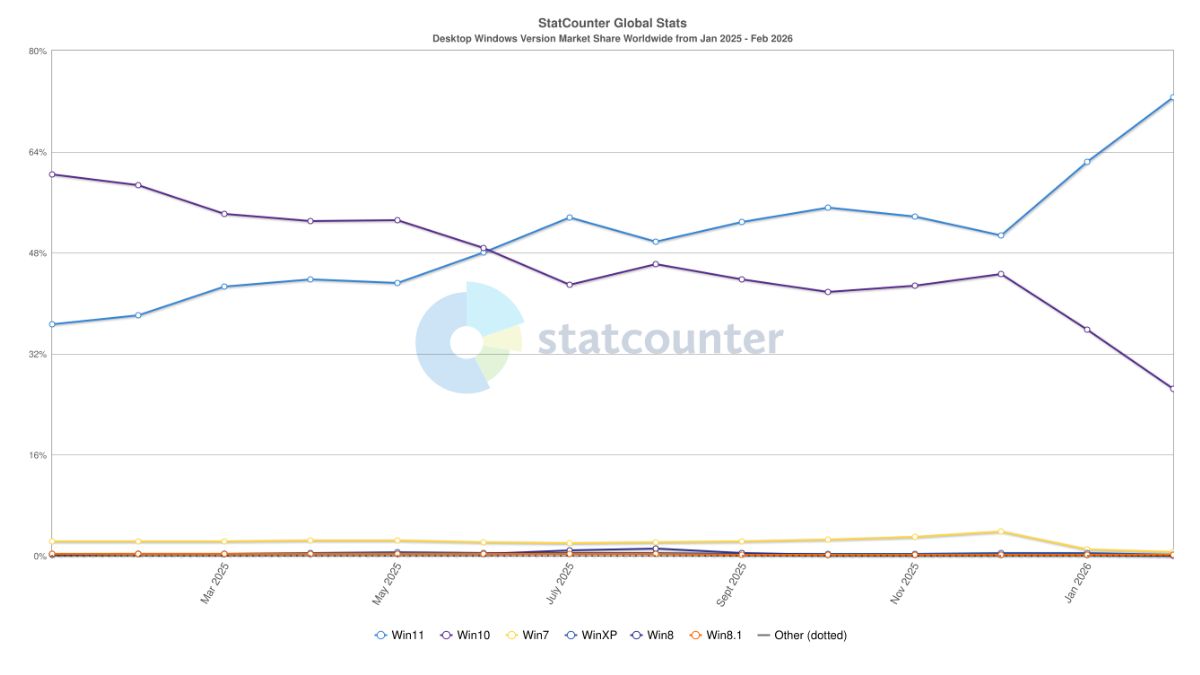
Statcounter does not receive official installation data from Microsoft. Instead, it collects usage statistics from billions of page views across approximately 1.5 billion websites every month. While it is not a direct measure of installed devices, it is widely used as a reliable indicator of real-world usage trends.
Separately, Microsoft has confirmed that Windows 11 has crossed the 1 billion user milestone. Satya Nadella shared this update during a recent earnings call.
Interestingly, Windows 11 reached 1 billion users in 1,576 days. Windows 10 took 1,705 days to reach the same milestone. That means Windows 11 achieved the mark 129 days faster, despite facing stricter hardware requirements and mixed user reception at launch.
Several factors are likely behind this rapid adoption curve. The most important thing is the approaching end of support for Windows 10. As security updates and long-term support wind down, enterprises and individual users are under pressure to upgrade. For businesses, staying on an unsupported operating system is not an option due to compliance and cybersecurity risks.
Another key factor is the hardware cycle. Most new PCs launched over the past two years ship with Windows 11 by default. As consumers and companies refresh their devices, Windows 11 becomes the automatic choice.
There is also the AI push. Microsoft has integrated Copilot and other AI-driven features deeply into the operating system. From search enhancements to productivity tools, Windows 11 is being positioned as the foundation for AI-powered computing. As AI becomes a selling point for new hardware, especially with dedicated NPUs in modern chips, Windows 11 benefits directly.
Read: How to Disable Copilot in Edge
Windows 11 has not been free from controversy. Users have criticized design changes, stricter hardware requirements, and increased reliance on online services. In 2026 alone, Microsoft has already released multiple out-of-band emergency updates to fix issues introduced by cumulative patches.
There have also been reports of system apps failing due to server-side licensing problems. As the OS becomes more cloud-connected and AI-integrated, even classic tools depend more on backend services.
Yet the data suggests that these concerns have not slowed adoption in a meaningful way.
Crossing 72% global market share marks a turning point. Windows 11 is no longer in transition. It is now the dominant Windows platform. If the current pace continues, Windows 11 could exceed 80% market share before the end of the year. The remaining Windows 10 users will likely migrate gradually as support deadlines approach and hardware upgrades continue.
The real test for Microsoft is not growth, but stability. Rapid adoption driven by necessity is one thing. Long-term user satisfaction is another.
In recent months, Windows has faced several quality concerns. Microsoft has released multiple out of band emergency updates to fix issues introduced by regular patches. Some updates caused performance drops, printer failures, VPN and network bugs, and in rare cases, boot related problems. For enterprises, such instability increases testing costs and deployment delays.
There have also been reports of built in apps failing to open due to backend licensing or cloud service glitches. As Windows 11 becomes more connected to online services and AI systems, dependency on server side infrastructure increases. If a cloud component fails, even a simple tool can stop working. That weakens trust.
Another concern is the pace of AI integration. Microsoft is aggressively pushing Copilot and AI-driven features across the system. While this helps position Windows 11 as an AI ready platform, some users feel certain features are rushed. Frequent interface changes and background service additions can also create friction for IT teams managing large fleets of devices.
For businesses, predictability matters more than experimentation. If update quality becomes inconsistent, companies may delay upgrades or extend support cycles. That could affect Microsoft’s long-term enterprise momentum.
There is also an emerging competitive angle. Apple is rumored to be preparing a more affordable MacBook model. If an entry-level MacBook powered by Apple Silicon launches at a competitive price point, it could become a serious alternative for students, creators, and even office users. Apple’s custom chips already deliver strong performance per watt and long battery life. If pricing drops closer to mainstream Windows laptop territory, the value equation changes.
In many markets, price has been the main advantage for Windows devices. If Apple narrows that gap, especially in education and entry-level productivity segments, Microsoft could face real pressure. An affordable MacBook with strong battery life and stable software may appeal to users frustrated by Windows update issues.
This does not mean Windows will suddenly lose dominance. The Windows ecosystem is vast, and enterprise dependency remains strong. But growth driven by forced upgrades is different from growth driven by preference.
Windows 11 has achieved impressive adoption numbers. Now Microsoft must focus on reliability, update quality, and user trust. At the same time, it must watch the competitive landscape closely. If Apple enters the affordable laptop space aggressively, the pressure on Windows will increase.