
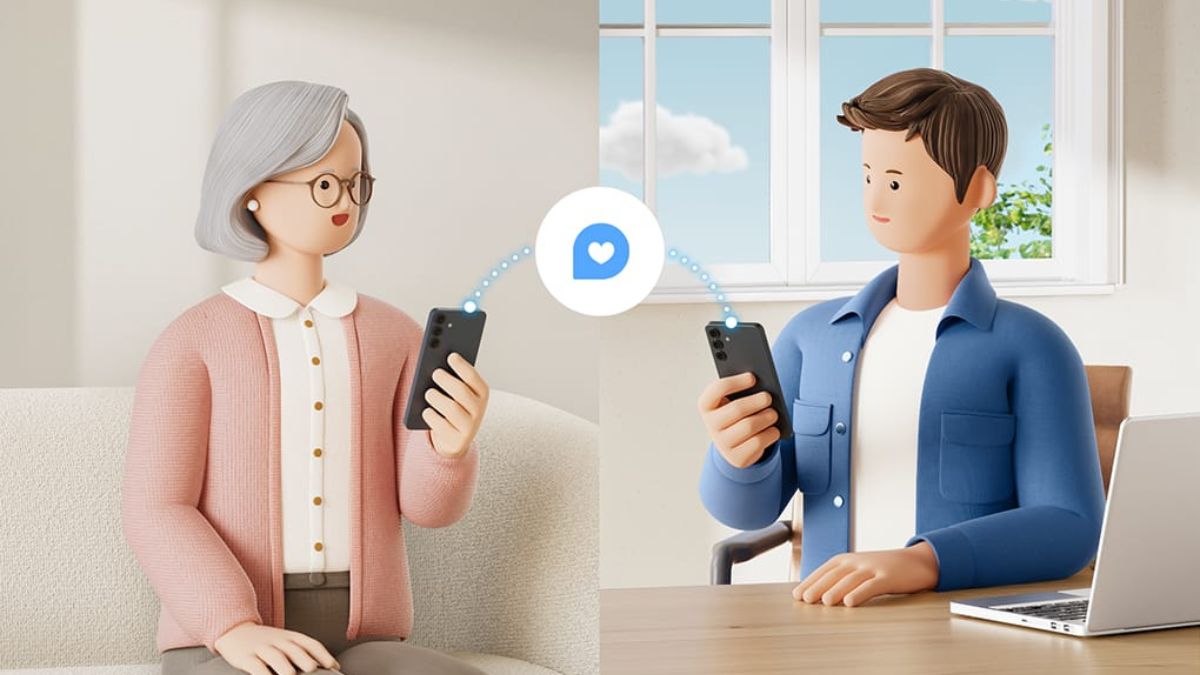

Samsung has introduced a new SmartThings Family Care feature in India. It is part of the Samsung SmartThings platform and works with the company’s connected home appliances. While Samsung presents it as a smart living upgrade, the idea goes beyond convenience.
The company is now using home appliances to understand daily routines and check if everything is normal inside a house. This is mainly aimed at people who live away from their parents and want a simple way to stay updated about their well-being.
The feature works with Samsung’s connected devices like refrigerators, washing machines, and other products from its Samsung Bespoke AI appliances lineup. It tracks how these appliances are used during the day and builds a pattern. If something unusual happens, like a routine not being followed, it can send alerts to family members. It can also send reminders for medicines and appointments.
This approach is different from what we usually see. Most solutions depend on cameras or wearable devices. Here, Samsung is using normal appliance usage as signals. For example, if a fridge is usually opened in the morning but is not used one day, the system may treat it as a change in routine and notify someone.
In India, this idea can work well in many cases. A lot of people live in different cities from their parents. Regular calls are not always enough, and not everyone is comfortable using smart gadgets or health trackers. Since this works in the background, it does not require much effort from the elderly user.
But there is also a clear limitation. The system depends on having multiple Samsung devices connected to the same system. That means only users who are already part of Samsung’s ecosystem can use it properly.
Privacy is another important concern. To make this feature work, Samsung is collecting data about how people use appliances inside their homes. Even if this data is used only for alerts, it still raises questions. Users will want to know how much data is being collected, how long it is stored, and who can access it.
Daily routines are not always fixed. Someone may wake up late, skip a routine, or go out without using appliances. It will be interesting to see how Samsung’s system manages to understand it.
Earlier, smart home products were about remote control and automation. Now companies are trying to add more intelligence by using data from everyday usage. This also opens the door for more advanced features in the future. If systems can understand routines, they can also try to predict problems or send early warnings. But that will only work if companies can build trust and keep the data safe.
Samsung’s SmartThings Family Care seems like an interesting idea. It addresses a real problem most families are facing. But it will be too early to say if Samsung managed to solve it.