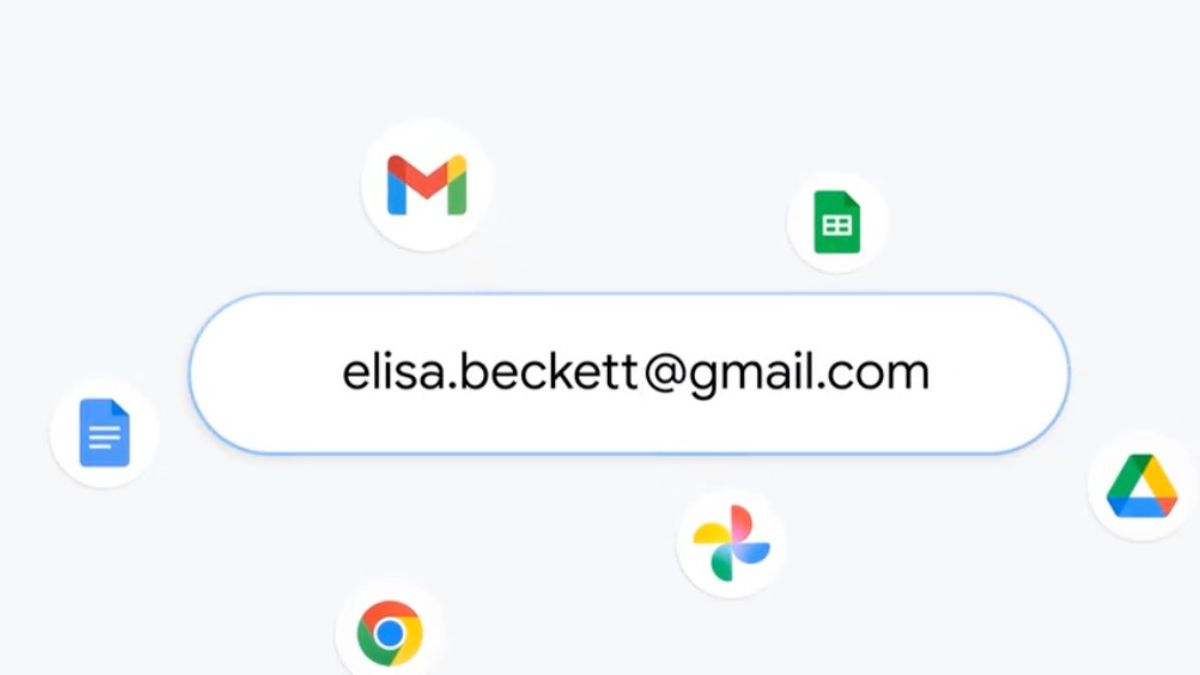

Google has announced a long-awaited feature that allows users to change their Gmail username without losing their emails, files, or account history. The feature is currently rolling out to users in the United States.
For years, Gmail users were stuck with the email address they created at the time of signup. If someone wanted a new or more professional username, the only option was to create a new account and manually migrate data.
Users can now select a new available @gmail.com username and link it to their existing account. All data across Gmail, Google Drive, Google Photos, and other services remains intact. There is no need for manual transfers or backups. This makes the process smooth and risk-free.
One of the most useful parts of this update is how Google handles the old username. Instead of removing it, the old email becomes an alias. This means users can still send, receive, and sign in using both the old and new email addresses. This ensures that no important emails or contacts are lost during the transition.
Google is also giving users some flexibility. If someone is not satisfied with the new username, they can revert to the old one. However, there are limits in place. Users can change their username only once per year, and up to three times in total. This is likely done to prevent misuse and maintain system stability.
This is a significant change in how identity works within the Google ecosystem. Email addresses are not just communication tools anymore. They are deeply linked to digital identity, authentication, and access to multiple services. Allowing username changes without breaking this connection requires careful backend design.
Google is likely using an internal unique identifier for each account, while treating email addresses as flexible aliases on top of it. This approach ensures that even if the visible username changes, the core identity and associated data remain untouched. It also reduces the risk of data loss or account conflicts.
There are also security considerations. Since email addresses are often used for login and recovery, maintaining the old address as an alias helps prevent account lockouts. At the same time, limiting how often usernames can be changed reduces the chances of abuse, such as impersonation or frequent identity switching.
This update also has practical benefits. Users who created casual or outdated email IDs years ago can now switch to more professional usernames without starting over. It is especially useful for freelancers, professionals, and content creators who want a cleaner digital identity.
As of now, the feature is limited to U.S. users. Google has not confirmed when it will expand globally, but a wider rollout is expected in the coming months.