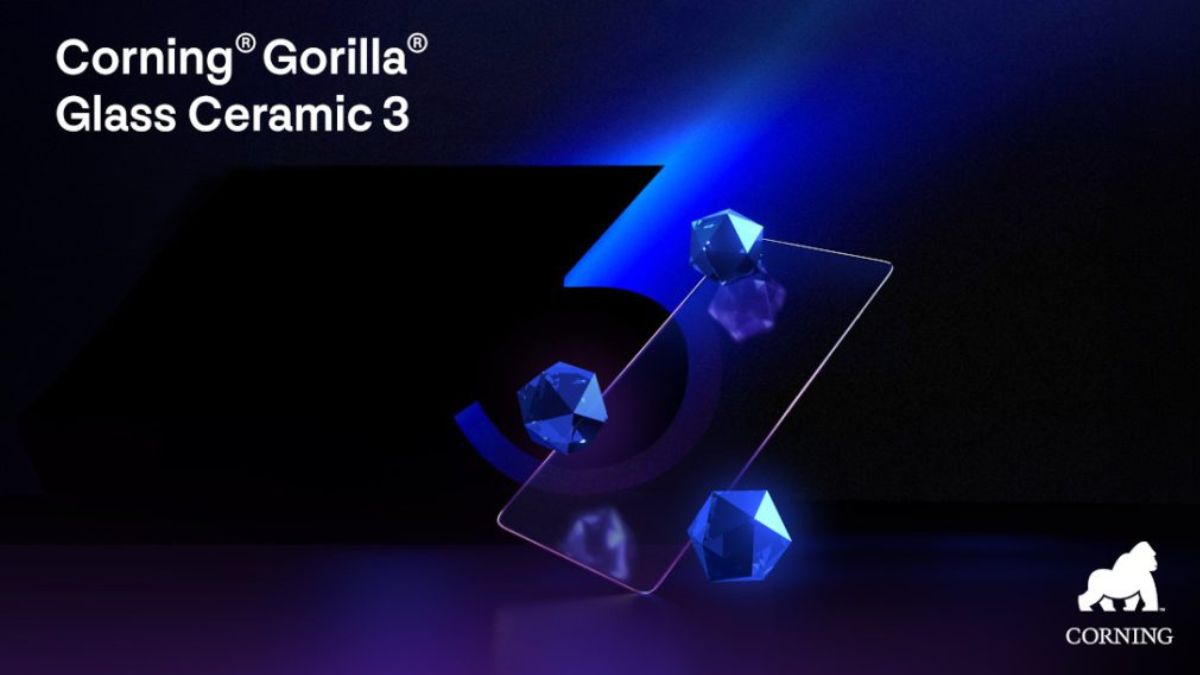

Corning has introduced Gorilla Glass Ceramic 3, its latest glass ceramic cover material designed for improved durability. The new material will make its commercial debut on Motorola’s upcoming foldable smartphone, the Razr Fold.
Corning says Gorilla Glass Ceramic 3 is built to handle everyday wear and tear over the lifespan of a device. It shows that the company is shifting focus from just impact resistance to long-term reliability.
According to Corning, the new material is developed using its expertise in glass and ceramic engineering. Instead of only optimizing for single drop performance, the company claims it worked on improving sustained durability. To test its strength, Corning uses lab environments that simulate real-world surfaces such as concrete and asphalt. These are considered some of the toughest impact surfaces for smartphones.
In internal testing, Gorilla Glass Ceramic 3 survived drops from heights of over two meters onto surfaces that mimic concrete. That is significant, especially for foldable devices, which have more complex designs and moving parts.
The material also handled repeated impact tests. It reportedly survived at least 20 consecutive drops from one meter onto simulated asphalt. Corning claims that competing aluminosilicate glass typically fails after a single drop in similar conditions.
The Motorola Razr Fold will be the first smartphone to use Gorilla Glass Ceramic 3. This continues the long-standing partnership between Corning and Motorola. For foldable devices, durability is even more important. These phones have hinges, flexible displays, and thinner frames. Any improvement in cover material strength can help reduce long term damage.
Motorola is expected to showcase the Razr Fold along with other new technologies at the ongoing Mobile World Congress 2026.