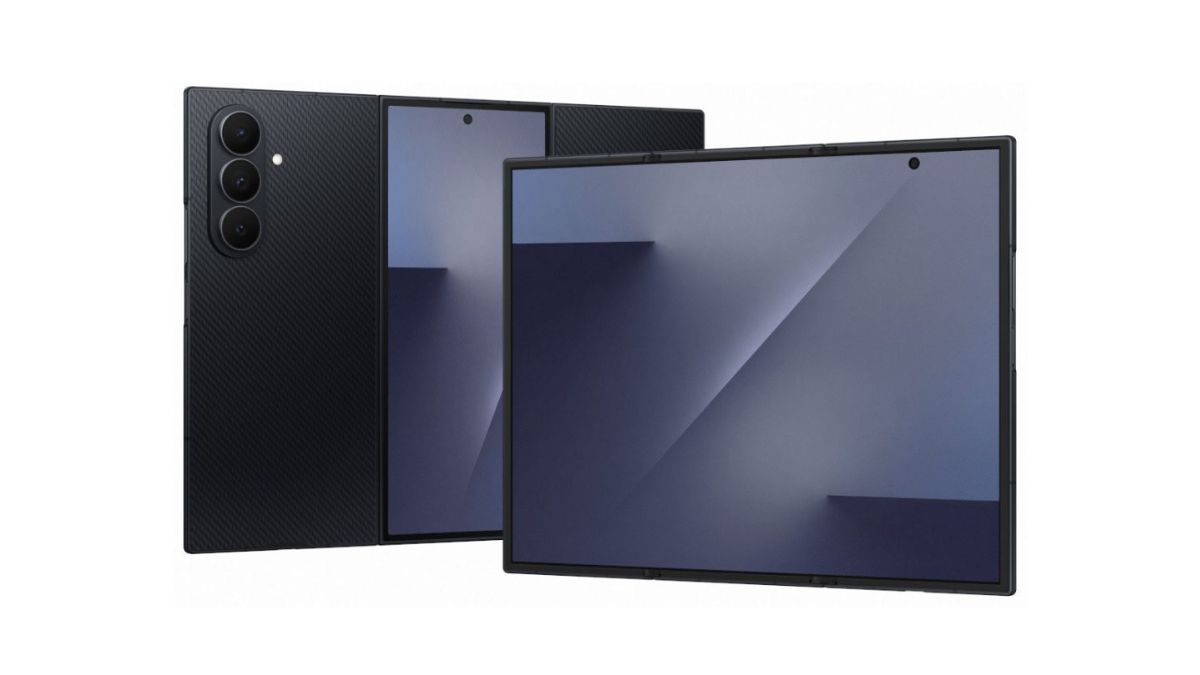

After months of rumours and leaks, Samsung has finally revealed the Galaxy Z TriFold, its first trifold smartphone. This is Samsung’s most ambitious foldable yet. It folds twice, opens into a full 10-inch tablet, and still works like a regular phone when closed. It is clear that Samsung is trying to show what the future of mobile devices could look like, but this design also raises questions about practicality, durability, and long-term usability.
The Galaxy Z TriFold comes with two separate displays. The outer screen is a familiar 6.5-inch FHD+ Dynamic AMOLED panel with a 21:9 aspect ratio and up to 2600 nits brightness. It feels like a normal flagship phone when closed.
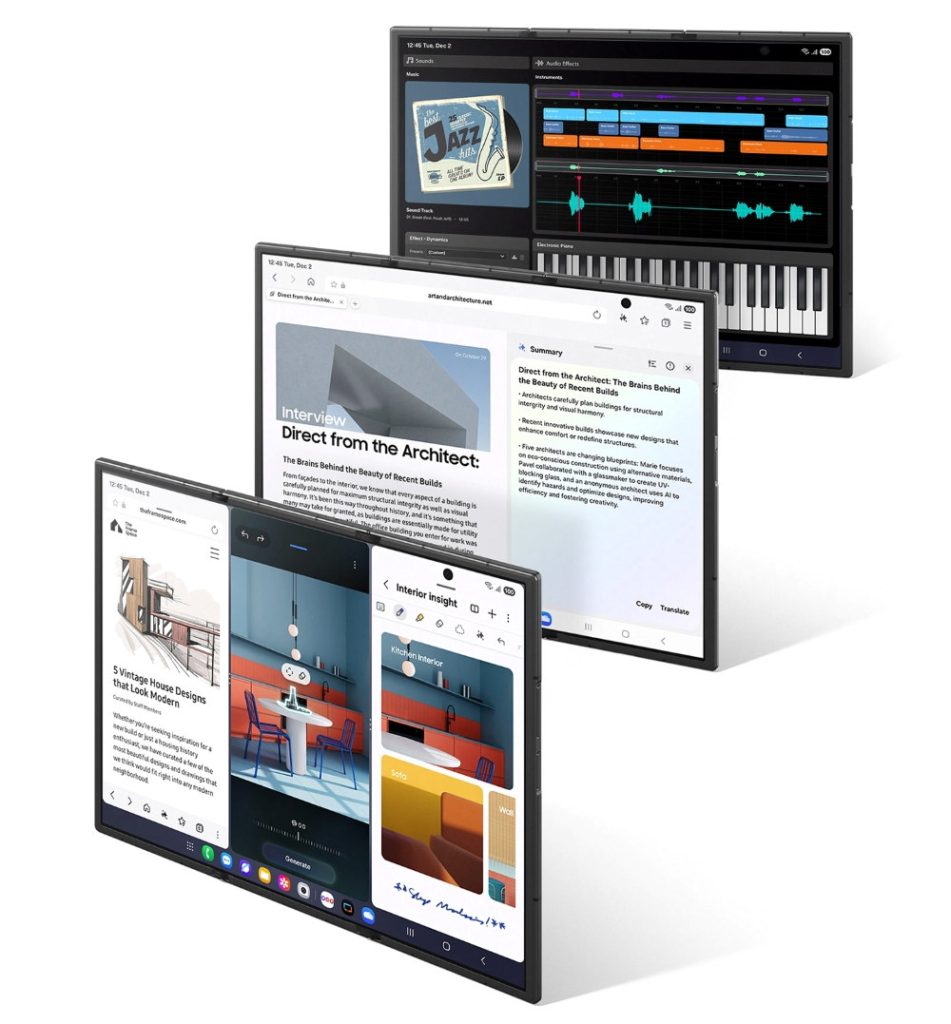
Open both sides and the device transforms into a 10-inch Dynamic AMOLED 2X panel with a resolution of 2160 x 1584. Both the inner and outer screens support adaptive refresh rates from 1Hz to 120Hz. The experience is designed to be smooth whether you are watching videos, browsing, or gaming.
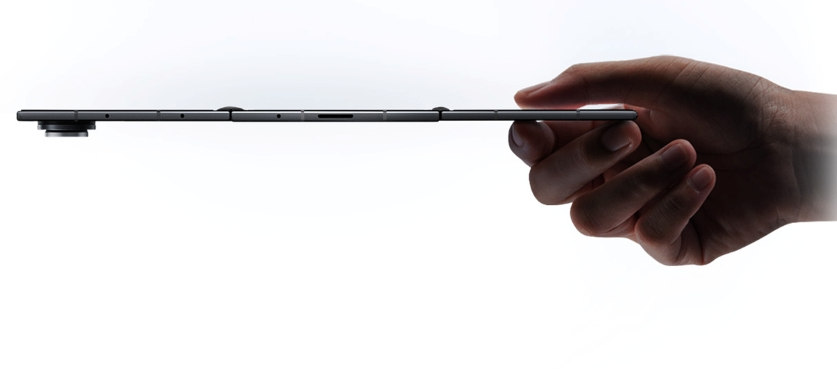
What surprised me is how slim Samsung has kept the device. When folded, it measures 12.9 mm thick, which is in line with early foldables. When fully opened, it becomes just 3.9 mm at its thinnest point, excluding the camera bump. The weight is 309 grams, which is heavy for a phone but lighter than most 10-inch tablets. If you enjoy carrying one device for both work and entertainment, the TriFold might feel convenient.
Samsung has used high-end materials. The front gets Corning Gorilla Glass Ceramic 2, while the back uses a Ceramic-Glass Fiber Reinforced Polymer. The frame is made from Armor Aluminum, and the hinge uses titanium. This shows Samsung is trying to make the phone durable despite the complex folding mechanism.
The device carries an IP48 rating. This means it can survive 1.5 m of fresh water for limited time, and it is protected from larger dust particles but not completely dust-tight. For a folding device with moving parts, this rating is good, but long-term durability will still be a concern. Hinges always face wear and tear over time, and a double-folding design naturally has a higher risk of failure.
He phone is powered by Snapdragon 8 Elite for Galaxy based on a 3 nm architecture. It comes with 16 GB RAM and storage options of 512 GB or 1 TB. This is the same class of performance we see in Samsung’s top flagship phones.
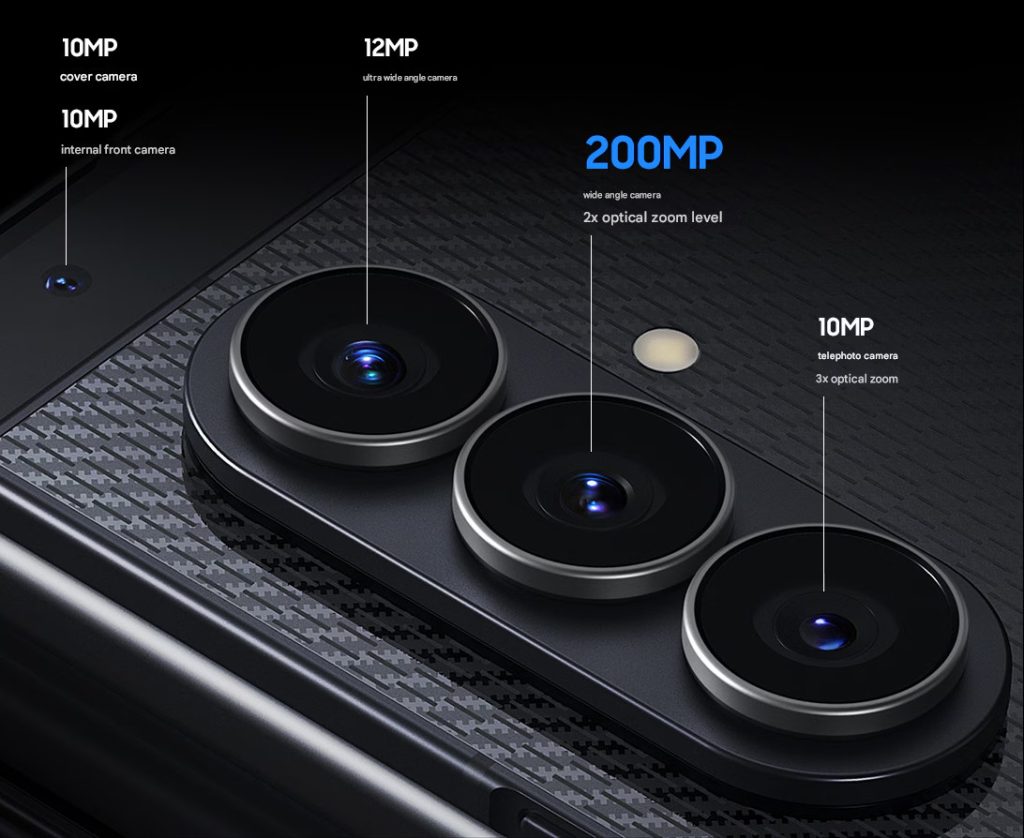
It comes with a 200 MP main camera with OIS and an F1.7 aperture. This is similar to the Ultra series and should deliver high-detail shots and strong low-light performance.
The rear setup also includes a 12 MP ultra-wide lens and a 10 MP telephoto with 3x optical zoom and up to 30x digital zoom. There are two 10 MP front cameras—one on the cover display and one inside. For a foldable device, this is one of the strongest camera packages we have seen.
Connectivity options are 5G, Wi-Fi 7, Bluetooth v5.4, UWB, GPS, and USB-C. It also has a fingerprint on the side. The phone also has Samsung Knox with Samsung Knox Vault.
The battery is a 5600 mAh tri-cell system. Samsung needed multiple cells because of the folding design. It supports 45W wired charging, giving around 50 percent charge in 30 minutes. It also offers 15W wireless charging and Wireless PowerShare. For such a large display, battery life will be something users will watch closely.
The Galaxy Z TriFold starts at 3,594,000 KRW (around USD 2445 or Rs. 2,19,235) for the 512 GB model. It will launch first in Korea on December 12, 2025, and later expand to China, Taiwan, Singapore, the UAE, and the United States.
Samsung says the box will include a Carbon Shield Case, AR Film, a 45W charging adapter and a data cable. Select retail stores in launch countries will have the device on display so people can try the new form factor before buying.
The Galaxy Z TriFold is one of the boldest devices Samsung has created. It shows how far foldable tech has come, and it gives users a real smartphone-tablet hybrid without carrying two devices.
However, I feel this design will appeal only to a small group of users. The price is extremely high, and the double-fold mechanism brings natural durability concerns. Even with premium materials and an IP rating, long-term hinge performance is something only real-world usage can prove. The weight will also be noticeable compared to a regular phone.