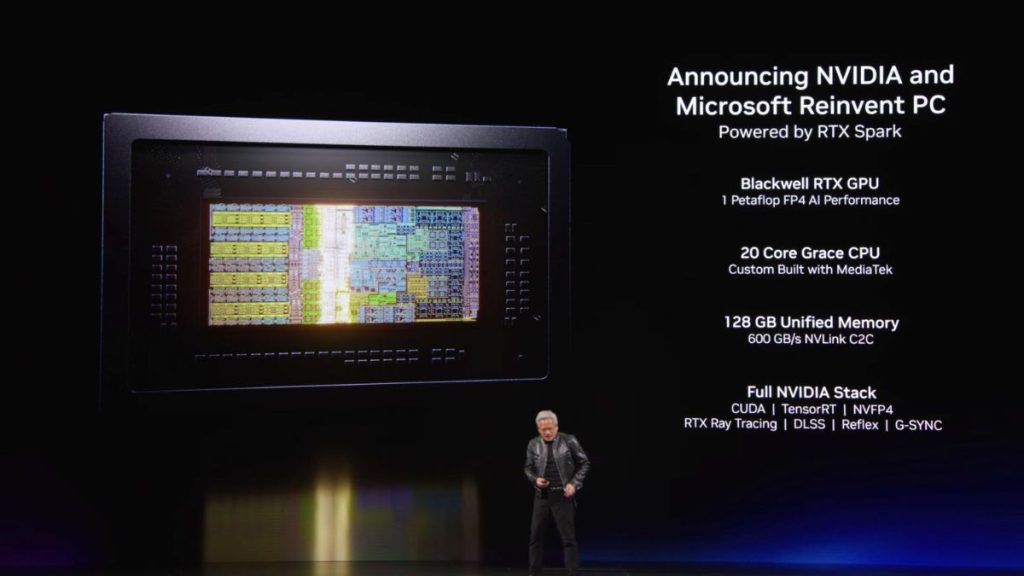
After years of rumors, leaks, and speculation, NVIDIA has finally unveiled RTX Spark, its first serious attempt at bringing together AI, gaming, and content creation on a Windows-on-ARM platform. The chip was previously known by its internal codename N1X and has been the subject of several reports over the past year. Now it is official, and NVIDIA believes RTX Spark could change what users expect from a Windows laptop.
RTX Spark is not just another laptop processor. It combines an Arm-based CPU, Blackwell RTX graphics, AI acceleration, and unified memory into a single package. The goal is simple: deliver desktop-class performance in thin and lightweight laptops with all-day battery life.
NVIDIA’s Biggest Push Into Windows PCs
For years, the Windows laptop market has been dominated by Intel and AMD. More recently, Qualcomm entered the conversation with Snapdragon X Elite and Snapdragon X Plus processors. Now NVIDIA wants a share of that market.
RTX Spark is built on TSMC’s 3nm manufacturing process and combines a custom 20-core Arm CPU developed with MediaTek and an NVIDIA Blackwell GPU with up to 6,144 CUDA cores. That is a significant amount of GPU power for a chip designed for thin laptops.
NVIDIA claims RTX Spark can offer performance similar to an RTX 5070 laptop GPU while consuming much less power. If those claims hold true in real-world testing, RTX Spark could become one of the most powerful chips ever seen in a Windows laptop.
Built for AI
Like almost every major chip launch in 2026, AI is at the center of the RTX Spark story. NVIDIA says the chip can deliver up to 1 petaflop of FP4 AI performance. The company also claims it can run AI models with up to 120 billion parameters locally. That is a huge jump compared to what most consumer laptops can handle today.
NVIDIA is positioning RTX Spark as the ideal platform for AI developers, researchers, and creators. Since CUDA runs natively on the chip, developers can use the same software stack that powers many of today’s AI workloads in data centers.
This could make RTX Spark-powered laptops attractive for developers who want to build, test, and fine-tune AI models locally before deploying them to larger systems.
NVIDIA is also talking about AI agents that can perform tasks on behalf of users. These agents could generate content, write code, automate workflows, and manage system settings.
Unified Memory
One of the most interesting features of RTX Spark is its memory architecture. The chip supports up to 128GB of LPDDR5X unified memory. Instead of separating system memory and graphics memory, everything is shared across the CPU, GPU, and AI workloads.
Apple popularized this approach with its M-series chips, and it has proven particularly useful for video editing, AI workloads, and professional applications.
NVIDIA says RTX Spark can achieve memory bandwidth of up to 600GB/s through NVLink technology. That bandwidth could help the chip handle large AI models, complex 3D projects, and high-resolution video editing without constantly moving data between different memory pools.
Powerful for Gaming
Unlike most ARM processors announced so far, RTX Spark is also targeting gamers. The Blackwell GPU inside the chip supports ray tracing, DLSS 4.5, Frame Generation, Reflex, RTX Video Frame Generation, and Ray Reconstruction.
NVIDIA says users will be able to play modern games at 1440p resolution while benefiting from the same RTX technologies found on desktop graphics cards.
At launch, support is expected for some popular titles such as Fortnite, Valorant, League of Legends, PUBG, Counter-Strike, Alan Wake II, Windrose, and Pragmata, with more games to follow. The company is also working with anti-cheat providers to improve compatibility with popular online games.
Gaming remains one of the biggest challenges for Windows on ARM devices. If NVIDIA can solve compatibility issues while maintaining strong performance, RTX Spark could become the first ARM chip that gamers seriously consider.
Focus on Content Creators
Content creators appear to be one of NVIDIA’s primary targets. Adobe Photoshop and Premiere Pro will support RTX Spark from day one. NVIDIA has also partnered with companies including Blackmagic Design, Blender, CapCut, ComfyUI, and OTOY.
The company claims users can render massive 90GB 3D scenes using OptiX and DLSS technologies. Video editors will also benefit from dedicated Blackwell media engines capable of handling 12K 4:2:2 video workflows. Support for AV1 encoding and decoding should help creators who regularly work with modern video formats.
These are capabilities normally associated with high-end workstations rather than thin laptops.
The First RTX Spark Laptops
Several laptop makers have already announced plans to launch RTX Spark-powered devices.
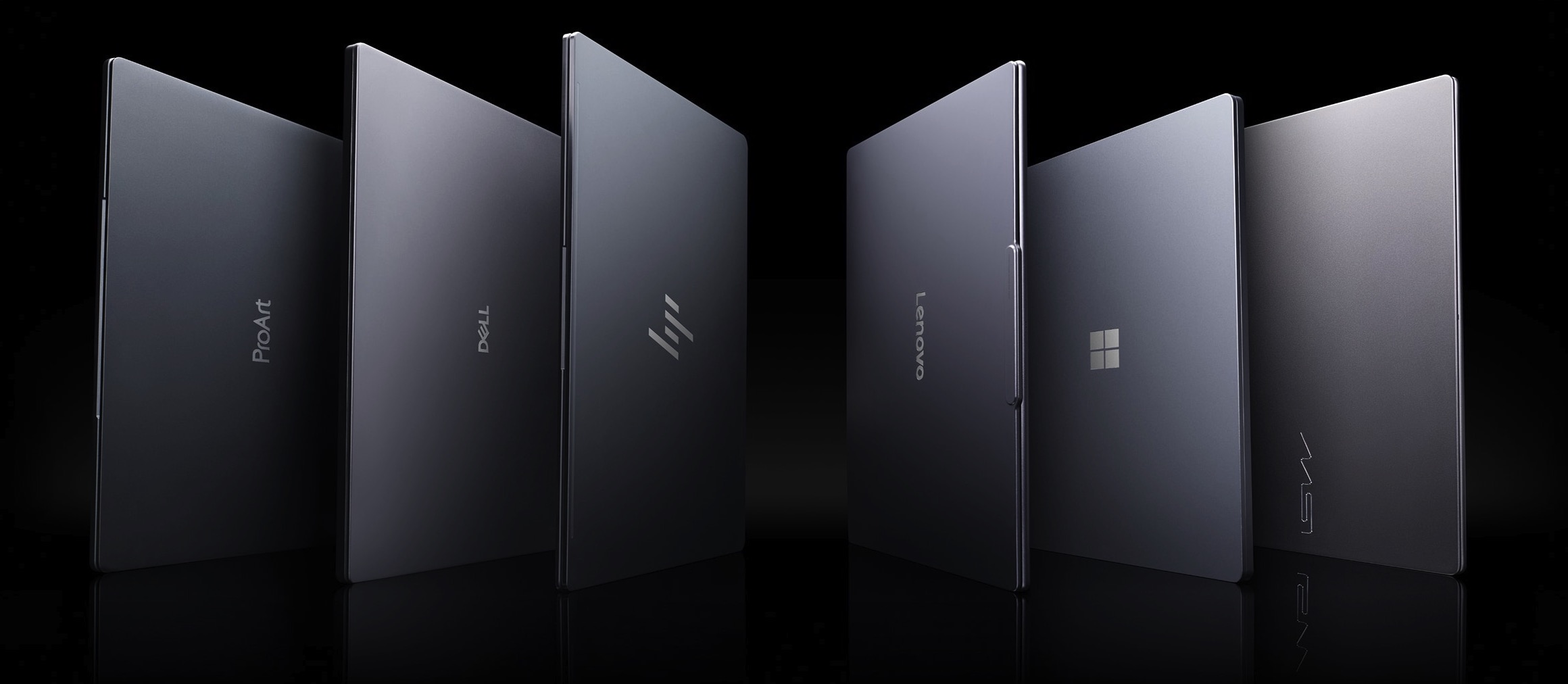
The first wave includes:
- ASUS ProArt P14
- ASUS ProArt P15
- Dell XPS 16
- HP OmniBook X 14
- HP OmniBook Ultra 16
- Lenovo Yoga Pro 9n
- Microsoft Surface Laptop Ultra
- MSI Prestige N16 Flip AI+
NVIDIA also confirmed that RTX Spark will power a new generation of compact desktop PCs from several manufacturers.
The first products are expected to arrive in Fall 2026.
Can RTX Spark Change the Windows Laptop Market?
RTX Spark arrives at an interesting time. Windows on ARM is finally gaining momentum thanks to Qualcomm’s recent efforts. At the same time, Apple’s M-series processors have shown that ARM-based chips can deliver excellent performance and battery life.
NVIDIA’s advantage is that it already dominates AI computing and discrete graphics. By combining those strengths with an ARM CPU, the company is attempting to create a platform that can handle gaming, content creation, and AI workloads better than existing solutions.
However, there are still unanswered questions. NVIDIA has not revealed detailed benchmark numbers. Pricing remains unknown. Real-world battery life is also a mystery. Software compatibility will be another area to watch closely.
If NVIDIA delivers on its promises, RTX Spark could become the chip that finally makes Windows on ARM appealing not just to everyday users, but also to gamers, creators, and AI developers.
Related Posts