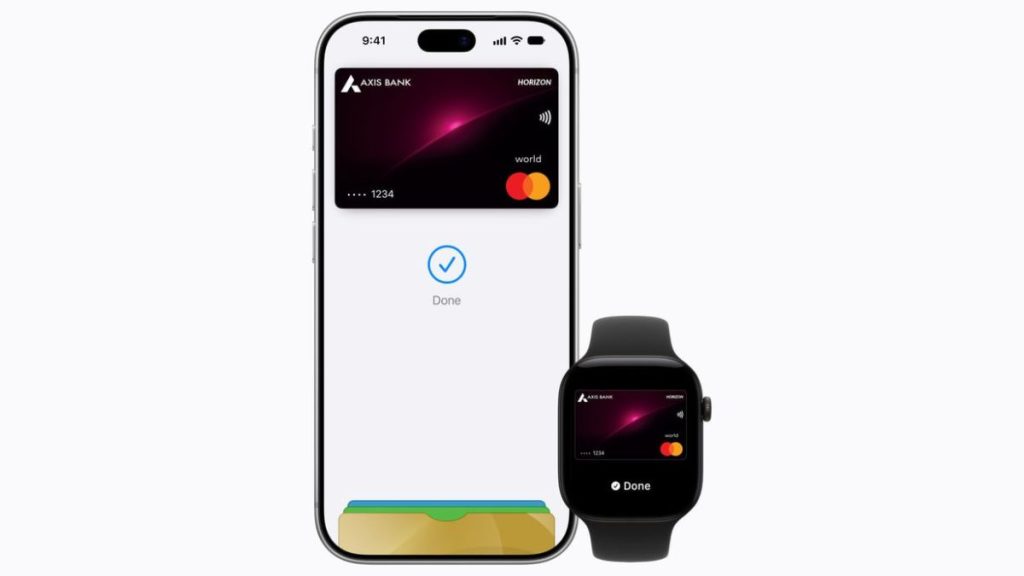
Apple has finally launched Apple Pay in India, bringing its digital payments service to the country after years of speculation. The service is now available on iPhone, iPad and Apple Watch, while Mac support is planned for a future update.
The timing is interesting because India already has a mature digital payments ecosystem, with UPI being the preferred option for many everyday transactions. Apple Pay is taking a different route. It is focused on making credit card payments easier through Apple devices, rather than trying to replace UPI.
At launch, Apple Pay supports Visa and Mastercard credit cards issued by Axis Bank. Users can add an eligible card to Apple Wallet and use it for contactless payments at NFC-enabled terminals. Apple Pay can also be used for payments within supported apps and on websites, without manually entering card details, OTPs or physical card PINs during checkout.
The payment experience is designed to be simple. At a physical store, users can double-click the side button or Home button, authenticate using Face ID, Touch ID or the device passcode, and hold the iPhone or Apple Watch near an NFC terminal. For online and in-app purchases, Apple Pay can authenticate the transaction directly on the device.
Apple has already secured support from several major merchants in India. The initial list includes Apple Store, Blinkit, Chaayos, Croma, Ixigo, Reliance brand outlets, Tata 1mg and Zomato. The company has also worked with payment service providers and aggregators including Cashfree, JusPay, Mswipe, Paytm, PayU, Pine Labs, Razorpay and Worldline to support merchant acceptance.
The bigger limitation right now is bank support. Apple Pay may have arrived in India, but it is not yet available to every credit card user. Only eligible Axis Bank Visa and Mastercard credit cards are supported at launch. This makes the rollout more of a first step than a full-scale Apple Pay launch for the Indian market.
Apple will need to bring more banks onboard if it wants the service to become a regular payment option for a larger number of iPhone users. The company already has partnerships with more than 11,000 banks and financial institutions globally, so expanding the Indian list should be an important part of its next phase.
Privacy is another major part of Apple’s pitch. Apple Pay does not store the actual credit card number on the device or Apple’s servers, and the card number is not shared with merchants. Instead, each card gets a unique Device Account Number that is stored in the device’s Secure Element. This keeps the actual card information separate from the payment process.
Users can also remotely manage Apple Pay if their device is lost. Apple’s Find My service can be used to locate or lock the device and suspend payment authorisation. Apple says it does not retain transaction information that can be directly tied to a specific user.
Adding a card can be done through the Wallet app on an iPhone or through the latest Axis Bank app. Existing card rewards, loyalty points and other benefits from the issuing bank continue to apply when the card is used through Apple Pay.
The launch gives iPhone and Apple Watch users another way to make card payments in India, but it is unlikely to change how most people make everyday digital payments overnight. UPI already handles a huge share of India’s digital transactions, while Apple Pay currently targets users who want to use their existing credit cards through Apple’s hardware.
Related Posts