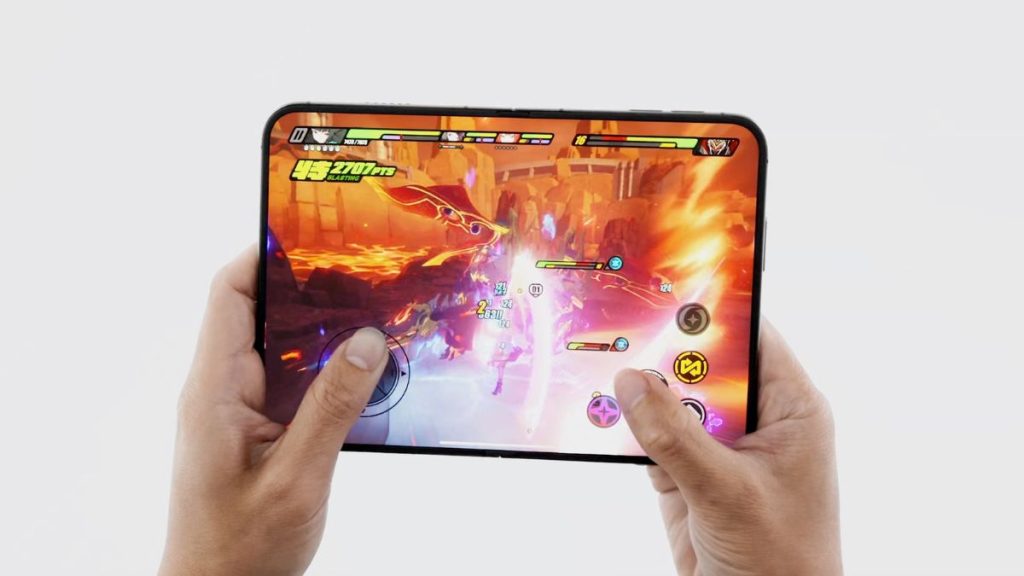
Apple has been investing in iPhone gaming for years, from bringing major console and PC games to the platform to improving its GPU architecture and gaming software. The iPhone 18 Pro shows where that strategy is heading next. Apple is not turning the iPhone into a gaming phone with triggers, RGB lighting, or an internal fan. Instead, it is trying to make the regular iPhone hardware better at handling demanding games for longer periods.
The biggest change is therefore not simply the faster A20 Pro chip. Apple has also redesigned the thermal system around it, which is important because sustained gaming performance depends as much on heat management as peak processing power.
The iPhone 18 Pro and Pro Max use Apple’s new A20 Pro, built on a 2nm process. It has a six-core CPU, a seven-core GPU and a 32-core Neural Engine. Apple says the new GPU is up to 40% faster than the previous generation and that the chip has 50% more memory bandwidth. The company specifically highlighted demanding gaming as one of the workloads that can benefit from the new architecture.
A 40% faster GPU does not mean games will suddenly run 40% faster. Actual gains depend on the game, resolution, graphics settings and whether the existing version was already limited by the CPU, GPU or thermal constraints. But the additional graphics headroom should give developers more room to push visual quality and maintain higher frame rates in demanding titles.
That is becoming increasingly relevant as Apple tries to bring more console-style games to iPhone. Games such as Death Stranding, Resident Evil and Assassin’s Creed Mirage have already shown that Apple wants the iPhone to handle software that was once associated with consoles and PCs. The hardware now has to sustain that workload rather than simply demonstrate that it can run it.
Read: PC Gaming Is Becoming a Costly Hobby and AI Is to Blame
The iPhone 18 Pro uses a redesigned vapor chamber with three times the surface area of the previous generation. Apple has also changed the A20 Pro’s packaging so that the processor can transfer heat more directly into the vapor chamber. Apple claims the new thermal system can deliver up to 40% better sustained performance than the iPhone 17 Pro.
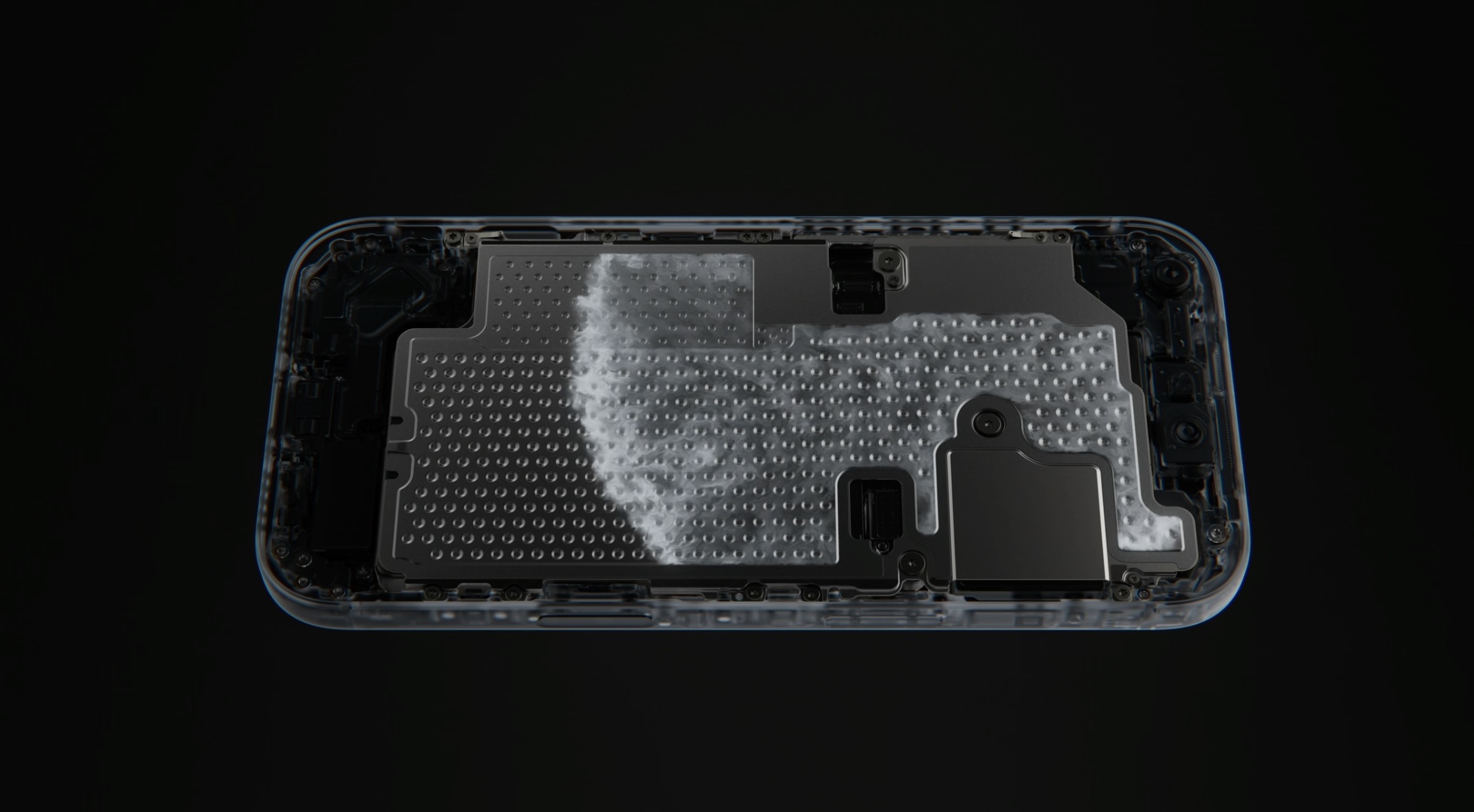
A smartphone can produce impressive performance for a short benchmark run and then reduce CPU and GPU speeds as temperatures rise. A long gaming session is a very different workload. A phone that maintains a higher level of performance after 30 or 60 minutes can provide a more consistent experience even if its peak benchmark score is only slightly higher.
Apple has not provided game-by-game frame-rate numbers, so it would be wrong to claim that Genshin Impact, Resident Evil or another specific game will run 40% faster. What Apple is promising is more headroom under sustained workloads. In practice, that should be most noticeable in demanding games that continuously stress the GPU.
It could also reduce the gap between the performance a game delivers when you first launch it and what you get later in a long session. That consistency is arguably more useful to a gamer than a higher peak score that lasts only a few minutes.
It is also important to understand that Apple is still far behind dedicated gaming phones in hardware. The REDMAGIC 11 Pro, for example, is built specifically around sustained gaming. Its cooling system combines a large vapor chamber with an active 24,000 RPM fan and liquid cooling. The phone also has gaming-specific controls and other hardware designed around long gaming sessions.
ASUS has taken a similar approach with the ROG Phone family, where gaming features extend beyond the processor. ROG phones have offered high-refresh-rate displays, large batteries, gaming controls and dedicated cooling accessories. The ROG Phone 9, for example, has a 5,800mAh battery, a 185Hz display and up to 24GB of RAM in its Pro Edition.
These phones are built around a different priority. If the iPhone is a general-purpose smartphone that is increasingly good at gaming, a REDMAGIC or ROG Phone is a gaming device that also happens to be a smartphone.
That difference remains significant. A gaming phone can accept a thicker body, larger battery, active cooling, and physical controls because those features directly serve its target audience. Apple cannot take the same approach without compromising the characteristics that make the iPhone attractive to mainstream buyers.
The iPhone Duo takes Apple’s strategy in an interesting direction. It uses the A20 Pro and a custom vapor-chamber cooling system, while opening into a 7.6-inch internal display. Apple says its design is capable of sustaining high-frame-rate gaming and other demanding workloads.
The larger display could be particularly useful for games with complex interfaces or controller support. It gives developers considerably more screen space than a conventional iPhone, although the actual benefit will depend on how individual games adapt to the unusual aspect ratio and larger canvas.
This is where the Duo could become an unexpected gaming device. Apple is not selling it as a gaming phone, but the combination of a large display, powerful GPU, and improved thermal management gives it some of the characteristics gamers normally look for in a larger gaming device.
It could also make the Duo more interesting for cloud gaming and remote play. A 7.6-inch screen provides more room for virtual controls and game interfaces, while a Bluetooth controller can turn the device into something closer to a small gaming tablet. That is speculation rather than something Apple has promised, but the hardware makes the use case obvious.
The interesting part of Apple’s strategy is what it has not done. There is no built-in cooling fan, no dedicated shoulder triggers, and no RGB lighting. Apple is instead putting gaming improvements into hardware that every iPhone user benefits from. A larger thermal system helps gaming, but it can also help AI workloads, video processing and other sustained tasks. A faster GPU improves games but also benefits graphics-heavy applications.
That makes Apple’s approach more commercially sensible than building a separate gaming iPhone. The company can spend money improving thermal performance and GPU capability without creating a niche product that appeals only to gamers.
For gamers, however, this means the iPhone is still not the most specialized gaming phone available. Android gaming phones have more aggressive cooling systems, larger batteries, and dedicated controls. They are better designed around the specific needs of people who spend hours playing demanding games.
Also read: If Gaming Phones Don’t Sell, Why Are Brands Chasing Them?
Apple’s advantage is different. It is trying to make a mainstream flagship that can handle increasingly demanding games without asking users to buy a gaming-specific phone.
That makes the iPhone 18 Pro’s biggest gaming upgrade less about peak performance and more about how long it can maintain that performance. If Apple’s claims hold up in independent testing, the difference should show up not in a five-minute benchmark, but later in a long gaming session when thermal limits usually start to matter.
That is a much more meaningful direction for iPhone gaming than simply chasing another benchmark record.
Related Posts