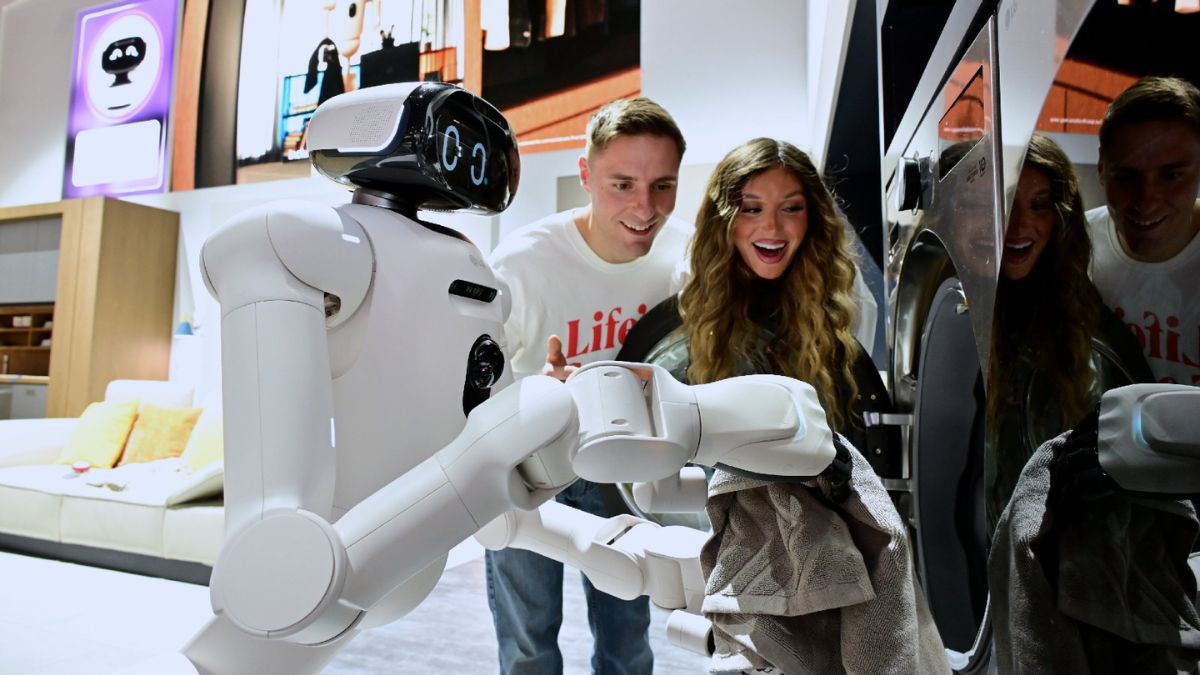
LG Electronics has outlined its long-term vision for bringing AI-powered robots into homes as part of what it calls the “Zero Labor Home.” The company believes future homes will rely on intelligent robots, connected appliances, and AI systems that can handle everyday tasks with minimal user intervention.
At the center of this vision is LG’s CLOiD home robot, which was first unveiled at CES 2026. The robot is designed to work alongside LG’s ThinQ-connected appliance ecosystem and serve as a physical interface between AI systems and the home environment.
The announcement shows a broader trend in the technology industry. While generative AI has focused on software and digital assistants over the past few years, companies are increasingly looking at ways to connect AI with the physical world. This category is often referred to as Physical AI, where intelligent systems can not only understand information but also perform actions in real-world environments.
According to LG, its approach to Physical AI is built on four key pillars. These include decades of consumer data gathered through millions of connected home appliances, more than 20 years of robotics development experience, expertise in core motion technologies such as actuators and motors, and a broader ecosystem of companies within the LG Group.
LG says its long history in the home appliance market gives it a unique advantage in understanding household routines and user behavior. The company believes this knowledge can help it build robots that are more context-aware and capable of assisting with everyday household activities.
The company also highlighted its robotics experience across multiple sectors. Since launching its first robotic vacuum cleaner in 2003, LG has expanded into commercial, logistics, and industrial robotics. The operational data collected from these deployments is expected to play an important role in developing future home robots.
Another major part of LG’s strategy is its internal ecosystem. The company is bringing together technologies from several LG Group businesses, including AI models from LG AI Research, sensing and vision technologies from LG Innotek, industrial robotics expertise from ROBOSTAR, battery technology from LG Energy Solution, and software integration capabilities from LG CNS.
LG says this combination of AI, robotics, sensing technologies, software, and connected appliances will help create systems that can understand their surroundings and take action autonomously.
The company’s long-term goal is to create homes that can anticipate user needs rather than simply respond to commands. In the envisioned Zero Labor Home, AI-powered robots and smart appliances would coordinate with each other to manage household tasks, giving users more time for work, leisure, and family activities.
Related Posts