
Meta is reportedly testing a new feature for WhatsApp that could change how users store their chat backups. Instead of depending only on Google Drive or iCloud, users may soon get the option to save backups directly on Meta’s infrastructure.
At present, WhatsApp relies on third-party cloud services for backups. This often creates issues for users who run out of storage or do not want to upgrade their cloud plans. It is because WhatsApp stopped getting unlimited backups on Google Drive back in 2023. The new system aims to solve this by offering an alternative managed by Meta itself.
According to early reports, the company is planning both free and paid storage tiers. The free plan may include around 2GB of space, while a paid option could offer up to 50GB for about $0.99. The exact pricing cycle is still unclear.
Screenshots shared by WABetaInfo suggest users will be able to choose their preferred backup provider. This means you can continue using Google Drive or switch to WhatsApp’s own storage, depending on your needs.
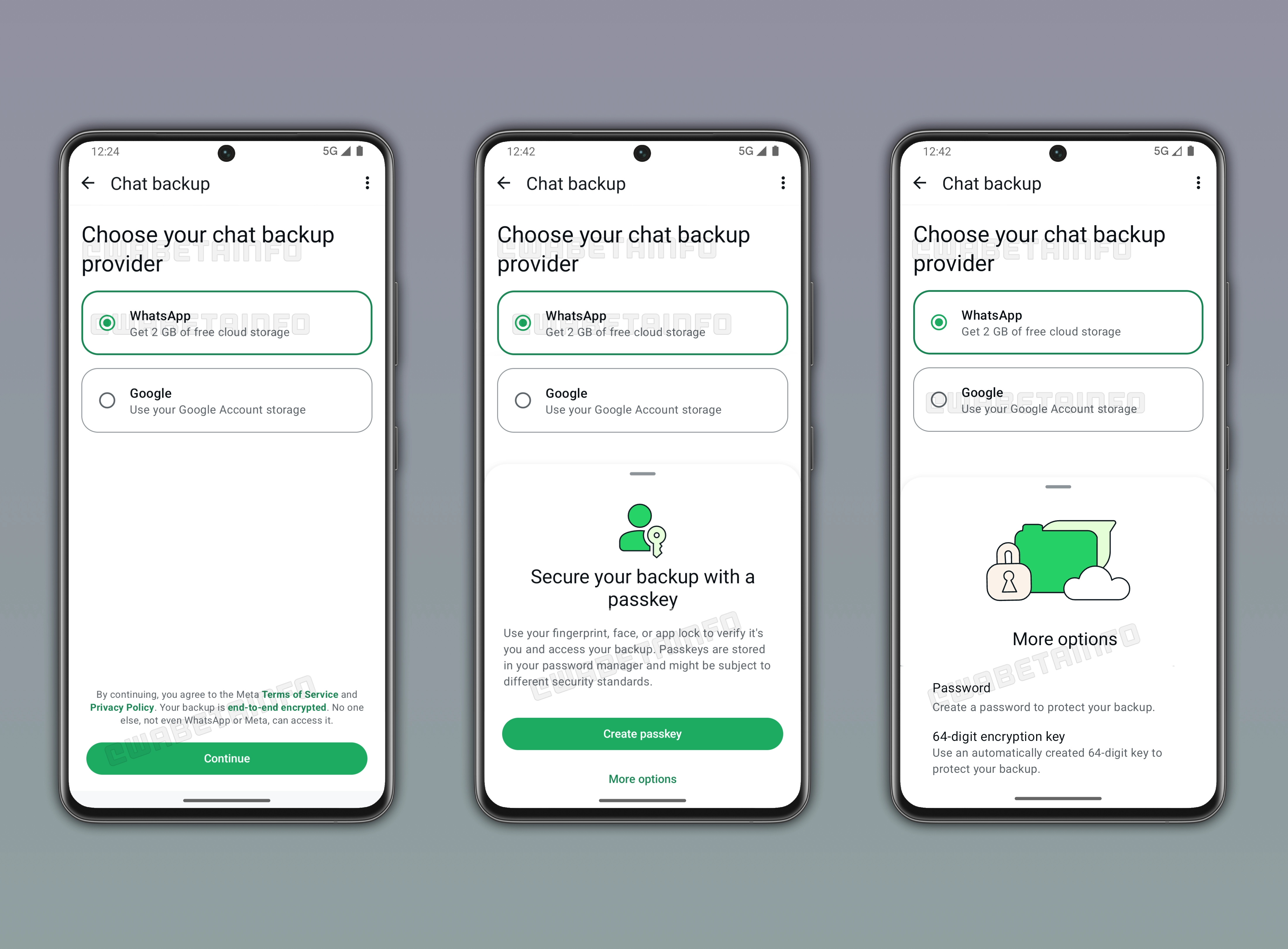
Security remains a key focus. Backups will be protected with end-to-end encryption, ensuring that only the user can access the data. Access will rely on a passkey system, which allows authentication through fingerprint, face unlock, or device lock. The encryption is backed by a 64-digit key, which adds a strong layer of protection.
Also Read: How to Enable End-to-End Encrypted Backups on WhatsApp
This move could be useful for many users. Chat backups often take up a large portion of cloud storage, especially for people who share media frequently. By shifting backups away from Google or Apple accounts, users can free up space for other files without deleting chat history.
It also gives more flexibility. Some users prefer not to link their messaging data with their primary cloud accounts. A separate backup option can help in managing data more independently.
This change makes strategic sense for Meta. Hosting backups on its own servers reduces reliance on external platforms and brings more control over the user experience. It also creates a potential revenue stream through paid storage plans, which can scale easily with WhatsApp’s large user base.
At the same time, trust will play a major role. Even with encryption in place, users will expect clear communication on how their data is stored and protected. Meta will need to ensure transparency to avoid privacy concerns.
The feature is still under development, and more details should become clear closer to its official rollout. If implemented well, it could make chat backups more flexible while reducing dependence on third-party cloud services.
Related Posts