


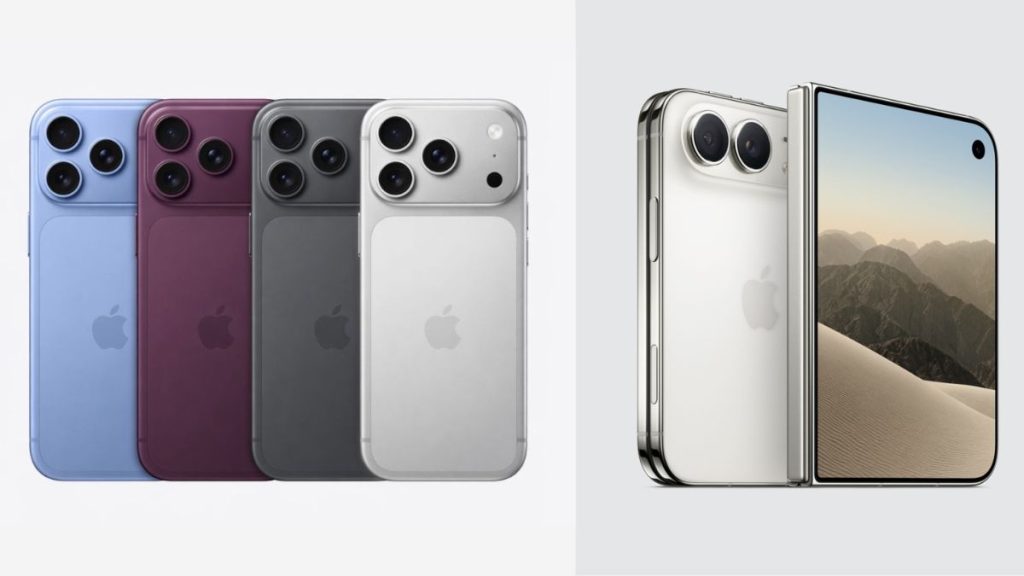
Apple’s September iPhone event looked familiar at first, but the company quietly changed one of the most predictable parts of its product strategy. For years, Apple’s September event has meant a new generation of iPhones arriving together. This year, that did not happen. Apple announced the iPhone 18 Pro and iPhone 18 Pro Max and its first foldable iPhone Duo, while the regular iPhone 18 was absent from the event. This suggests Apple is moving away from a single annual launch window for its entire iPhone lineup.
The change is significant because September is now dominated by Apple’s most expensive and technically ambitious iPhones. The iPhone 18 Pro and Pro Max remain the company’s conventional flagship models, while the Duo introduces a completely new category above them. The Duo starts at $1,999 in the US, compared with $1,199 for the iPhone 18 Pro and $1,299 for the Pro Max. Apple can therefore use its biggest hardware event to showcase its premium products without needing the standard iPhone to be part of the same launch.
There were already signs that Apple was preparing for a more complicated iPhone roadmap. Our earlier report on iOS 27 beta 5 found references to six upcoming models, including the iPhone 18, iPhone 18 Pro, iPhone 18 Pro Max, iPhone Air 2, iPhone 18e and the rumored foldable. The software evidence did not establish when those models would launch, but Apple’s latest event makes the broader strategy easier to understand. Apple no longer needs to treat every iPhone as part of the same September refresh.
This gives Apple more flexibility with the standard iPhone. The conventional model is a mature product, and it does not need to carry the biggest hardware changes every year. Apple can introduce its newest camera and performance technologies in the Pro models, experiment with a new form factor through the Duo, and launch more mainstream models separately when it makes commercial sense. It could also spread iPhone launches across the year instead of concentrating all of the attention and demand around one event.
The Duo makes this strategy even more logical. Apple has entered the foldable market years after Samsung and several Chinese manufacturers, but it is positioning its first foldable as an ultra-premium iPhone rather than trying to make the form factor mainstream immediately. The Duo opens into a 7.6-inch display and supports features such as multitasking and Apple Pencil input. That gives Apple a product aimed at customers who want something fundamentally different from a conventional iPhone, rather than another reason to upgrade from one numbered model to the next.
The challenge now is keeping the lineup simple enough for customers to understand. Apple is increasingly separating iPhones by design, price and use case, and the Duo adds another tier above the Pro Max. That can create more choice, but it can also make the lineup harder to navigate if the differences between models are not clear. Apple will need to show why each category exists instead of allowing the products to overlap.
For now, Apple appears to be turning September into a showcase for its most important premium iPhones while leaving room for other models to arrive later. The regular iPhone has not disappeared. It has simply stopped being essential to the September event. If Apple follows this pattern in future years, the traditional idea of every new iPhone launching together in September could become a thing of the past.
Related Posts


