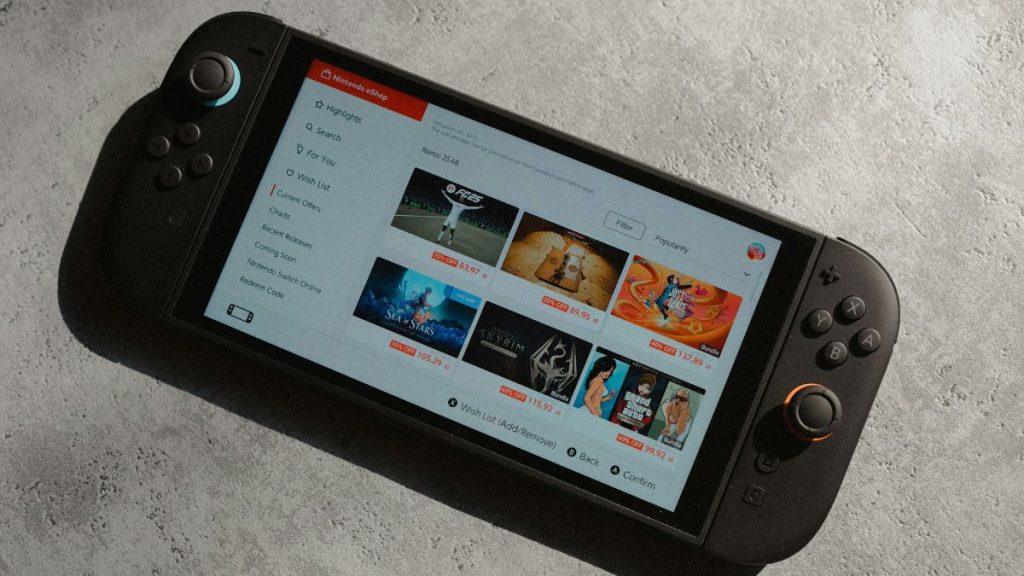
I love PC gaming. If I have the choice between playing a demanding game on a proper gaming PC with a large monitor and playing it on a handheld, I will still choose the PC most of the time. I like the larger display, a powerful GPU, a keyboard and mouse when a game needs them, and the freedom to increase graphics settings without worrying about battery life.
Yet I keep coming back to handhelds.
As a tech reviewer, I have spent enough time with different devices to see both sides of the argument. Some handhelds have impressed me with how much performance they can deliver from a small battery-powered device. Others have made me wonder why anyone would want to deal with a desktop operating system on a six-inch screen. A few have been good enough to change when and where I choose to play.
That is what makes the current handheld gaming boom interesting.
The story is not really about shrinking a gaming PC or replacing the console sitting under a television. It is about making gaming less tied to a particular place. Hardware has become powerful enough to run demanding games in a portable form, while the software experience is slowly catching up with the idea that a handheld should be operated with a controller rather than a mouse and keyboard.
The market is still relatively small compared with smartphones, PCs and consoles. But the direction is becoming difficult to ignore.
Nintendo provides the clearest evidence that consumers still want dedicated portable gaming hardware.
As of March 31, 2026, Nintendo had sold 19.86 million Switch 2 consoles worldwide, while the original Switch had reached 155.92 million units over its lifetime. Switch 2 also had 48.71 million software units sold by that date.
The PC handheld market is much smaller, but it is growing at a meaningful rate. Omdia estimated that 2.3 million PC gaming handhelds would be sold globally in 2025, up 32% from 1.7 million units in 2024. It expects annual PC handheld sales to reach 4.7 million units by 2029.
The two markets should not be treated as one. The Switch 2 is a dedicated Nintendo platform, while Omdia’s figures cover PC gaming handhelds such as the Steam Deck and its competitors.
What they show together is more useful than a combined market size: portable gaming has room for more than one type of device.
Nintendo has built an enormous business around a handheld that also works as a home console. Valve helped establish another model in which a handheld can provide access to an existing PC game library. Other manufacturers are now trying to find space between those two approaches.
That is a significant change from a few years ago, when PC gaming handhelds were still largely an enthusiast category.
My own experience is probably the simplest explanation for why the category has started to make sense to me.
When I sit down at my gaming PC, I usually have a clear intention to play. The setup is excellent for that. I have a large display, proper controls, and enough performance to play almost anything I want. But the setup also ties gaming to my desk.
There are times when I have half an hour available but do not particularly want to sit at the desk. Sometimes I want to continue a game from the sofa. When travelling, carrying a gaming laptop is possible, but it is hardly the same experience as picking up a relatively compact handheld.
A handheld changes that calculation. I can start a game, play for a short period, suspend it and return later. It makes gaming fit around the rest of the day rather than requiring a dedicated gaming session every time.
That is not a performance advantage. In many cases, the PC will still deliver a better image and higher frame rates. It is an access advantage. And that distinction is important when trying to understand why people are buying handhelds despite already owning other gaming hardware.
The hardware is finally good enough
The other reason this market is becoming viable is that modern mobile silicon can deliver surprisingly high performance within a relatively small power envelope. A desktop GPU can draw hundreds of watts when necessary. A handheld has to work within the limits of a small battery, a compact cooling system and a device that the user is holding in their hands.
That changes what manufacturers should optimise for.
Peak performance matters, but sustained performance matters more. A handheld that briefly reaches an impressive frame rate and then runs hot while draining its battery is not necessarily a better gaming device than one that delivers slightly lower performance consistently.
Kaustubh K. Jadhav, Co-founder of ARC, sees this shift as one of the reasons 2026 could be an important year for the category.
“I think 2026 is the year handheld gaming is starting to move from an interesting hardware category to a credible platform,” Jadhav said. “The important shift is not simply that processors have become faster; the entire stack is finally being designed around portable gaming.”
That “entire stack” is important. The processor is only one part of a handheld. The display, cooling system, battery, controls, and operating system all have to work within the same physical constraints.
The result is a different design problem from building a desktop PC. The goal is not to fit as much performance as possible into the device. It is to balance performance, battery life, heat, acoustics, weight and usability well enough that the device remains enjoyable after the novelty wears off.
The software problem is harder than the hardware problem and this is where PC gaming handhelds still have work to do.
A powerful handheld can run demanding PC games, but the experience outside the game can sometimes feel like using a small Windows laptop with controllers attached.
Windows was built around a mouse, keyboard and large display. On a handheld, the user expects to navigate menus with a thumbstick, launch games without dealing with desktop windows and avoid settings that require a technical understanding of PC gaming.
That mismatch has been one of the category’s biggest weaknesses.
Jadhav describes the problem directly.
“Today, many handhelds are still essentially powerful miniature PCs,” he said. “That often means desktop operating systems squeezed onto small screens, multiple launchers, inconsistent controller navigation, background processes, driver management and settings that assume the user understands PC gaming.”
The ideal, he argues, is closer to an appliance.
“A successful handheld should behave more like an appliance: turn it on, find the game and play.”
Microsoft has started addressing this problem on the Windows side. Its Xbox mode for Windows provides a controller-optimised full-screen gaming interface, and Microsoft says the mode can limit background processes to improve gaming performance.
Xbox is also building a handheld-focused compatibility programme that identifies games optimised for handheld controls, resolution and text readability.
These changes matter because the handheld market is moving beyond a simple hardware competition. Manufacturers increasingly have to solve the interface between the player and the game.
Steam Deck changed the PC handheld conversation
Valve did not invent the PC gaming handheld. There were several devices attempting the idea before the Steam Deck. What Valve changed was the expectation around the software experience.
SteamOS effectively solved the ‘Windows-on-a-handheld’ friction by providing a console-like abstraction layer over the PC library That approach helped establish an important distinction. A PC handheld does not have to behave like a PC all the time. It can retain the flexibility of a PC while presenting a much simpler gaming interface.
Valve is now extending SteamOS to more third-party hardware. Recent beta updates have added initial gamepad support for several additional handhelds, which shows that SteamOS is gradually becoming less tied to the Steam Deck itself.
Microsoft is approaching the same problem from the Xbox ecosystem, while manufacturers such as ASUS, Lenovo and MSI continue to build Windows-based handhelds.
The result is an interesting competition. The industry is no longer simply asking how much performance can be fitted into a handheld. It is also asking which software environment can make that performance accessible without making the user think about the underlying PC.
Nintendo has already demonstrated the value of the form factor
The Switch did not become one of the industry’s best-selling consoles because it competed with gaming PCs on performance. It succeeded because Nintendo built the entire product around the flexibility of the form factor.
The same hardware could be connected to a television or used as a handheld. The software was designed around controllers. The operating system was not asking users to manage drivers, launchers or graphics settings.
Switch 2 has now continued that model at a scale that few other dedicated gaming devices can match. Its 19.86 million unit sales by March 31, 2026 show that demand for portable gaming hardware remains substantial.
PC handhelds are taking a different route because they have access to a much larger existing PC library. That gives them an obvious advantage, but it also creates a harder software problem. The PC ecosystem was never designed around a single controlled hardware platform.
A Nintendo handheld can be optimised around a relatively fixed set of hardware. A Windows handheld has to deal with different processors, GPUs, drivers, launchers and game configurations. That is why software could become one of the biggest differentiators in the next phase of the market.
The real limitation is not performance
There is a temptation to view every new handheld through the lens of specifications. A faster APU, more RAM or a higher refresh rate makes for an easy comparison. But handhelds expose the limits of that approach more clearly than almost any other category.
A gaming PC can respond to higher power consumption with a larger power supply and more substantial cooling. A handheld cannot. Every additional watt eventually becomes heat that has to be moved away from the user’s hands and battery capacity that has to be consumed.
Jadhav believes manufacturers need to focus on sustained performance rather than headline numbers.
“The temptation is to keep increasing peak performance, but portable gaming has a fixed power and thermal budget,” he said. “The better question is not, ‘How many frames can this device produce at maximum power?’ but, ‘What performance can it sustain comfortably for two or three hours?'”
That is a question I find more useful when reviewing portable hardware as well.
A benchmark tells me what a device can do under a particular set of conditions. It does not tell me whether the device remains comfortable to use after an hour, whether the fans become distracting, or whether the battery drops so quickly that I start looking for a charger.
Technologies such as upscaling and frame generation are therefore particularly relevant to handhelds. They can reduce the rendering workload or improve perceived performance without requiring the GPU to produce every frame at native resolution.
For a handheld, that can be more valuable than simply increasing the maximum graphics performance.
The remaining problem is cost.
As handheld PCs become more powerful, they increasingly overlap with gaming laptops in price. That creates an obvious question for buyers: why buy a handheld if a similarly priced laptop offers a larger display, a keyboard and broader functionality?
The answer has to be the form factor. But the price difference still has to be reasonable.
That challenge is becoming harder because memory and storage costs are rising across the PC industry. Omdia expects global PC shipments to decline 12% in 2026 to 245 million units, with the sub-$500 segment particularly affected by higher component costs.
Handhelds have little room to absorb those increases. Their components are already tightly integrated, and adding more memory or storage can quickly raise the retail price.
Jadhav argues that the next step for the category should therefore be efficiency rather than another specification race.
“The next breakthrough will come from combining efficient silicon, intelligent upscaling, lean software and disciplined hardware choices to push cost-per-frame and performance-per-watt down, not simply pushing specifications up,” he said.
That is relevant for India, where premium handheld pricing can quickly turn a potentially interesting category into an enthusiast-only purchase.
However, if hardware efficiency is the global hurdle, price and localization remain the primary gatekeepers in emerging markets like India.
India presents an unusual opportunity for handheld manufacturers.
Lumikai’s 2025 research puts India’s gaming market above $1.5 billion and the country’s gamer base at 555 million. Its research also shows that 66% of gamers come from non-metro cities.
Those numbers demonstrate the size and geographic spread of India’s gaming audience. They do not, however, mean that hundreds of millions of people are potential handheld buyers.
Most Indian gamers have experienced gaming through smartphones. The phone is already owned, always connected and capable of running an enormous range of games, many of which are free to play.
So, a handheld has to offer a meaningful reason to spend additional money.
That is where the category could become interesting. A dedicated handheld provides physical controls, a larger gaming-focused interface and access to deeper PC or console-style games without requiring the user to build a permanent gaming setup.
Jadhav believes the opportunity exists, but pricing is the key barrier.
“I believe the form factor can become mainstream in India, but the current pricing model cannot,” he said.
He also points to the practical requirements that would have to be addressed for that to happen.These requirements are lower acquisition costs, efficient power consumption, good battery life, durable controls, local warranty and repair, sensible game pricing and software that does not require PC-level troubleshooting.
That is a much more demanding proposition than simply bringing an international handheld to India. It requires manufacturers to design for the market rather than merely sell into it.
Handhelds are more likely to complement PCs than replace them
After using different handhelds, I do not see them replacing my gaming PC. There are games I would always rather play at a desk. Competitive games benefit from a keyboard and mouse. Large open-world games can look spectacular on a high-end monitor. Strategy and simulation games often work better when I have a larger display and precise input.
But that does not make the handheld redundant. There are games that suit the form factor naturally, particularly RPGs, platformers, indie games and older titles. More importantly, there are situations where I would rather have a handheld than a gaming PC simply because I am not sitting at my desk.
That is the distinction the industry needs to recognise.
The handheld does not have to win a direct hardware comparison with a desktop. It has to offer something the desktop cannot. It should offer the ability to take the experience with you without turning gaming into a separate activity.
The long-term significance of handhelds may therefore have less to do with the devices themselves and more to do with the way gaming platforms are converging.
A game can increasingly exist across PC, console and handheld hardware. Xbox is bringing its ecosystem to Windows handhelds. SteamOS is expanding beyond the Steam Deck. Nintendo continues to build a dedicated portable platform around its own software.
Cloud gaming and Remote Play add another layer. It allows a handheld to access games that its local hardware may not be capable of running. That makes the handheld less of a standalone platform and more of an access point.
The same player can have a powerful PC at home, a console connected to the television, and a handheld for everything in between. The hardware does not have to replace the other devices because each serves a different situation.
For the industry, that is a more sustainable proposition than trying to convince consumers that every new handheld should be powerful enough to replace their existing gaming hardware.
2026 could be the year handhelds become a platform, not a category
The first phase of modern handheld gaming was about proving that demanding games could run on portable hardware.
That argument is largely settled.
The next phase is more difficult. Manufacturers need to make these devices affordable enough for a broader audience, efficient enough to provide useful battery life, and simple enough that the user does not feel like they are managing a desktop PC on a small screen.
The market data suggests there is room for that transition. Omdia expects PC gaming handheld shipments to more than double from 2024 levels by 2029, while Nintendo has already demonstrated the scale that dedicated portable gaming can reach. But growth will not come simply from putting a faster processor into every new device.
The next generation of handhelds will have to answer a more practical question: why should someone carry one?
For me, the answer has become clearer after using enough of them. I still prefer my gaming PC when I want the best possible version of a game. But there are many times when I would rather have access to a good version of that game without being tied to my desk.
That is where handheld gaming has found its place.
It is not making the gaming PC obsolete. It is making the idea of where gaming happens much less fixed.
Related Posts