


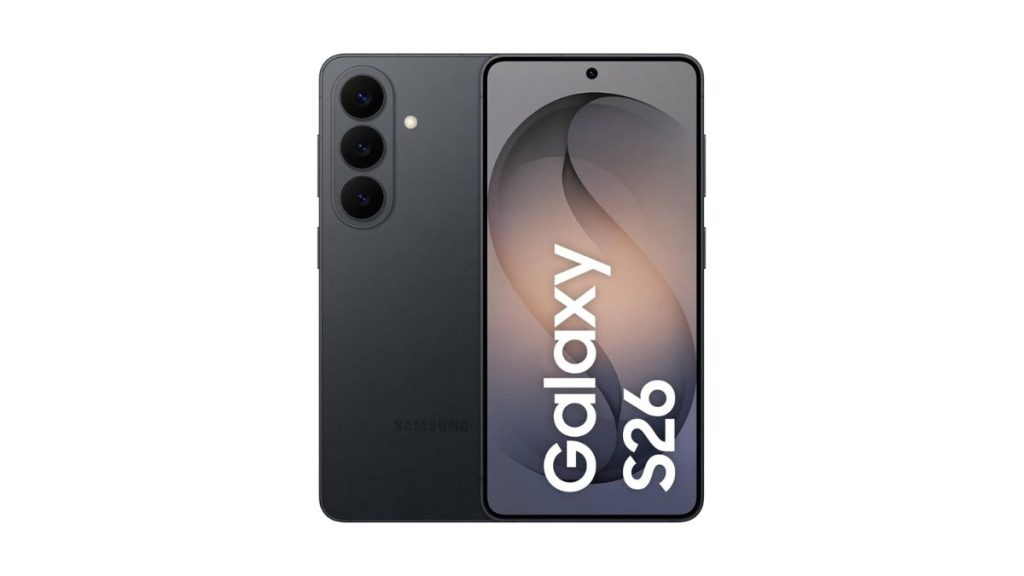
Samsung Galaxy S26 has received a surprisingly modest score in DxOMark’s camera test. The phone scored 146 points, placing it at 44th on DxOMark’s smartphone camera leaderboard.
That puts Samsung’s latest standard Galaxy S model behind several older and competing flagship phones. The result is notable because the Galaxy S26 is positioned as a flagship, yet its camera hardware remains relatively conservative.
The Galaxy S26 uses a triple-camera setup consisting of a 50-megapixel main camera, a 12-megapixel ultrawide camera and a 10-megapixel telephoto camera with 3x optical zoom.
The main camera has a 1/1.56-inch sensor, f/1.8 aperture, Dual Pixel PDAF and OIS. The ultrawide uses a 1/2.55-inch sensor, while the 3x telephoto uses a much smaller 1/3.94-inch sensor.
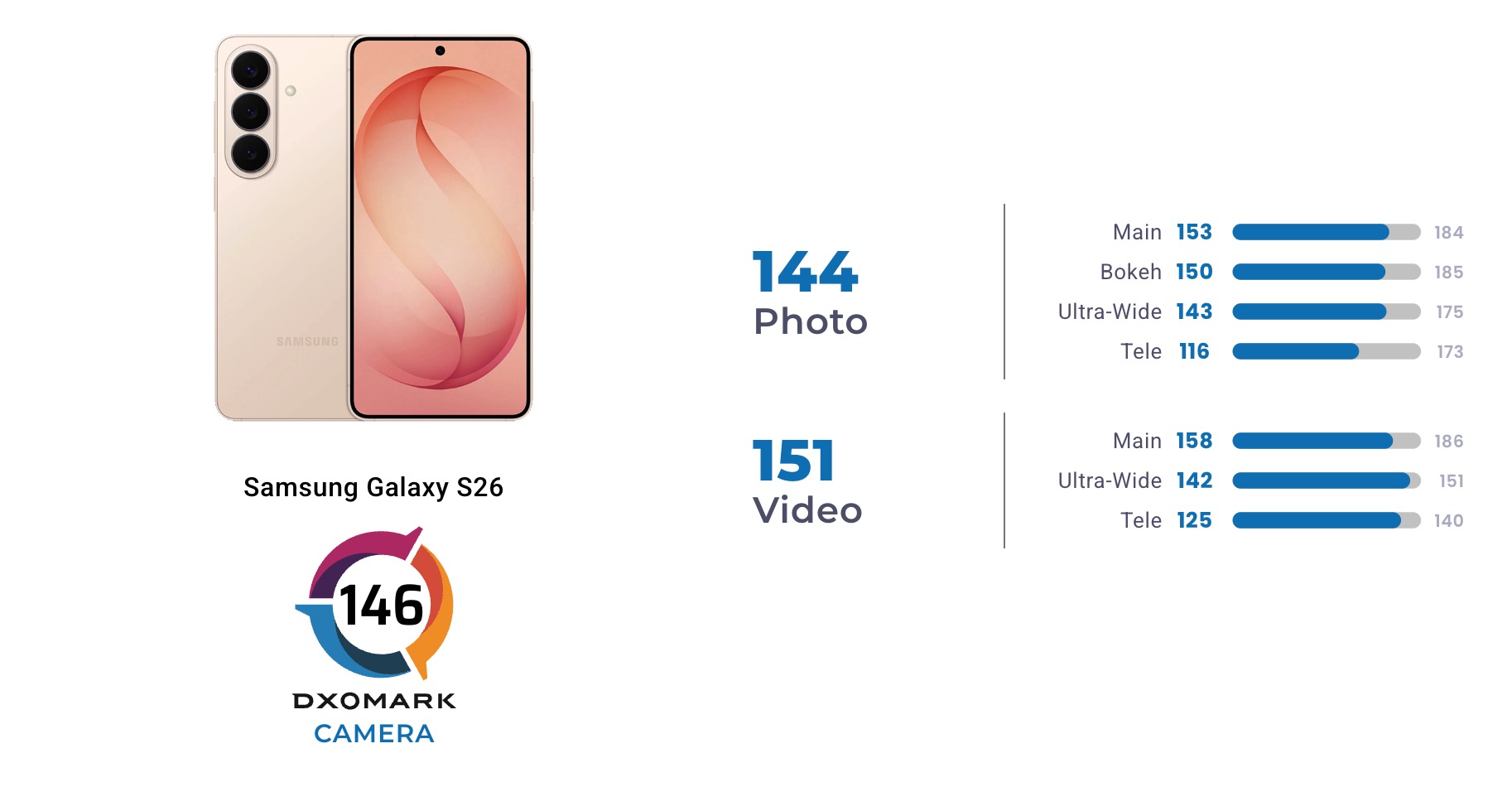
DxOMark found the Galaxy S26’s main camera capable of producing accurate exposure, a relatively wide dynamic range and pleasant color reproduction.
It also found a good balance between texture preservation and noise reduction. Portrait photography is another strong area, partly because the relatively wide depth of field can keep multiple subjects in focus.
The weaknesses appear when lighting becomes more difficult. Low-light photos show more noise, occasional white balance casts and reduced fine detail. DxOMark also reported autofocus instability and artifacts around edges and depth gradients in some difficult scenes. Hue shifts can also be visible in skies.
These limitations are consistent with the phone’s hardware. The 1/1.56-inch main sensor is not particularly large by current flagship standards, while the telephoto sensor is considerably smaller.
The Galaxy S26’s 116-point telephoto score is one of the clearest indicators of where the camera system falls short.
The 10-megapixel telephoto camera provides 3x optical zoom, but its small 1/3.94-inch sensor limits the amount of detail it can capture. DxOMark found accurate exposure and color in zoomed images, but fine detail was often lacking.
The phone also lacks a dedicated long-range telephoto camera. As a result, image quality falls behind more versatile flagship camera systems as the zoom level increases.
Video zoom is a different story. DxOMark found it comparable to the Galaxy S26 Ultra and iPhone 17 Pro, with good image quality and smooth transitions.
The Galaxy S26 scored 151 points for video, compared with 144 points for photo. DxOMark praised its stabilization, color reproduction and noise control. Video remains consistent across different lighting conditions and is one of the stronger aspects of the phone’s camera system.
Exposure is the main weakness. The test found that exposure can fluctuate when lighting changes, particularly in indoor and outdoor scenes.
The DxOMark result does not suggest that the Galaxy S26 takes bad photos. Instead, it shows the limitations of Samsung’s approach to the standard Galaxy S model.
The phone has a capable main camera and strong video performance, but its relatively small sensors and limited zoom hardware leave it at a disadvantage against phones with more advanced camera systems.
That becomes more significant when looking at its position on DxOMark’s leaderboard. A 146-point score and 44th-place ranking are difficult to ignore for a current flagship.
The result also raises a question about Samsung’s product segmentation. The company reserves its most advanced camera hardware for the Galaxy S26 Ultra, leaving the smaller S26 with a system that appears increasingly conservative compared with the wider flagship market.
For users who mainly shoot everyday photos and video, the Galaxy S26 should still be capable. But for buyers choosing a phone primarily for camera performance, DxOMark’s results suggest there are stronger options, including some older flagship models.
Related Posts


