Cloudflare has introduced a major update to its AI platform. The company is now building a unified inference layer that lets developers access multiple AI models through a single API. Instead of depending on one AI provider, developers can use different models from different companies without changing much code.
This is important because AI models are changing fast. A model that works best today may not be the best after a few months. Many real-world apps also use multiple models at the same time for different tasks.
With this update, Cloudflare now offers access to more than 70 models from over 12 providers. These include platforms like OpenAI, Google, and Alibaba Cloud. Developers can switch between these models with just one line of code. Everything works through a single endpoint, which makes it easier to manage.
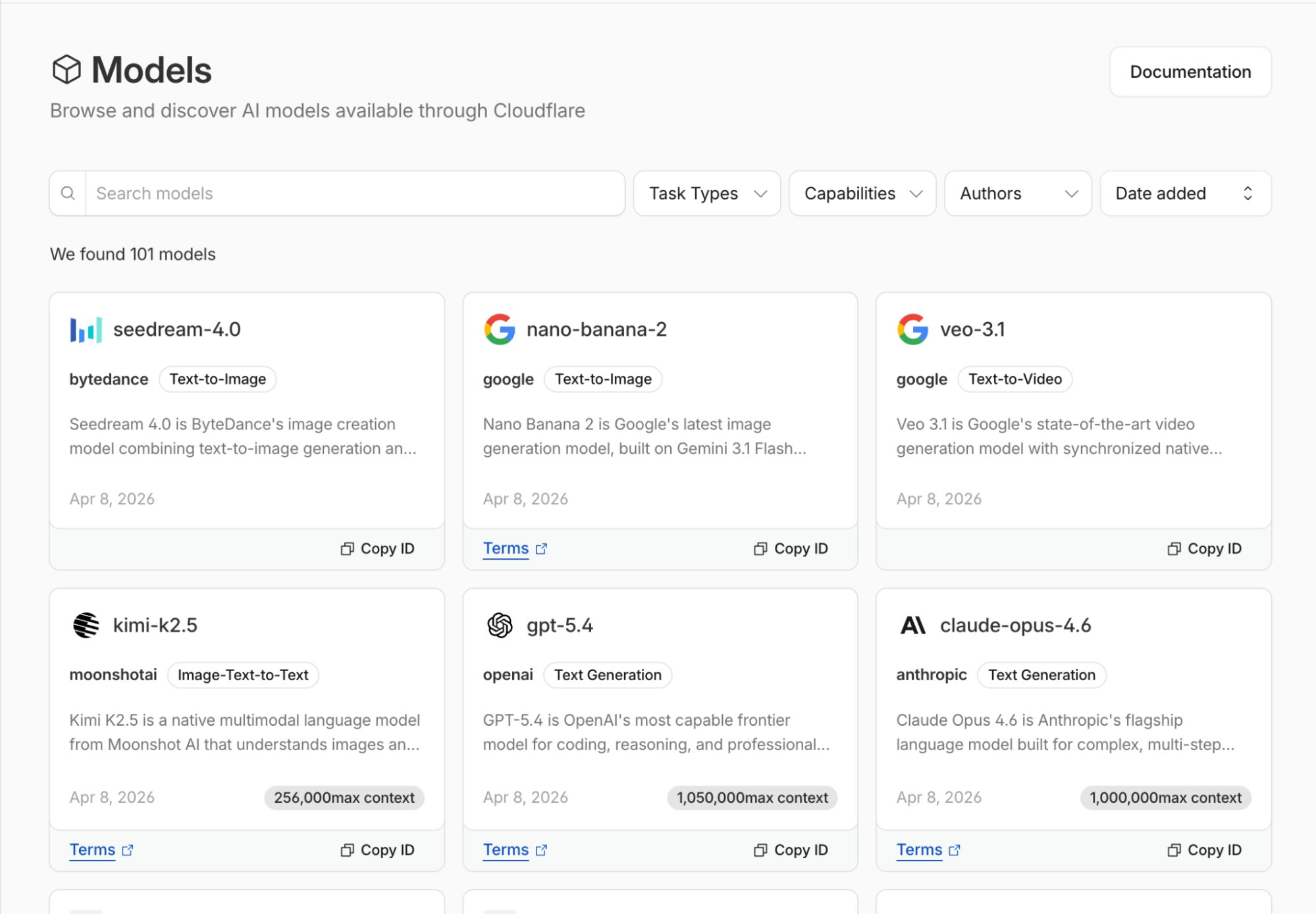
Another key feature is cost tracking. Since developers often use multiple AI services, tracking spending becomes difficult. Cloudflare now offers a single dashboard to monitor usage and costs across all models.
The platform also focuses on speed and reliability. Cloudflare says its global network helps reduce delay, especially for AI agents that require multiple steps to complete a task.
If one AI provider goes down, the system can automatically switch to another provider. This helps avoid failures without needing extra setup.
Cloudflare is also working on support for custom models. Developers will be able to bring their own trained models and run them on the platform using container tools.
The company is also expanding support beyond text. The platform will include models for images, video, and speech, allowing developers to build more advanced applications.
This update shows that Cloudflare is trying to simplify how developers build AI apps. Instead of managing multiple services, everything can now be handled from one place.
This move makes a lot of sense. Right now, most developers are already using more than one AI model. Managing them separately adds cost and complexity. Cloudflare is trying to fix that with a single layer.
It also reduces dependency on a single provider. That is important because outages and pricing changes are common in the AI space.
However, there is one concern. Giving one platform control over access to multiple AI models could create a new kind of dependency. Developers may move away from model lock-in, but still depend heavily on Cloudflare’s ecosystem.
Cloudflare itself has faced multiple outages in recent months. There have also been other incidents, including route leaks and data center issues that affected performance and connectivity. Earlier outages in 2025 even took down major websites and services globally, showing how much of the internet depends on Cloudflare.
This raises an important concern. While Cloudflare is solving model fragmentation, it could also become a single point of failure for AI applications if something goes wrong.
Related Posts