


Apple removed Touch ID from its flagship iPhones for a reason. Nearly nine years later, it has brought it back for almost the same reason.
When Apple introduced the iPhone X in 2017, it removed the Home button and the fingerprint sensor built into it. The change gave Apple more space for the display and allowed it to replace the physical button with gesture-based navigation. Face ID took over biometric authentication, and it has remained the standard on Apple’s flagship iPhones ever since.
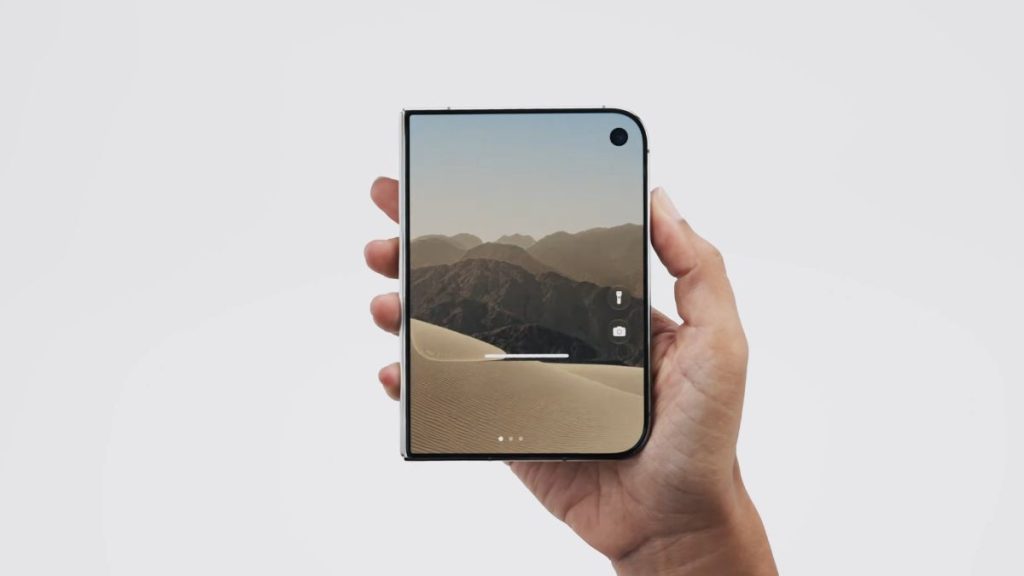
The iPhone Duo, Apple’s first foldable iPhone, changes that. Apple has brought Touch ID back, but this time the sensor is integrated into the side button. There is no Home button and no fingerprint sensor taking space away from either display.
That makes the return of Touch ID less of a reversal than it initially appears. Apple is still trying to keep hardware away from the display. The difference is that the hardware problem has changed.
Touch ID itself was never the main problem. Its implementation was. Apple’s fingerprint sensor was built into the Home button at the bottom of the iPhone. As smartphone displays grew larger and bezels became smaller, that button became increasingly difficult to justify. Apple wanted the front of the phone to be dominated by the screen, but the Home button required a permanent area below it.
The company introduced the iPhone X as the solution. Apple removed the Home button, extended the display into the space it had occupied and introduced Face ID as a replacement for Touch ID.
Face ID was therefore closely connected to Apple’s new design. It allowed the company to remove the physical button without losing biometric authentication. Users could unlock the phone and authenticate payments and apps without touching a dedicated sensor.
For a conventional smartphone, that was a sensible trade-off. There was little reason for Apple to add another biometric system when Face ID already worked and fit the direction of the iPhone.
Apple could have kept fingerprint authentication without bringing back the Home button. An in-display fingerprint sensor could have placed Touch ID underneath the screen, as several Android manufacturers have done. Apple never shipped that solution on an iPhone.
There are technical challenges with in-display fingerprint systems, but Apple’s larger reason was probably that it did not have much to gain from adding one. The company had already invested heavily in Face ID and its TrueDepth hardware, while Face ID gave it exactly what it needed for its all-screen iPhone design.
Adding Touch ID would have meant another biometric system, additional hardware and more complexity without solving a major problem on conventional iPhones.
That calculation changes with a foldable.
The iPhone Duo has two displays connected by a hinge, with batteries, cameras, processors, cooling hardware and other components packed into a thin body. Unlike a conventional iPhone, its internal space is divided between two halves and has to accommodate the additional mechanical complexity of a foldable design.
Apple is also using an under-display camera on the inner screen. That is significant because it shows how strongly the company wants the large display to remain free of visible hardware.
Face ID is harder to accommodate in such a design. The TrueDepth system requires multiple components, and finding room for them in a thin foldable is more complicated than fitting them into a conventional iPhone.
Apple could eventually develop smaller Face ID hardware or move more of it underneath the display. But the company does not need to solve that problem in the first-generation Duo when there is a simpler option available.
Touch ID can sit in the side button. The sensor does not consume display space, does not require hardware around the inner screen and works whether the phone is folded or unfolded. The side button already has a place on the device, so integrating a fingerprint sensor into it is also a relatively efficient use of space.
For the Duo, that makes Touch ID a practical engineering choice rather than a nostalgic return to an older iPhone design.
The return also shows why fingerprint authentication never became completely irrelevant. Face ID is extremely convenient when the phone is in front of you. But it can be less convenient when the phone is lying flat on a desk or being held at an angle where the front camera cannot see your face properly. Touch ID does not have that limitation.
A side-mounted fingerprint sensor can be used without changing the position of the phone. It can also be useful when the user’s face is partially covered.
That does not make Touch ID better than Face ID in general. Face ID remains well suited to conventional iPhones, and Apple has had years to refine the experience. The important difference is that the physical design of the device can make one technology more practical than the other.
The Duo’s multiple-screen design makes that trade-off particularly interesting because the phone can be used in different configurations without changing where the biometric sensor is located.
I would not expect Apple to replace Face ID across its regular iPhone lineup because Touch ID has returned on the Duo. Face ID still makes sense for conventional iPhones, where Apple has enough room for its hardware and does not have to divide the internal space around a hinge.
Instead, Apple could end up using different biometric systems for different form factors. Touch ID could make sense for foldables or particularly thin devices, while Face ID remains the default for conventional iPhones.
It is also possible that Apple eventually develops a smaller or under-display Face ID system. If that happens, the company could theoretically reconsider how Touch ID fits into future devices. But there is no reason to assume Apple wants both systems simply because it can technically support them.
The Duo is better understood as Apple choosing the biometric technology that fits the hardware rather than treating Face ID as mandatory for every iPhone.
The interesting part of Apple’s decision is that the company has not really changed its philosophy.
In 2017, Apple removed Touch ID because the Home button was taking up valuable space on the front of the iPhone. Face ID allowed the company to remove the button and give more of that space to the display.
In 2026, Apple has brought Touch ID back because the Duo has an even more complicated display-first design. A fingerprint sensor in the side button lets Apple keep both screens unobstructed without having to fit the full Face ID system into an extremely constrained foldable chassis.
The implementation is different, but the underlying priority is remarkably similar: keep the display free of unnecessary hardware.
Touch ID did not become useful again because Apple suddenly decided fingerprints were better than faces. The iPhone changed, and the engineering trade-offs changed with it.
That is why the return of Touch ID makes more sense than it might seem. Apple did not abandon the design philosophy that led to its removal. It simply found that, for a foldable iPhone, Touch ID can actually help Apple pursue that philosophy.
Related Posts


